

How to Write an Apology Letter to Customers: Examples and Best Practices
In business, mistakes happen, and how you address them can make a significant difference in maintaining customer trust and loyalty. Writing a sincere, effective apology letter demonstrates accountability and a genuine commitment to customer satisfaction.
This guide will walk you through the essential elements of a great apology letter, common scenarios where you might need one and provide you with templates to use for various situations.
Let’s dive in.
Why Apologizing to Customers Matters
An apology isn’t just about saying “sorry”; it’s an opportunity to rebuild and strengthen customer relationships. When customers receive an empathetic, transparent apology, they feel valued and respected. Effective apology letters can:
1. Repair Trust: A sincere apology shows accountability, making customers more likely to forgive mistakes.
2. Boost Loyalty: Handling issues well can transform disappointed customers into loyal advocates.
3. Prevent Escalation: Timely apologies may prevent further complaints, public criticism, or customer churn.
4. Encourage Feedback: Openly addressing issues creates an environment where customers feel comfortable sharing their experiences, which helps improve your products or services.
Key Elements of an Effective Apology Letter
A well-crafted apology letter includes specific elements to convey sincerity and ensure clarity. Here’s a breakdown of what makes an apology letter effective:
1. Acknowledge the Issue: Address the specific issue or complaint the customer raised. Clearly state what went wrong to show the customer you’ve understood their concern.
2. Express Empathy and Regret: Use empathetic language to acknowledge how the issue may have impacted the customer. Words like “we apologize for any inconvenience” show understanding but should be specific to the situation.
3. Take Responsibility: Accept responsibility for the issue without placing blame. Customers appreciate honesty and accountability, which helps repair trust.
4. Provide a Solution or Explanation: Describe what actions you’re taking to resolve the issue or prevent it from happening again. This step reassures customers that their experience matters to you.
5. Offer a Next Step: Depending on the severity of the issue, this could be a replacement, a discount, or a personal follow-up. Include this as part of your commitment to service recovery.
6. End on a Positive Note: Thank the customer for their feedback and encourage them to reach out if they have further questions or concerns.
Related: 10 Actionable Ways to Improve Customer Experience
Common Scenarios for Apology Letters
Here are a few common customer service situations where an apology letter might be necessary:
1. Product Issues: If a product is defective, damaged, or otherwise not meeting expectations, an apology letter can help manage customer dissatisfaction.
2. Delays: When orders or services are delayed, it’s crucial to communicate the reasons clearly and apologize for the inconvenience.
3. Service Complaints: Sometimes, service doesn’t meet a customer’s expectations. An apology letter can turn a negative experience into a positive one.
Apology Letter Templates for Different Situations
Below are customizable templates for common customer service situations.
1. Personal Apology Letter
A personal apology letter is appropriate when a direct interaction with a customer has led to dissatisfaction. It shows that you’re addressing their concern personally, which can help restore trust and loyalty.
Template:
Subject Line: I’m Personally Apologizing for Your Experience,

2. Mass Apology Letter
When an issue has affected multiple customers, such as a system outage, a mass apology letter is appropriate. This allows you to communicate with a broad audience while still addressing their concerns.
Template:
Subject Line: Apology for Recent Service Disruption

3. Apology Letter for Angry or Dissatisfied Customer
Addressing an angry or dissatisfied customer requires a careful balance of empathy and solutions to resolve their frustration and win back their trust.
Template:
Subject Line: We’re Committed to Making Things Right, [Customer’s Name]

4. Apology Letter for Poor Customer Service
If a customer has had an unpleasant experience with your service, an apology letter addressing poor customer service is essential. It demonstrates accountability and a commitment to improve.
Template:
Subject Line: Apology for Your Experience with Our Service

5. Apology Letter for Defective Products
Product issues can impact customer satisfaction significantly. A tailored apology letter addressing the product defect can help reassure the customer of your dedication to quality.
Template:
Subject Line: Apology for the Defective [Product Name] You Received

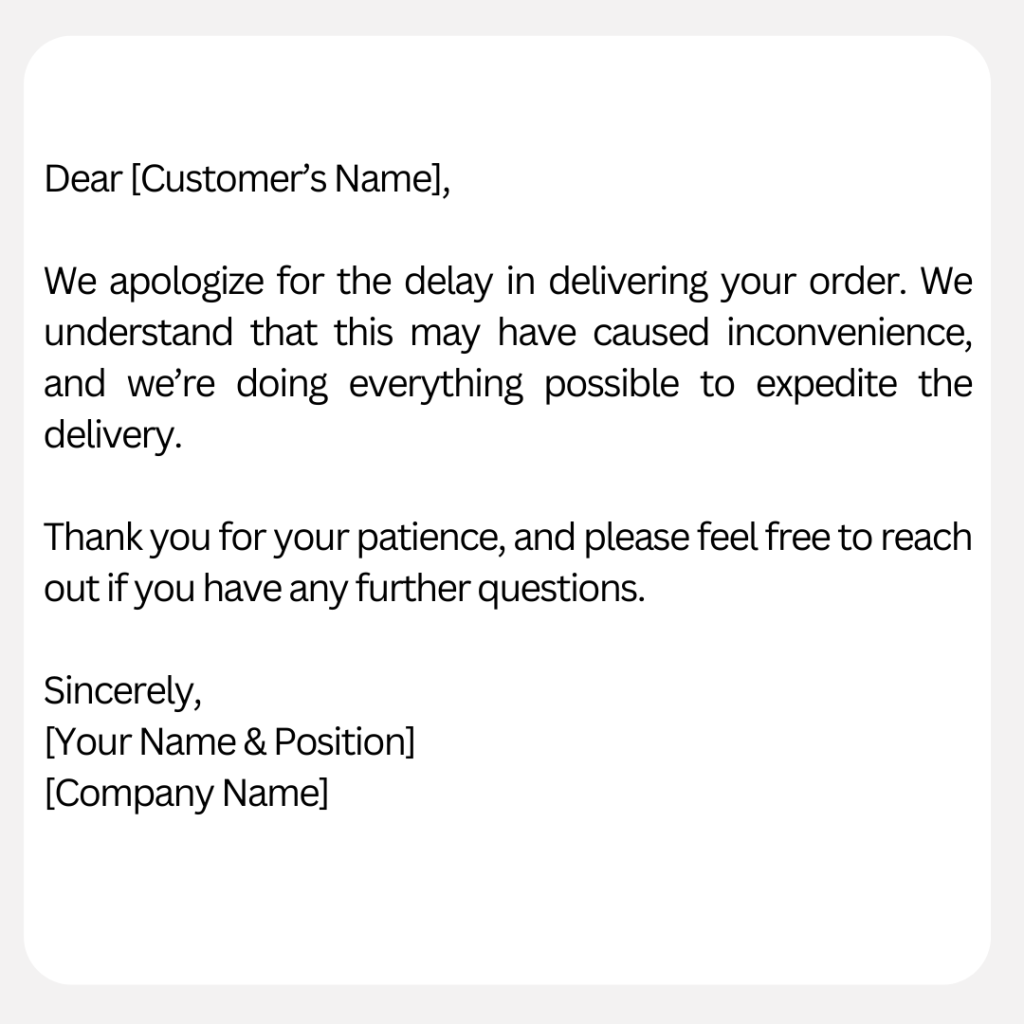
6. Apology Letter for Late or Delayed Delivery
When a delivery is delayed, customers deserve to know why and when they can expect the product. A well-crafted apology letter here can help maintain customer satisfaction.
Template:
Subject Line: Apologies for the Delay in Your Order
7. Apology Letter for Communication Errors
Miscommunication can lead to misunderstandings or incorrect expectations, and a sincere apology letter can clarify the situation.
Template:
Subject Line: Apology for Communication Error

8. Apology Letter for Out-of-Stock Items
When a customer’s order is delayed due to an item being out of stock, an apology letter with an alternative solution can help manage expectations.
Template:
Subject Line: Apology for Out-of-Stock Item

Dos and Don’ts for Writing Apology Letters
Dos:
1. Personalize the Letter: Mention the customer’s name and the specific issue to show your response is genuine.
2. Be Direct and Transparent: Clearly state the problem and the resolution to avoid any ambiguity.
3. Show Empathy: Use language that shows understanding of how the issue may have impacted the customer.
4. Provide a Clear Resolution: Make it easy for customers to know what they can expect.
Don’ts:
1. Don’t Shift Blame: Even if the issue was caused by external factors, avoid blaming third parties.
2. Avoid Conditional Language: Words like “if” or “might” can make the apology seem insincere.
3. Stay Away from Jargon: Keep the language simple to avoid confusion.
Related: How to create an ai chatbot

Conclusion
In conclusion, crafting a thoughtful apology letter is essential for maintaining trust and loyalty with customers. Whether it’s addressing delays, billing issues, or unmet expectations, taking responsibility and offering a genuine solution shows customers that their concerns are valued.
With platforms like Salesgroup.ai, businesses can enhance customer interactions and streamline responses for a more efficient, personalized approach to resolving issues. By combining the right tools with a sincere approach to apologies, businesses can turn challenges into opportunities to improve customer satisfaction and loyalty.
