
The 7 Best Customer Success Tools For Every Budget
In the world of modern business, the customer journey no longer ends at the point of sale. Instead, companies are increasingly focused on nurturing ongoing relationships with customers, ensuring they receive continuous value from their products or services. This customer-centric approach, known as “customer success,” involves proactively supporting and engaging customers to foster loyalty and satisfaction. Customer success tools are integral to implementing this strategy, helping businesses to monitor customer health, optimize engagement, and ultimately drive revenue growth.
This article explores customer success tools in-depth: what they are, why they matter, key features to look for, and a list of the best tools available today to enhance customer satisfaction. Let’s dive into how these tools can transform your customer relationships and elevate your business.
What Are Customer Success Tools?
Customer success tools are software solutions designed to manage and enhance the customer experience at every stage of the journey. They go beyond traditional customer support by providing a proactive approach to customer management. Through data insights, automation, and personalized engagement strategies, customer success tools help businesses to understand their customers, identify potential risks, and capitalize on opportunities for growth.
Unlike customer service, which is typically reactive, customer success aims to preemptively address challenges and support customers in achieving their goals with the product. This approach can drive customer retention, encourage positive reviews, and increase upselling opportunities.
The Importance of Customer Success Tools for Modern Businesses
As competition intensifies, retaining customers has become as crucial as acquiring new ones. Studies show that it can be 5-25 times more costly to attract a new customer than to retain an existing one, and customer success strategies can reduce churn significantly by enhancing customer satisfaction and loyalty.
By investing in customer success tools, businesses can:
- Boost Retention: By providing timely support, companies can reduce customer churn and retain more long-term users.
- Increase Customer Lifetime Value (CLV): Satisfied customers are more likely to make repeat purchases and explore additional products or services.
- Build Brand Advocacy: Happy customers are more likely to recommend your product, leading to organic growth.
- Enhance Operational Efficiency: Customer success tools streamline processes, allowing teams to work more effectively and focus on high-impact activities.
Key Features to Look for in a Customer Success Tool
Choosing the right customer success tool requires understanding the core features that will support your business goals. Here are some of the most valuable features to consider:
- Customer Health Scoring: A vital feature, customer health scoring evaluates the “health” of each customer based on factors like product usage, engagement frequency, support requests, and satisfaction scores. It identifies at-risk customers early, allowing teams to take preventative actions to reduce churn.
- Customer Journey Mapping: This feature visualizes each stage of the customer journey, from onboarding to renewal. Customer journey mapping enables teams to tailor their engagement efforts based on the customer’s progress, creating a personalized experience.
- Product Usage Analytics: Product usage analytics provide insights into how customers are using your product, highlighting popular features and areas where customers may struggle. These insights help customer success teams address pain points, promote underutilized features, and improve the user experience.
- Automated Playbooks and Workflows: Many customer success tools include automation to standardize tasks like follow-up emails, renewal reminders, and customer check-ins. Automated workflows ensure that customers receive consistent support, saving time and reducing human error.
- Integration Capabilities: Integration with CRM, marketing, and support tools is essential for a holistic view of the customer. A customer success tool should integrate seamlessly with your existing systems to avoid data silos and streamline collaboration across teams.
- Customer Feedback and Surveys: Understanding customer sentiment is critical for refining your product and service. Surveys and feedback tools allow companies to gather insights directly from customers, helping to improve the experience.
- Reporting and Analytics: In-depth reporting on metrics like customer retention, churn rate, and customer satisfaction helps teams measure the effectiveness of their strategies and make data-driven decisions.
Top Customer Success Tools to Consider
With a range of customer success tools available, selecting the right one can be challenging. Here’s a list of the top customer success tools, including their pros, cons, and who they’re best suited for.
1. Salesgroup.ai
Description:
Salesgroup.ai is an innovative tool designed to help businesses turn conversations into conversions. With its AI-driven features, this platform enables companies to provide personalized customer experiences, automate responses, and analyze interactions for actionable insights. Salesgroup.ai emphasizes the importance of creating authentic customer connections, making it ideal for sales and customer support teams looking to leverage AI to improve efficiency and customer satisfaction.
Pros:
- AI-Powered Personalization: offers tailored customer experiences through machine learning, enhancing engagement and satisfaction.
- Automation: Streamlines repetitive tasks like follow-up emails and reminders, saving time for teams and reducing response delays.
- Actionable Analytics: provides in-depth analytics that help businesses understand customer behaviors and preferences, supporting data-driven decision-making.
Cons:
- Learning Curve: The sophisticated AI features may require some training for teams unfamiliar with AI-based platforms.
- Pricing: Higher price point due to advanced features, potentially costly for smaller businesses.
Pricing:
Pricing plans vary based on features and team size, with customized pricing for larger organizations. A free trial is available, allowing businesses to explore the platform before committing.
Best For:
Salesgroup.ai is ideal for businesses of any size that want to maximize their customer interactions by combining personalization with AI-powered automation and analytics.

2. Gainsight
Description:
Gainsight is a comprehensive customer success platform known for its extensive customer health scoring and in-depth journey mapping capabilities. This tool focuses on enhancing customer engagement and preventing churn, allowing businesses to create long-term customer relationships. Gainsight provides a highly customizable platform suited for large teams with complex customer success needs.
Pros:
- Comprehensive Health Scoring: Tracks key metrics to evaluate the “health” of each customer, identifying at-risk accounts early.
- Journey Mapping: Enables visualization of the customer journey, from onboarding to renewal, helping teams provide targeted support.
- Customizable Dashboards: Allows teams to tailor the interface to fit their unique needs, improving workflow efficiency.
Cons:
- Complex Setup: Gainsight’s many features can be challenging for smaller teams to navigate without training.
- Higher Price Point: More expensive compared to simpler customer success platforms, making it less accessible for startups.
Best For:
Gainsight is best suited for larger SaaS companies that require advanced analytics and customizable customer success workflows.

3. ChurnZero
Description:
ChurnZero is designed specifically for subscription-based businesses looking to reduce churn. By analyzing customer behavior and providing actionable insights, ChurnZero helps businesses proactively address customer needs, ensuring satisfaction and retention. This tool is well-suited for businesses that rely on long-term customer engagement to drive revenue growth.
Pros:
- Real-Time Insights: Offers live data on customer interactions and product usage, helping teams make informed decisions on the spot.
- Proactive Engagement: Automated workflows ensure consistent follow-ups with customers, reducing the risk of churn.
- Easy-to-Use Interface: Known for its intuitive design, making it easy for customer success teams to get started quickly.
Cons:
- Limited Integration Options: Some users may find the available integrations insufficient for complex tech stacks.
- Basic Reporting: Reporting features may not be as detailed as other platforms like Gainsight.
Best For:
ChurnZero is ideal for SaaS and subscription-based businesses focused on improving retention and reducing customer churn.

4. Totango
Description:
Totango is a flexible, scalable platform designed to help businesses manage customer journeys at scale. With a variety of pre-built workflows, Totango allows teams to tailor their customer success efforts based on customer lifecycle stages. Totango also offers a free version with basic features, making it accessible for smaller teams.
Pros:
- Scalable Solution: Totango adapts to companies of all sizes, from startups to large enterprises.
- Pre-Built Templates: Includes workflows for key stages in the customer lifecycle, making it easier to get started.
- Real-Time Analytics: Provides data-driven insights that help teams tailor engagement to meet customer needs.
Cons:
- Limited Customization in Free Version: The free version restricts access to certain features, which may require a paid plan for more robust options.
- Advanced Features Require Training: Some of Totango’s more complex features may require additional training.
Best For:
Totango is ideal for mid-sized businesses and startups that require a flexible, scalable customer success solution.

5. HubSpot Service Hub
Description:
As part of the HubSpot ecosystem, Service Hub provides a comprehensive platform for managing customer support and engagement. The tool integrates seamlessly with HubSpot CRM, providing a centralized platform for customer success efforts. Service Hub is designed to help small to mid-sized businesses deliver consistent, high-quality customer experiences.
Pros:
- Seamless CRM Integration: Syncs directly with HubSpot CRM for an all-in-one solution.
- User-Friendly Interface: Intuitive and easy to navigate, making it accessible for teams with limited technical expertise.
- Automated Workflows: Simplifies customer support tasks like ticketing and follow-ups, ensuring consistent engagement.
Cons:
- Limited Features in Free Version: Advanced features, such as custom automation, require premium plans.
- Less Comprehensive for Larger Teams: Service Hub may lack the depth needed for more complex customer success teams.
Pricing:
HubSpot offers a free plan with basic features, with premium plans starting at $45 per month, depending on team needs and add-ons.
Best For:
Service Hub is perfect for small to mid-sized businesses already using HubSpot CRM.

6. ClientSuccess
Description:
ClientSuccess provides an intuitive platform focused on customer retention and renewal tracking. Its easy-to-use interface makes it accessible for teams of all sizes, particularly those looking for a straightforward approach to customer success without the need for extensive customization.
Pros:
- User-Friendly Interface: Known for its simplicity, making it easy for customer success teams to onboard and begin using.
- Renewal Tracking: Effective tools for managing renewals, supporting a streamlined process for subscription-based businesses.
- Straightforward Customer Health Scoring: Tracks customer engagement levels to identify churn risk early.
Cons:
- Limited Advanced Features: Lacks some of the in-depth analytics and customizability of competitors like Gainsight.
- Higher Pricing for Basic Features: Some users find the pricing less competitive for the level of features included.
Best For:
ClientSuccess is ideal for teams seeking a straightforward, user-friendly customer success tool focused on renewals and retention.

7. Salesforce Service Cloud
Description:
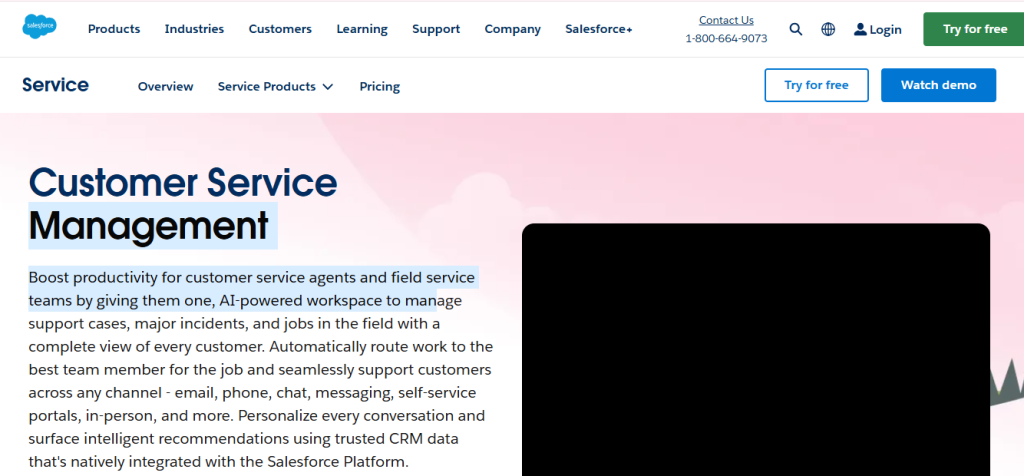
Salesforce Service Cloud is a powerful customer success tool within the Salesforce ecosystem, offering extensive automation and detailed customer insights. Its advanced analytics and integration capabilities make it suitable for large enterprises with complex customer success needs.
Pros:
- Highly Customizable: Extensive options for customizing the platform to fit unique business needs.
- Powerful Analytics and AI Capabilities: Uses AI-driven insights to support data-driven decision-making.
- Wide Range of Integrations: Integrates with various other Salesforce tools, creating a unified CRM ecosystem.
Cons:
- Higher Cost: The extensive features come with a high price point, which may be challenging for smaller businesses.
- Complex Setup: Requires a learning curve and potentially additional training for full utilization.
Pricing:
Salesforce Service Cloud offers various pricing tiers based on features, with an entry-level cost starting at $25 per user per month.
Best For:
Large businesses and enterprises already using Salesforce CRM that require robust, scalable customer success solutions.
Choosing the Right Customer Success Tool
Selecting the right tool for your business involves aligning its features with your specific customer success objectives. Here’s a simple process to help guide your decision:
- Define Your Customer Success Goals: Are you focused on reducing churn, enhancing onboarding, or driving upsells? Having a clear goal will guide you toward a tool with the right functionalities.
- Evaluate Scalability: Ensure the tool can support your business as it grows, with features that will remain valuable at different stages of scaling.
- Look at Integration Needs: Customer success is often collaborative, so seamless integrations with other tools are essential for efficiency and data accuracy.
- Consider Usability and Support: If your team finds the tool challenging, adoption will suffer. Look for intuitive interfaces and available training resources to ease implementation.
- Budget and ROI: Invest in a tool that delivers value aligned with your budget, offering a strong return on investment by improving customer retention and satisfaction.
Final Thoughts: The Power of Customer Success Tools
Customer success tools are not just a trend; they are a cornerstone of modern customer relationship management. By adopting these tools, businesses can better understand their customers’ needs, proactively address potential issues, and deliver exceptional experiences that build loyalty. When effectively utilized, customer success tools can transform customer interactions, reduce churn, and drive sustainable growth.
From real-time messaging to in-depth analytics, the options available cater to businesses of all sizes and industries. Investing in the right customer success tool can empower your team to cultivate valuable, long-lasting customer relationships, setting your business up for continued success.
