
Best Marketing automation Software Tools to Use in 2026
Marketing automation software can be a game-changer, streamlining your workflows and allowing you to nurture leads effectively. But with so many options on the market, how do you determine which one is the best fit for your business? This guide provides an in-depth look at ten leading marketing automation platforms, breaking down their features, pros, cons, and ideal use cases.
Let’s dive in and find the perfect tool for your needs.
Best Marketing Automation Software
1. Salesgroup AI
Salesgroup AI is a cutting-edge platform that combines marketing automation with artificial intelligence to streamline sales and marketing processes. Its focus on predictive analytics and AI-driven personalization makes it a strong contender for businesses aiming to optimize lead management and customer journeys.
Key Features:
- AI-powered lead scoring and segmentation.
- Automated email and multichannel campaigns.
- Predictive analytics for smarter decision-making.
Pros:
- Personalized recommendations based on customer behavior.
- AI tools improve lead qualification and sales alignment.
- Integrates seamlessly with major CRMs like Salesforce and HubSpot.
Cons:
- Requires training to leverage advanced AI features.
- Premium pricing tiers may be costly for small businesses.
Pricing:
Starts at $99/minimum top up, depending on the number of features.
Best For: Mid-sized to large businesses looking to harness AI for predictive marketing.

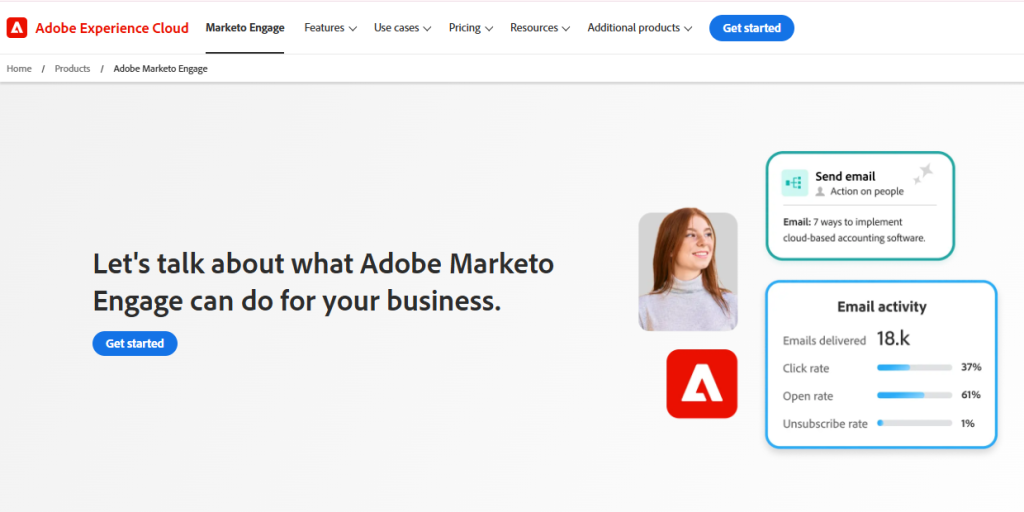
2. Marketo (Adobe)
Marketo, a product of Adobe, caters primarily to B2B companies. It is renowned for its robust lead management and email marketing capabilities. Marketo excels in handling complex, multi-touchpoint marketing journeys, offering predictive analytics and AI tools for smarter decision-making.
Key Features:
- Advanced lead scoring and nurturing.
- Predictive analytics powered by AI.
- Seamless integration with CRMs like Salesforce.
Pros:
- Excellent for data-driven marketing.
- Strong CRM and enterprise integration.
Cons:
- Steep learning curve.
- Customized pricing can be a barrier for smaller businesses.
Pricing:
Available upon request, making it ideal for enterprise-level budgets.
Best For: Enterprises with complex customer journeys and B2B marketers.
3. ActiveCampaign
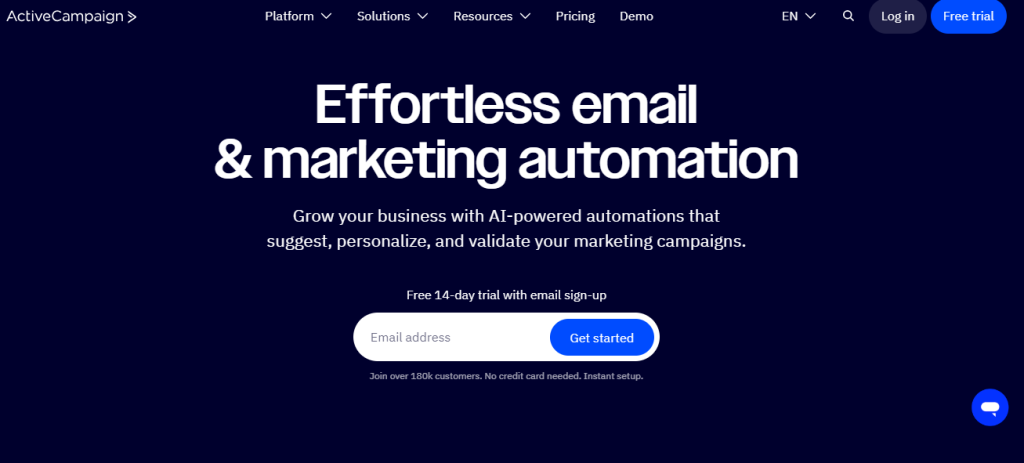
ActiveCampaign is a flexible marketing automation tool known for its robust email marketing and CRM capabilities. It is particularly popular with small and mid-sized businesses looking for a personalized customer experience.
Key Features:
- Automation workflows for customer journeys.
- Multi-channel marketing, including email and SMS.
- Lead scoring and segmentation.
Pros:
- Affordable pricing starting at $15/month.
- Easy-to-use interface.
- Great for personalized engagement.
Cons:
- Limited scalability for larger enterprises.
Best For: Small teams looking for affordable email marketing and CRM tools.
Related: 10 Best Tidio Alternatives and Competitors
4. Pardot (Salesforce)
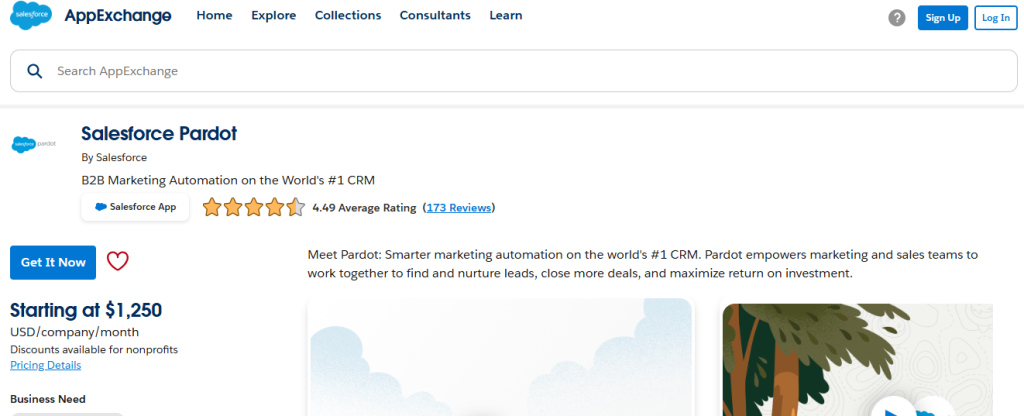
Pardot is Salesforce’s answer to B2B marketing automation, offering advanced tools for lead nurturing and customer relationship management. It is tailored to businesses already using Salesforce, ensuring seamless integration.
Key Features:
- Progressive profiling for personalized communication.
- Advanced CRM integration and detailed analytics.
- Robust lead scoring.
Pros:
- Comprehensive tools for complex B2B sales cycles.
- Deep analytics for tracking ROI.
Cons:
- Complex implementation.
Best For: Salesforce users looking for advanced B2B marketing automation.
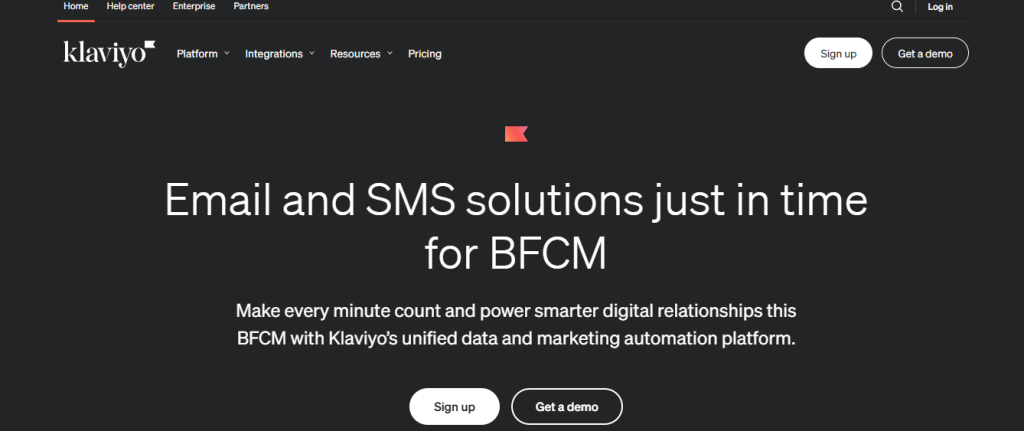
5. Klaviyo
Designed for e-commerce businesses, Klaviyo specializes in personalized marketing automation. It integrates seamlessly with major platforms like Shopify, enabling businesses to craft data-driven campaigns.
Key Features:
- Behavior-based triggers for campaigns.
- Advanced SMS and email marketing.
- Tailored recommendations to drive retention.
Pros:
- Free tier available for small businesses.
- Excellent for abandoned cart recovery and product suggestions.
Cons:
- Limited use for non-e-commerce businesses.
Best For: Online retailers focused on retention and personalized experiences.
6. Mailchimp
Mailchimp has expanded beyond email marketing to include CRM and basic automation tools. Its ease of use and budget-friendly plans make it a favorite for small businesses and startups.
Key Features:
- Multi-channel campaigns, including email and social media.
- Audience segmentation.
- Affordable pricing starting at $10/month.
Pros:
- Free tier for startups.
- Simple, beginner-friendly tools.
Cons:
- Limited automation features for advanced users.
Best For: Startups and small businesses new to marketing automation.

Related: The 7 Best Customer Success Tools For Every Budget
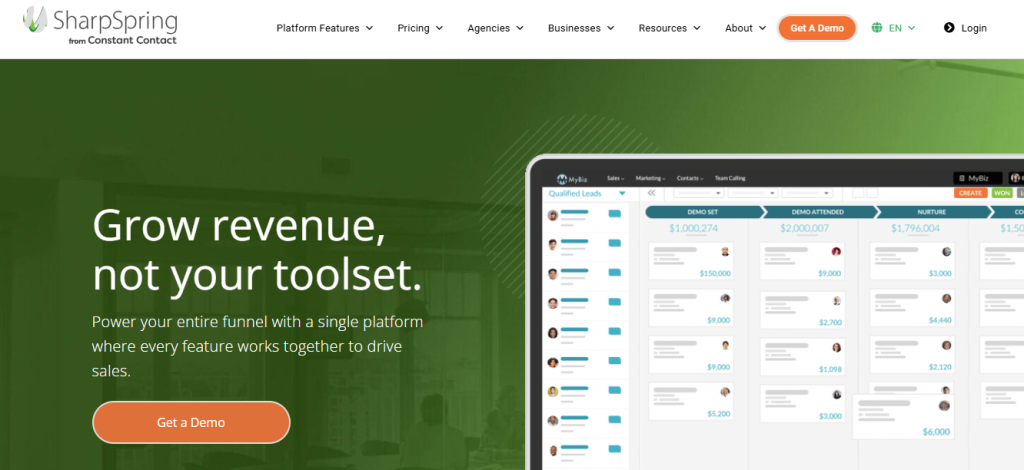
7. SharpSpring
SharpSpring is built with agencies and businesses in mind, offering white-label capabilities and a range of customizable tools. From email automation to lead scoring, it’s an all-in-one platform for managing client campaigns.
Key Features:
- Integrated CRM and social media management.
- White-label functionality for agencies.
- Robust tracking and analytics.
Pros:.
- Tailored for agencies managing multiple clients.
Cons:
- Requires significant setup.
Best For: Digital agencies seeking white-label marketing automation.
8. Zoho
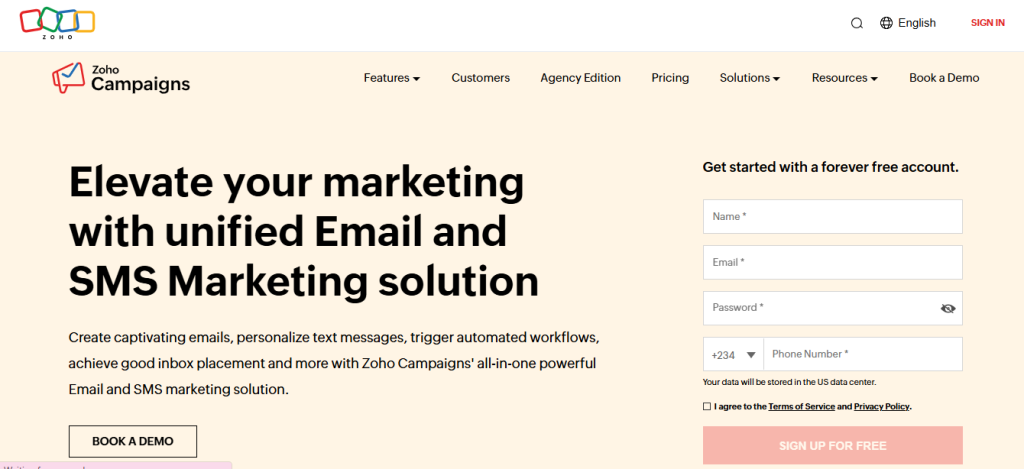
Zoho offers a complete suite of marketing tools, from CRM to social media management, making it one of the most affordable and versatile options on the market.
Key Features:
- Comprehensive CRM and lead management.
- Social media, email, and analytics tools.
- Extensive third-party integrations.
Pros:
- Easy to use and highly functional for small businesses.
Cons:
- Not as feature-rich as enterprise-grade tools.
Best For: Budget-conscious small to mid-sized businesses.
9. Keap (Infusionsoft)
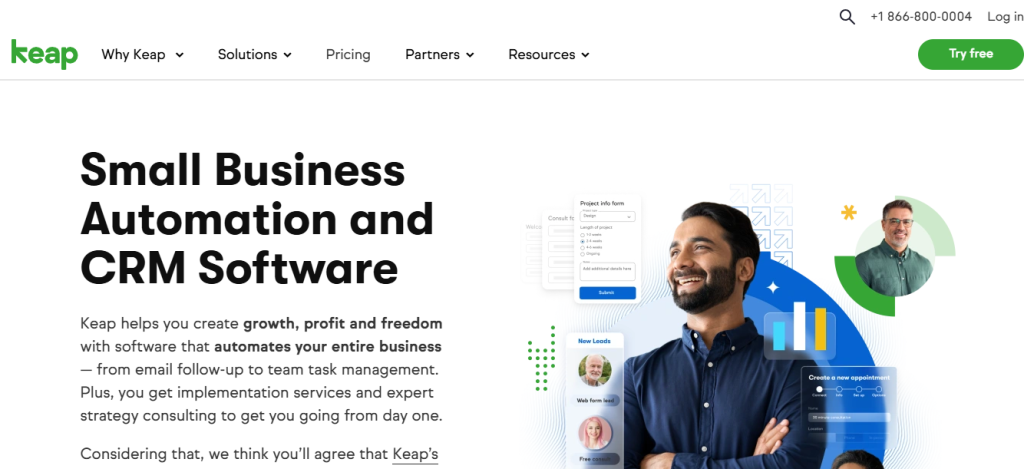
Keap combines marketing automation, CRM, and invoicing tools, making it a standout choice for service-based businesses and entrepreneurs.
Key Features:
- Automation workflows tailored for small businesses.
- Built-in e-commerce and invoicing tools.
- Streamlined customer management.
Pros:
- Strong CRM and invoicing features.
Cons:
- Dated interface compared to newer tools.
Best For: Service-oriented businesses needing marketing and invoicing in one platform.
Related: 10 Best AI Sales Chatbots for Your Business in 2025
10. Autopilot
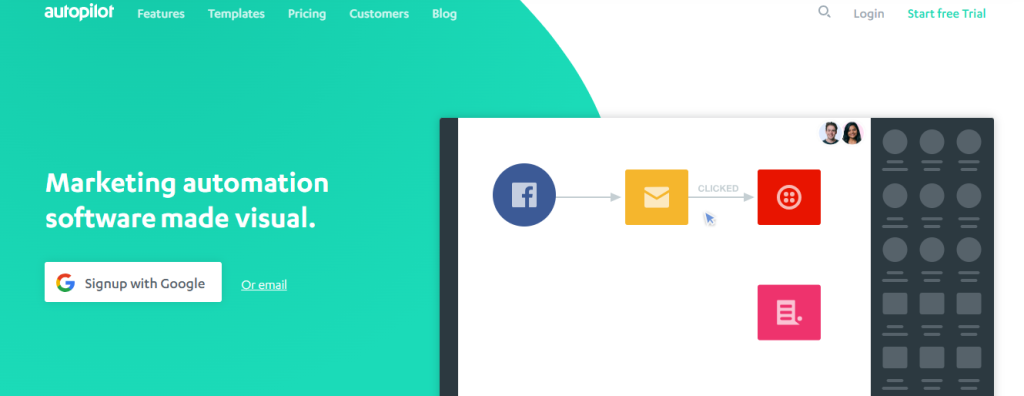
Autopilot is known for its visual workflow builder, simplifying the process of creating and managing customer journeys.
Key Features:
- Drag-and-drop workflow interface.
- Multi-channel marketing via email and SMS.
- Integrations with external CRMs.
Pros:
- Intuitive interface.
Cons:
- Lacks built-in CRM functionality.
Best For: Small businesses focusing on simple, effective customer journeys.
How to Choose the Right Marketing Automation Software
Finding the right tool involves aligning your business needs with the platform’s capabilities. Here are key factors to consider:
- Define Your Needs: Identify must-have features like CRM integration, analytics, or multi-channel marketing.
- Set a Budget: Choose a platform that fits your budget and offers a solid ROI.
- Evaluate Scalability: Ensure the software can grow with your business.
- Check Integrations: Look for tools that work seamlessly with your existing systems.
- Consider Training and Support: Strong customer support and learning resources are crucial for successful adoption.
Conclusion
The best marketing automation software depends on your business size, goals, and budget. Whether you’re a small business owner, e-commerce retailer, or enterprise marketer, there’s a tool designed to meet your needs. Explore free trials and demos to find the perfect match and start transforming your marketing strategies today.
