

10 Best Unified Messaging Platform in 2026
In a world where businesses connect with customers across countless digital channels, the need for a single, efficient, and integrated messaging system has never been greater. Gone are the days when emails were the only way customers reached out to companies.
Today, businesses juggle emails, SMS, live chats, social media messages, WhatsApp, and even voice communications—all of which can become overwhelming without the right system in place. That’s where unified messaging platforms come in.
A unified messaging platform consolidates all communication channels into a single, user-friendly interface, enabling businesses to respond quickly, collaborate effectively, and deliver exceptional customer service. Whether you’re a startup, a mid-size business, or a large enterprise, leveraging a reliable unified messaging platform can greatly enhance your customer experience and internal productivity.
In this guide, we’ll explore what unified messaging platforms are, their benefits, and the top 10 platforms to consider in 2025. Lets dive in.
What is a Unified Messaging Platform?
A unified messaging platform is a communication system that brings together different types of messaging services—such as email, SMS, live chat, voice mail, social media messages, and real-time messaging—into one centralized hub. It acts as a single point of access for both incoming and outgoing communications, ensuring that users no longer need to switch between apps to manage messages.
These platforms are particularly valuable for customer-facing teams, such as sales and support, who need to interact with customers across multiple channels while maintaining context and consistency. Unified messaging also facilitates seamless collaboration among team members, as everyone can view message histories, assign tasks, or jump into ongoing conversations without confusion.
Benefits of Unified Messaging Platforms
Unified messaging platforms provide a powerful set of benefits that can transform how businesses manage communication and customer relationships. Here’s a more in-depth look at the key advantages:
1. Centralized Communication
One of the biggest challenges for modern businesses is managing messages across multiple channels. Unified messaging platforms bring all these conversations into a single interface. This centralized communication means team members no longer need to toggle between different apps or devices to check messages. Everything—whether it’s an email, social media message, or live chat—is organized and accessible in one place. This not only saves time but also ensures that no message slips through the cracks.
2. Increased Efficiency
When your team doesn’t have to waste time jumping from one platform to another, they become significantly more efficient. Unified messaging streamlines workflows by reducing friction. Agents can handle more queries in less time, and tasks like replying, tagging, or routing messages can be automated or simplified. This efficiency translates into faster response times and a more productive team.
3. Improved Customer Experience
From the customer’s perspective, a unified platform means consistent, timely service. Whether they reach out via Facebook Messenger, email, or live chat, customers get responses that are quick and informed. Since agents have access to full conversation histories and customer data in one view, they can offer more helpful and personalized responses. The result is better customer satisfaction and loyalty.
4. Enhanced Collaboration
Unified messaging platforms are built with collaboration in mind. Internal teams can easily work together in real time, share notes on customer issues, tag teammates who need to step in, and assign tasks. This kind of collaboration ensures that messages are handled by the right people without duplication of effort or confusion. It fosters team synergy and boosts accountability.
5. Context-Rich Interactions
Context is everything when it comes to effective customer support. Unified platforms preserve entire conversation threads, regardless of the channel. This gives agents the full picture of each customer’s journey, including previous interactions, order history, and preferences. Armed with this information, agents can offer quick resolutions and avoid asking customers to repeat themselves.
6. Automated Workflows
Modern unified messaging platforms come with a suite of automation tools. These include routing rules that send messages to the appropriate departments, canned responses for frequently asked questions, and chatbots that handle basic queries instantly. Additionally, analytics dashboards help teams measure performance, track KPIs, and refine strategies. Automation makes communication smarter and more scalable.
7. Cost Efficiency
Managing multiple tools for different communication channels can be expensive—not to mention the cost of training and maintaining separate systems. Unified messaging platforms consolidate these tools into a single solution, reducing licensing fees, minimizing IT maintenance, and cutting operational costs. Over time, this consolidation results in significant savings.
By unifying communications, businesses gain speed, clarity, and consistency—all of which are essential in today’s competitive digital landscape.
10 Best Unified Messaging Platform
Now, let’s take a look at 10 of the best unified messaging platforms that businesses can use in 2025 to streamline their communication strategies.
1. SalesGroup AI
SalesGroup is a unified messaging and sales enablement platform designed to help teams connect with customers across SMS, email, WhatsApp, and web chat. Its key strength lies in enabling real-time, personalized engagement with automation and CRM integration.
SalesGroup lets teams build automated workflows, track customer journeys, and access real-time analytics. It also features robust collaboration tools that let sales teams assign messages, track conversation ownership, and ensure a smooth handoff between departments. With its unified inbox, businesses can offer an omnichannel experience while maintaining consistency across all touchpoints.
Best for: B2B and SaaS companies seeking a balance between communication and sales.

2. Tidio
Tidio is an all-in-one customer service platform that combines live chat, chatbots, email, Messenger, and Instagram messages in one interface. It’s a favorite for small businesses and eCommerce stores due to its ease of use and powerful automation features.
The standout feature of Tidio is its AI-powered chatbot builder that helps automate common queries, lead generation, and customer onboarding. The dashboard gives businesses a unified view of every conversation, along with customer data and browsing history. Integration with platforms like Shopify, WordPress, and Zapier makes it versatile and scalable.
Best for: Small and medium businesses looking for automation and multi-channel support.

3. Zendesk
Zendesk has long been a powerhouse in customer support and now includes omnichannel messaging under its Zendesk Suite. It brings together live chat, email, social media messaging, voice, and web widgets under one umbrella.
Zendesk’s strengths lie in its robust ticketing system, knowledge base integration, and AI tools that enhance agent productivity. Teams can create macros, route queries based on rules, and analyze customer satisfaction metrics. Its scalability and security features make it suitable for enterprises handling large volumes of queries.
Best for: Enterprises and fast-growing companies with complex support needs.

4. Intercom
Intercom is a customer messaging platform that supports live chat, bots, email, and outbound messaging. It’s built for support, marketing, and sales teams looking to personalize interactions at scale.
One of Intercom’s core strengths is its behavioral targeting, which allows businesses to send personalized messages based on how users interact with their website or app. With its sleek messenger, businesses can onboard new users, provide instant support, or re-engage inactive customers.
Best for: SaaS companies and digital products that prioritize user onboarding and in-app engagement.

5. Freshchat (by Freshworks)
Freshchat is a modern messaging software designed for customer engagement. It includes live chat, email, Messenger, WhatsApp, and Apple Business Chat in a single inbox.
Freshchat comes with intelligent chatbots, conversation routing, campaign tools, and contextual messaging. It integrates smoothly with Freshdesk and other Freshworks tools, allowing for a seamless customer service experience. It also offers multilingual support, making it suitable for global businesses.
Best for: Mid-sized businesses that need rich messaging capabilities with CRM integration.

6. LiveAgent
LiveChat provides a complete helpdesk solution with a strong emphasis on unified communication. It brings together emails, live chat, calls, and social media messages into one shared inbox.
With features like SLA tracking, ticketing, internal notes, and automation, Livechat helps support teams manage customer interactions efficiently. Its real-time chat feature is especially fast, offering proactive messages and chat invitations based on user activity.
Best for: Customer support teams looking for a cost-effective and reliable messaging solution.

7. HelpCrunch
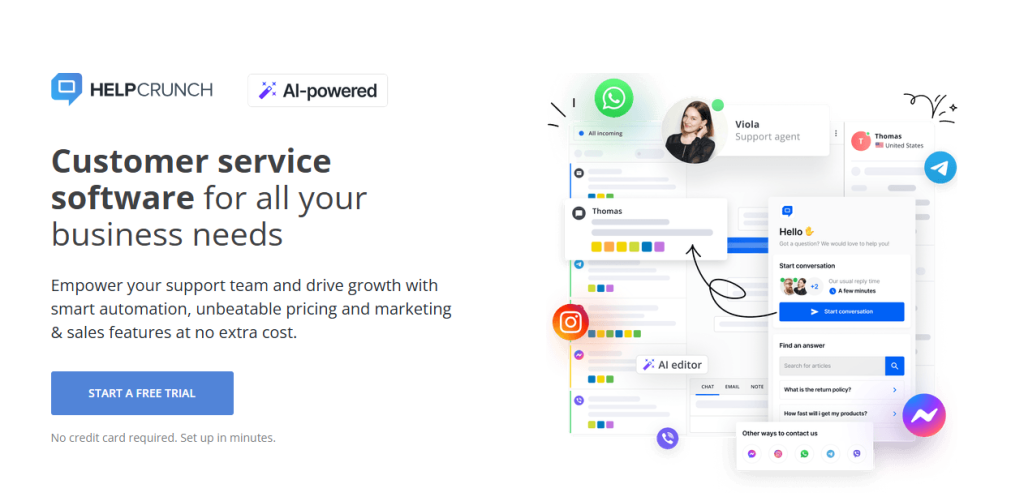
HelpCrunch is an all-in-one communication platform tailored to startups and SaaS businesses. It includes live chat, email automation, and popups in a single suite.
What sets HelpCrunch apart is its balance between marketing and support. It allows users to create email campaigns, track user behavior, and use chat-based lead generation tactics. It’s perfect for businesses that want to engage customers across the lifecycle—from first visit to retention.
Best for: Startups and SaaS platforms that want to combine customer support with marketing automation.
8. Sendinblue Conversations (Brevo)
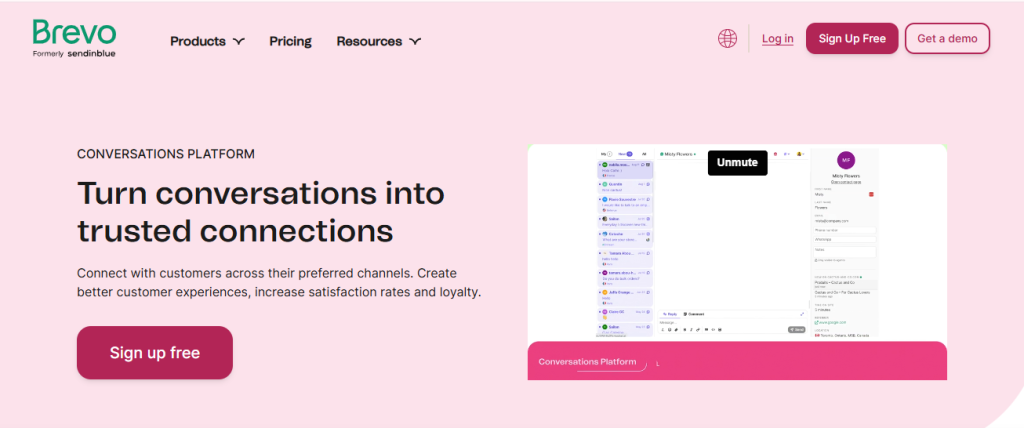
Sendinblue (now Brevo) Conversations is a part of Brevo’s full-stack marketing platform. It brings live chat, Facebook Messenger, and team collaboration into one platform.
It’s deeply integrated with the rest of the Brevo ecosystem, making it easy to manage marketing campaigns and communication from the same place. It’s also GDPR-compliant and offers a free plan for small teams.
Best for: Businesses already using Brevo for marketing who want to expand into unified messaging.
9. Crisp
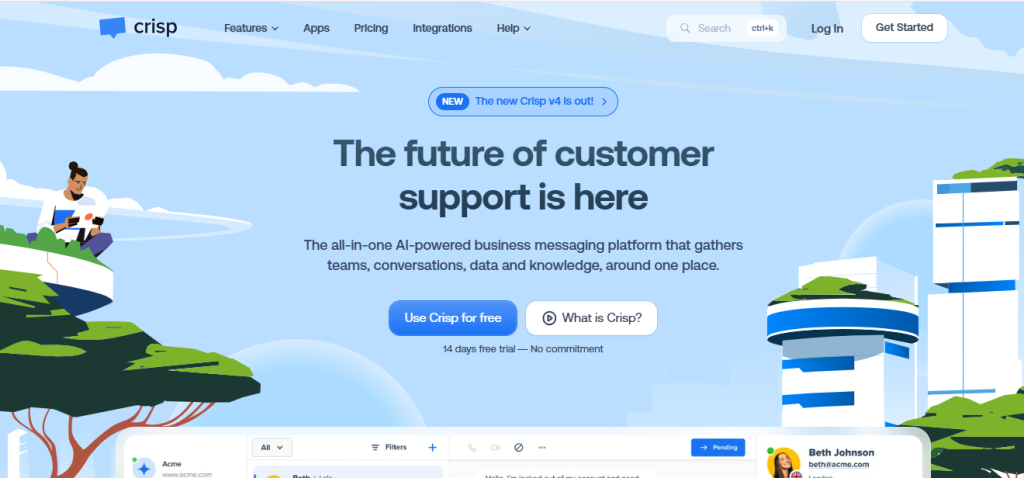
Crisp is a customer messaging platform designed to unify support, sales, and marketing conversations across live chat, email, Messenger, and more. Its standout features include a shared inbox, knowledge base, chatbot builder, and co-browsing tool.
Crisp’s MagicBrowse feature allows support agents to see exactly what users are doing on the website in real time. This, along with instant translations and real-time collaboration, makes support faster and more accurate.
Best for: Tech-savvy businesses and agencies looking for detailed real-time user interaction tools.
10. Drift
Drift transforms your email inbox into a collaborative workspace. It’s a shared inbox tool that connects email, SMS, live chat, and social messages into one view.
Drift excels at team collaboration. Users can assign conversations, add internal comments, and track SLA deadlines. It’s designed for companies that want email-like simplicity with powerful team features.
Best for: Teams that rely heavily on email but want better visibility and accountability across messages.

Conclusion
Choosing the right unified messaging platform depends on your team size, industry, channels you use, and how much automation you need. Whether it’s SalesGroup for sales engagement, Zendesk for enterprise-grade support, or Tidio for eCommerce automation, each platform offers unique features that can elevate your customer interactions.
By investing in a unified messaging solution, you’re not just streamlining communication—you’re improving team performance, boosting customer satisfaction, and positioning your business for scalable growth. In a digitally connected world, that kind of alignment isn’t just helpful—it’s essential.
