
10 Best Conversational AI platforms 2026
The rise of conversational AI has completely transformed how businesses communicate with customers. From live chat and automated workflows to AI-powered virtual assistants, these platforms now serve as the bridge between brands and their customers offering faster, smarter, and more human-like interactions across every touchpoint.
But not all conversational AI tools are built the same. Some excel at automating support, others focus on sales or engagement and only a few deliver a complete, unified experience across all channels. To help you choose the right solution for your business, we’ve reviewed the top-performing conversational AI platforms for 2025.
What is Conversational AI and How Does It Work?
Conversational AI combines natural language processing (NLP), machine learning, and automation to enable computers to understand, process, and respond to human language in a natural, contextual way. It powers chatbots, voice assistants, and messaging systems that can interpret user intent, recall previous interactions, and deliver accurate, personalized responses just like a human agent would.
Unlike traditional chatbots that rely on pre-set scripts, conversational AI platforms learn from every interaction, improving accuracy and response quality over time. They integrate with CRMs, help desks, and analytics tools, giving businesses a single source of truth for customer engagement.
10 Best Conversational AI Platforms for businesses
1. SalesGroup AI

SalesGroup AI is an advanced conversational AI platform designed to help businesses automate customer communication, boost engagement, and drive sales all from a single unified dashboard.
Built with intelligent automation, multilingual support, and natural language processing (NLP), SalesGroup AI enables companies to deliver instant, human-like conversations across web, email, social, and live chat.
Unlike traditional chatbot tools, SalesGroup AI combines AI-powered chat automation, live chat, survey and form builders, into one integrated platform. This makes it a complete customer interaction suite, ideal for businesses that want to streamline communication without juggling multiple tools.
The platform’s conversational engine understands context, tone, and intent, allowing it to provide relevant answers, route conversations intelligently, and even personalize offers or responses based on user behavior. Its real-time analytics dashboard gives teams full visibility into performance metrics, helping them refine strategies and improve customer satisfaction.
Key Features
- Intelligent chatbot automation for customer support and lead generation
- Omnichannel messaging (web, email, WhatsApp, social)
- Built-in survey and form builder for feedback and data collection
- Real-time analytics and reporting
- Seamless integrations with popular CRM and e-commerce platforms
- Easy-to-embed widgets and customizable UI
Pros
- Unified platform combining multiple AI tools in one place
- Easy to set up and manage—no technical expertise required
- Supports multilingual and omnichannel communication
- Scalable for both small teams and enterprise operations
- Offers advanced personalization and contextual understanding
2. Zendesk
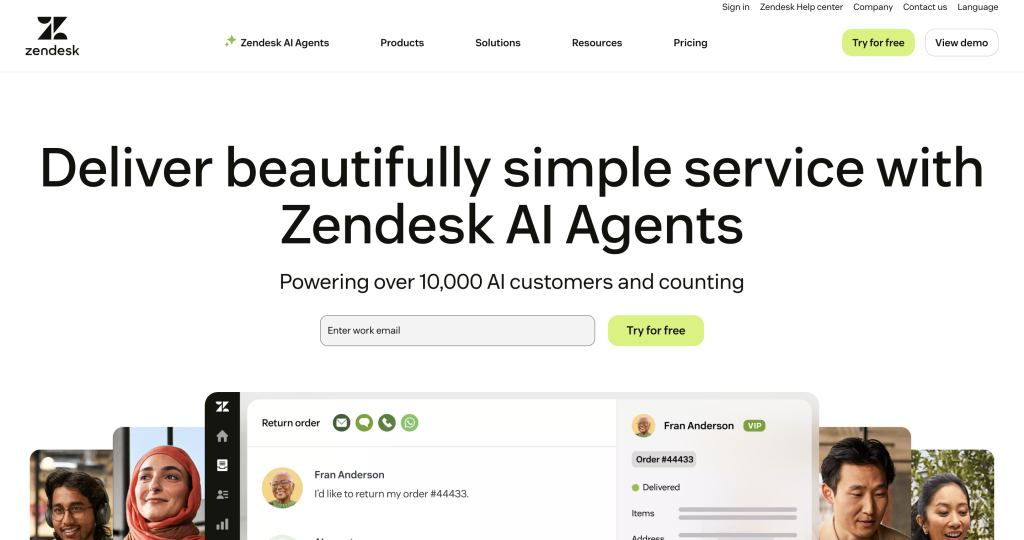
Zendesk is a leading AI customer service platform designed for ease of setup, customization, and scalability. It leverages AI trained on billions of customer interactions to enhance both self-service and agent-assisted support. With automation, workflow management, and a marketplace of over 1,800 integrations, Zendesk is ideal for businesses seeking an all-encompassing support ecosystem.
Key Features
- AI-powered automation and workflow management
- Omnichannel case management (chat, email, social, and phone)
- Built-in QA and workforce management tools
- 1,800+ app integrations
- Advanced analytics and reporting
Pros
- Easy to customize without developers
- Excellent automation and workflow tools
- Strong omnichannel integration
- Ideal for large support teams
Cons
- Pricing can be high for small teams
- Initial setup may feel complex for beginners
3. Fin by Intercom
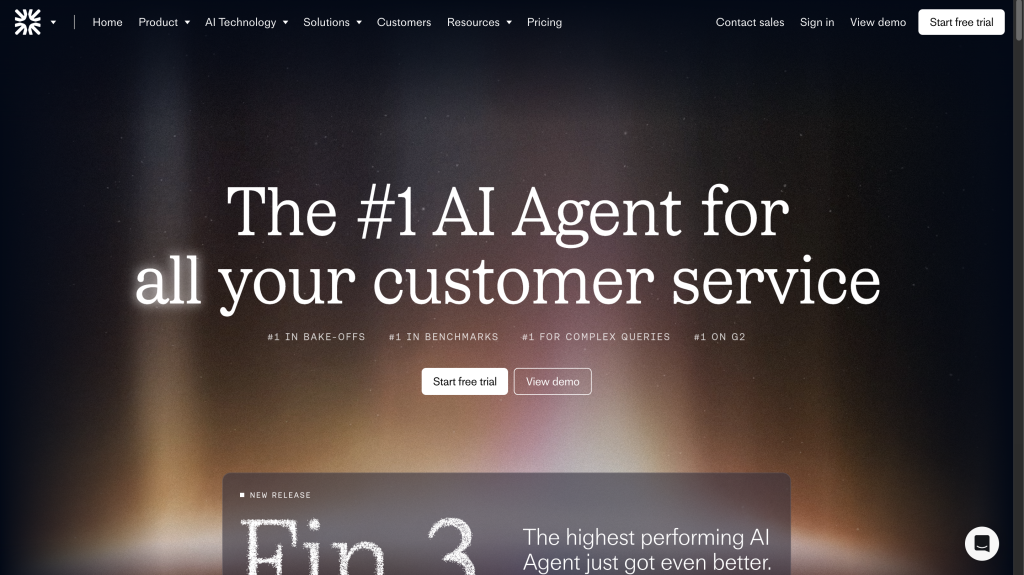
Fin by Intercom is an advanced AI agent built for customer service automation. It handles complex tasks such as refunds, troubleshooting, and dispute management with exceptional accuracy. Fin integrates with major helpdesks like Zendesk, HubSpot, and Salesforce, no migration needed.
Key Features
- AI agent powered by the Fin AI Engine™
- No-code configuration
- Works with any helpdesk platform
- Analytics and testing tools for optimization
- Pricing from $0.99 per resolution
Pros
- High accuracy and resolution rates (up to 93%)
- Affordable at scale
- Easy to implement with no coding
- Integrates with major CRMs
Cons
- Limited documentation for advanced customization
- May struggle with niche or complex requests
4. Zoho Desk
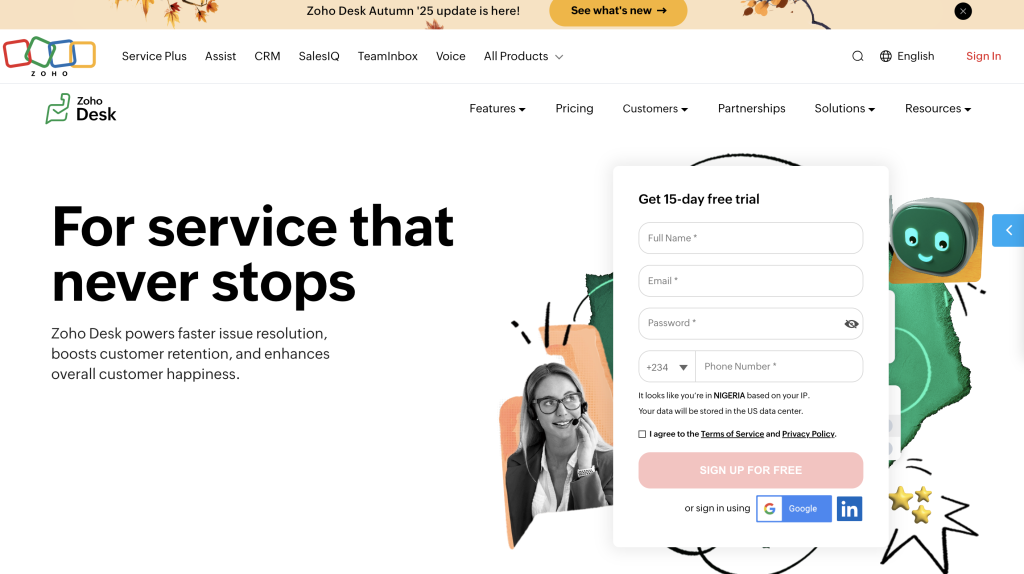
Zoho Desk helps businesses deliver consistent, high-quality support across multiple channels. It offers ticket management, AI-powered automation, and seamless integrations all within an intuitive interface.
Key Features
- Omnichannel ticketing system
- Built-in AI assistant (Zia)
- Workflow automation and reporting
- Integration with Zoho apps and third-party tools
Pros
- User-friendly interface
- Strong automation capabilities
- Affordable pricing tiers
- Easy integration with other Zoho products
Cons
- Limited customization options
- Steep learning curve for advanced features
5. Freshdesk
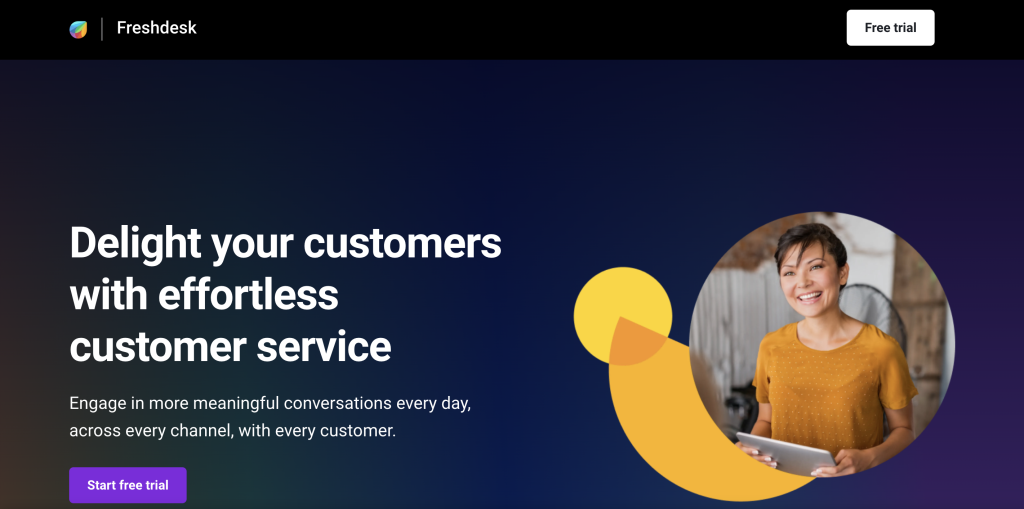
Freshdesk, by Freshworks, converts emails, calls, and chats into manageable tickets, unifying customer communication under one platform. With AI and automation tools like ticket prioritization and canned responses, it’s designed to boost team productivity.
Key Features
- AI ticket management and automation
- Omnichannel conversation management
- 150+ integrations
- Predictive support and analytics
Pros
- Easy to deploy and use
- Scalable for growing teams
- Strong reporting and collaboration tools
Cons
- Some features locked in higher-tier plans
- Reports and analytics lack full customization
- Mobile app less responsive than web version
6. Tidio

Tidio brings together live chat, chatbot automation, and AI customer service into one unified platform. Its AI agent, Lyro, uses your knowledge base to provide quick and accurate responses in your brand’s tone, achieving up to a 64% resolution rate.
Key Features
- Live chat and chatbot automation (Flows)
- AI agent (Lyro) trained on your FAQs
- Social and email integration
- Custom chat widget and analytics
Pros
- Great for SMBs
- Intuitive interface and easy setup
- Strong AI self-service capabilities
- Affordable plans
Cons
- Chatbot automation not available in free plan
- Limited analytics and customization options
- Short trial period (7 days)
7. ProProfs Chat
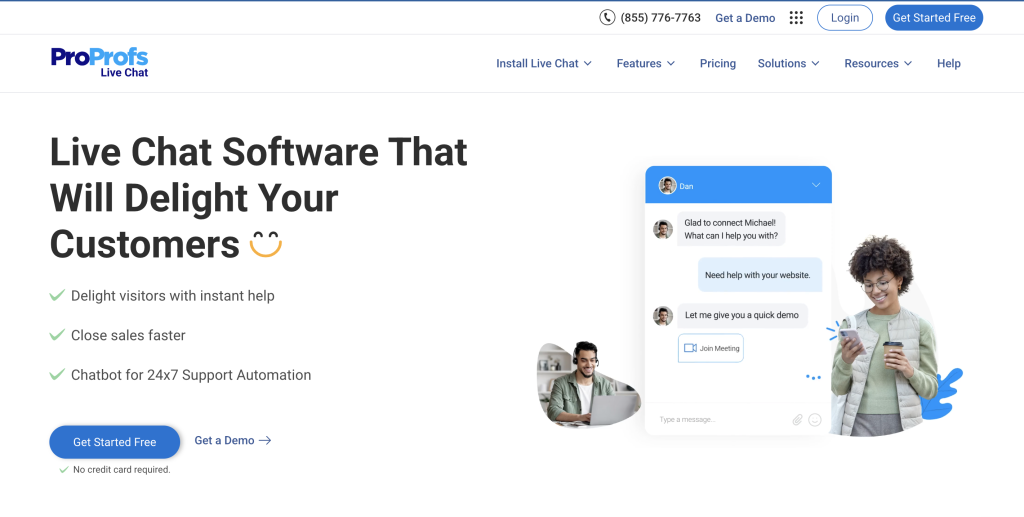
ProProfs Chat helps businesses connect with website visitors instantly. With features like real-time visitor monitoring, co-browsing, and AI-assisted chat routing, it enhances customer experience and agent productivity.
Key Features
- Real-time visitor tracking and analytics
- AI-powered chat routing
- Customizable chat widgets
- Integration with CRMs and helpdesks
- Post-chat surveys and reports
Pros
- Simple setup and user-friendly interface
- Excellent real-time reporting
- Affordable for small teams
- 24/7 support and onboarding assistance
Cons
- Limited advanced chatbot capabilities
- Interface could use more customization options
8. Drift
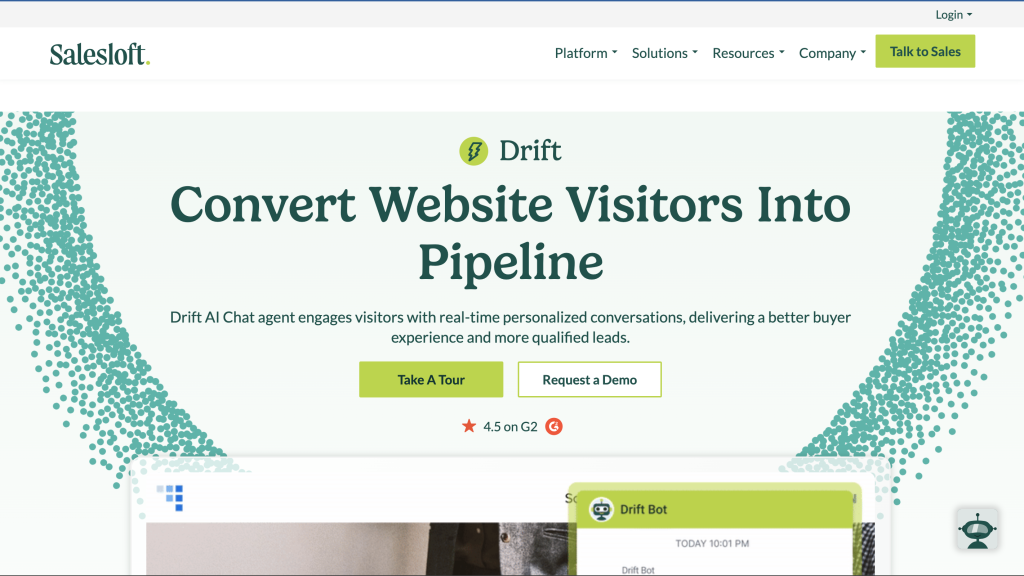
Drift focuses on sales-driven conversational AI. It helps businesses engage website visitors, qualify leads, and schedule demos in real time. With powerful integrations and data-driven insights, Drift turns conversations into conversions.
Key Features
- Conversational lead qualification
- Personalized playbooks and workflows
- Integration with CRMs like Salesforce
- Analytics and pipeline tracking
Pros
- Ideal for B2B lead generation
- Easy-to-use conversational interface
- Deep CRM integrations
Cons
- Expensive for small businesses
- Requires setup time for complex workflows
9. Ada
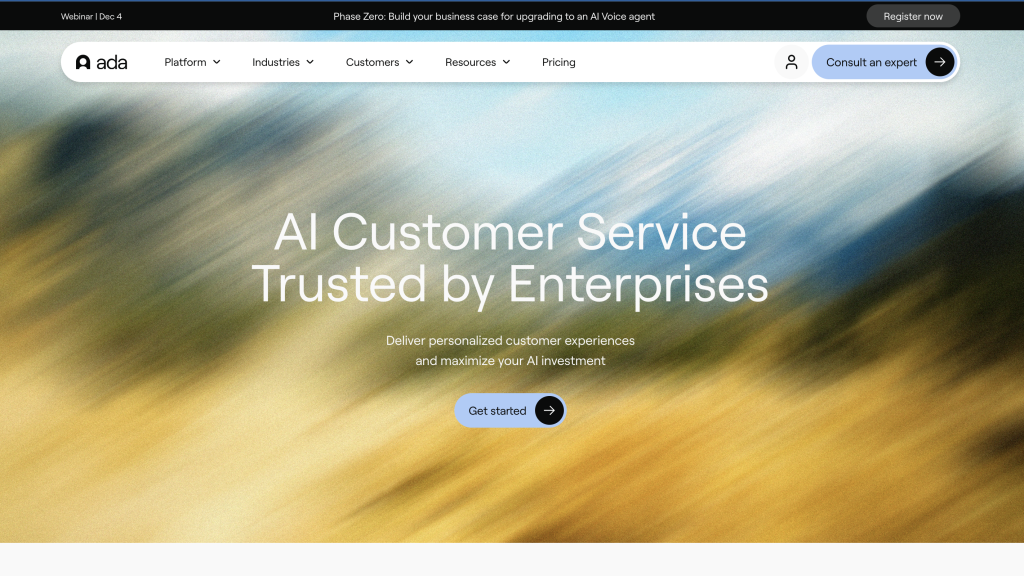
Ada is a no-code conversational AI platform that helps enterprises automate customer interactions at scale. It integrates with major tools and provides analytics to measure performance across all touchpoints.
Key Features
- No-code bot builder
- Advanced AI and NLP
- Multilingual support
- Deep CRM and marketing integrations
Pros
- Great for large enterprises
- Strong analytics and reporting
- Easy to deploy and customize
Cons
- Higher pricing tiers
- Can be too complex for small teams
10. LivePerson

Best for: Large-scale AI-driven customer engagement
LivePerson offers AI messaging and automation solutions for enterprise support and sales teams. Its conversational cloud helps brands connect with customers through messaging apps, voice, and social platforms.
Key Features
- Conversational Cloud for omnichannel messaging
- AI intent recognition and automation
- Integration with major CRMs and contact centers
Pros
- Excellent AI-driven engagement tools
- Enterprise-grade scalability
- Real-time analytics and insights
Cons
- Premium pricing
- Steep learning curve
Conclusion
While each tool on this list offers unique strengths, SalesGroup AI stands out as the most complete and versatile platform. It unites chatbot automation, AI-driven insights, surveys, and content creation into one easy-to-use ecosystem, empowering businesses to create smarter, faster, and more meaningful customer interactions.
Ready to elevate your customer experience with conversational AI? Try SalesGroup AI today.
