

Multilingual Customer Support: What it is & How to Execute
It is not news that geographical boundaries no longer confine businesses. With over 350 spoken in the United States alone, companies face an unprecedented opportunity and challenge to serve an increasingly diverse customer base.
This guide explores why multilingual consumer support has become a crucial business imperative and how to effectively implement it using AI.
What is Multilingual Consumer Support?
Multilingual customer support means offering the same high-quality service in multiple languages, ensuring customers receive assistance in their preferred language But this goes beyond just translating words; it also involves understanding cultural differences and using local communication styles for a more personalised experience.
The Benefits of Multilingual Support in Customer Relationship Management
1. Enhanced Customer Experience and Loyalty
Research shows that 70% of global consumers consider native-language support essential for a complete customer experience. This preference goes beyond convenience, it’s about respect and inclusion. When customers receive support in their preferred language, they feel valued and understood, fostering stronger brand loyalty and higher retention rates.
2. Market Expansion and Revenue Growth
A report by Unbabel found that nearly 70% of consumers would switch to brands offering support in their native language. This presents a significant opportunity for businesses to:
- Capture new market segments
- Increase global market share
- Drive revenue growth through better customer acquisition and retention
- Gain a competitive edge in underserved linguistic markets
3. Competitive Differentiation
Many brands still lack comprehensive multilingual support, creating an opportunity for businesses that invest in it. Providing support in multiple languages helps companies:
- Stand out from competitors
- Improve customer trust and satisfaction
- Break language barriers in new markets
Channels for Effective Multilingual Customer Support
1. Digital Channels
Businesses can enhance multilingual customer support through various digital channels. Email communication can be streamlined with multilingual templates, ensuring consistent messaging across different languages.
Self-service knowledge bases and help centers provide customers with the information they need in their preferred language, reducing reliance on live support. AI-powered chatbots with real-time translation capabilities allow businesses to engage with customers instantly, no matter their language. Additionally, maintaining a localized social media presence helps brands connect with international audiences more effectively.
2. Traditional Channels
While digital solutions are essential, traditional channels still play a crucial role in multilingual support. Phone support with multilingual representatives ensures that customers receive personalized assistance in their native language.
In-person support, where applicable, provides direct interaction for complex issues. Printed materials and documentation, such as product manuals and FAQs, should also be available in multiple languages to accommodate diverse customer needs.
3. AI and Automation
AI and automation significantly enhance multilingual customer support. AI-powered chatbots can detect a customer’s language in real time and provide responses in their preferred language, eliminating language barriers.
Automated routing systems ensure that customers are directed to the appropriate language specialists, improving efficiency. Machine learning further enhances the accuracy of translations over time, making AI-driven support more reliable and natural.
4. Support Infrastructure
A strong infrastructure is essential for delivering consistent multilingual support. Businesses should implement robust CRM systems with multilingual capabilities, allowing seamless customer interactions across different languages.
Translation management systems help maintain accuracy and consistency in translated content. Additionally, integrating quality assurance tools ensures that responses remain clear, culturally appropriate, and uniform across all languages.
5. Recruitment and Training
Hiring diverse, multilingual support staff is a key step in providing effective language support. However, language proficiency alone is not enough comprehensive cultural sensitivity training programs should be developed to equip support teams with the skills to navigate cultural differences and customer expectations.
Establishing clear communication protocols ensures smooth cross-cultural interactions, helping teams deliver a high-quality, inclusive customer experience.
Ways to Implement Multi-Lingual Support Using Salesgroup
Sign in to Your SalesGroup AI Account
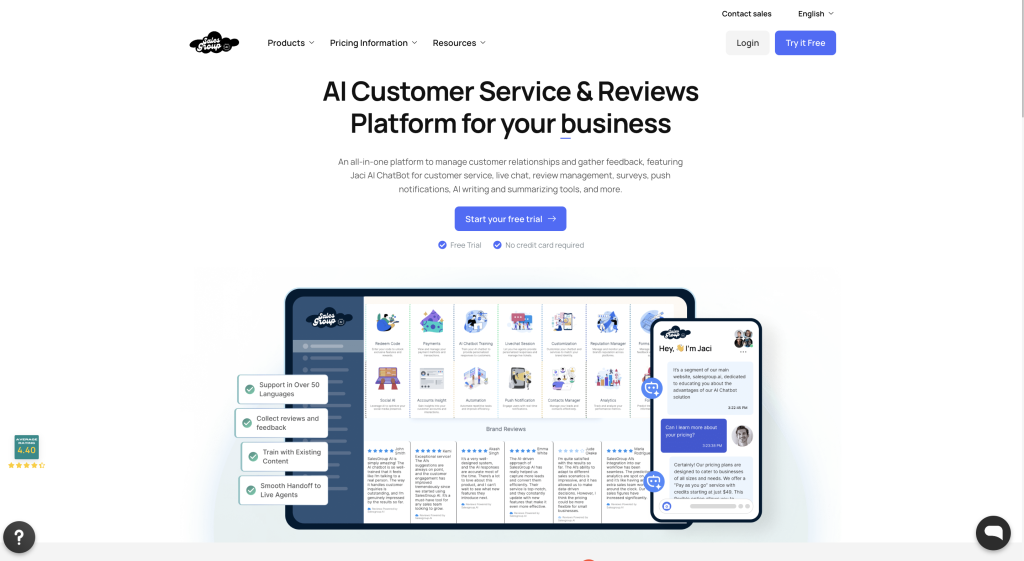
Start by signing in to your SalesGroup AI account using your login credentials.
Access the AI Dashboard
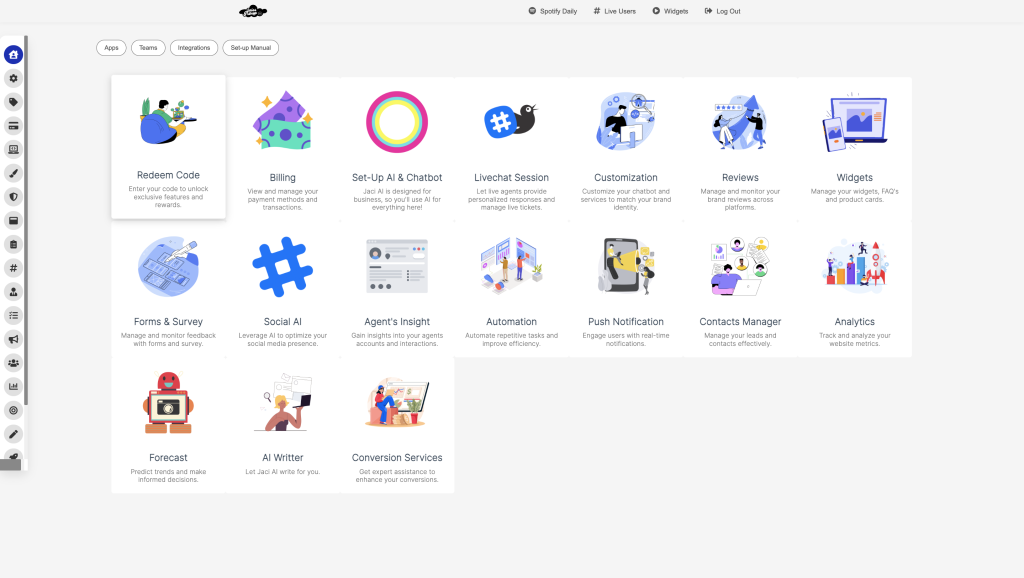
Once logged in, you will be directed to the AI dashboard, where you can manage your settings and integrations.
Navigate to Settings
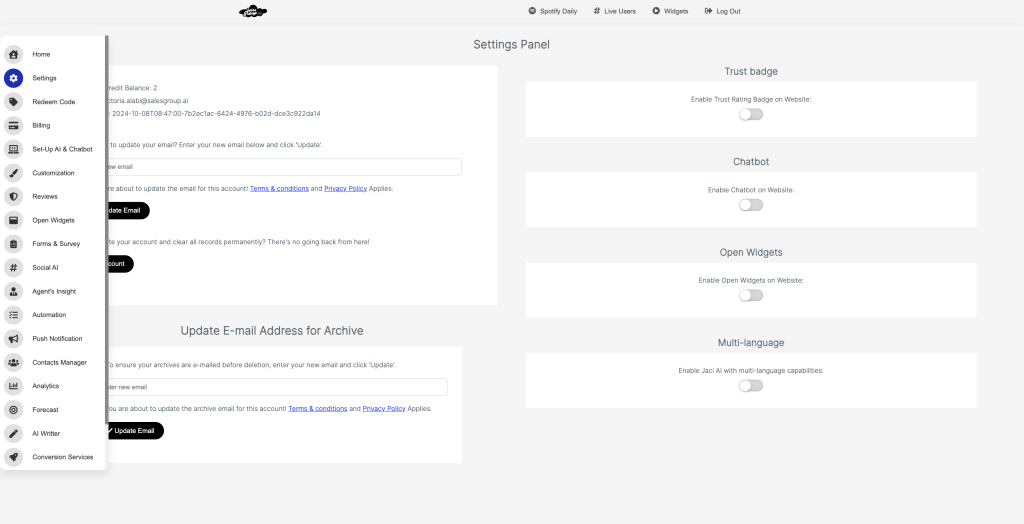
On the left-hand menu, locate and click on Settings to access the configuration panel.
Enable Multi-language Support
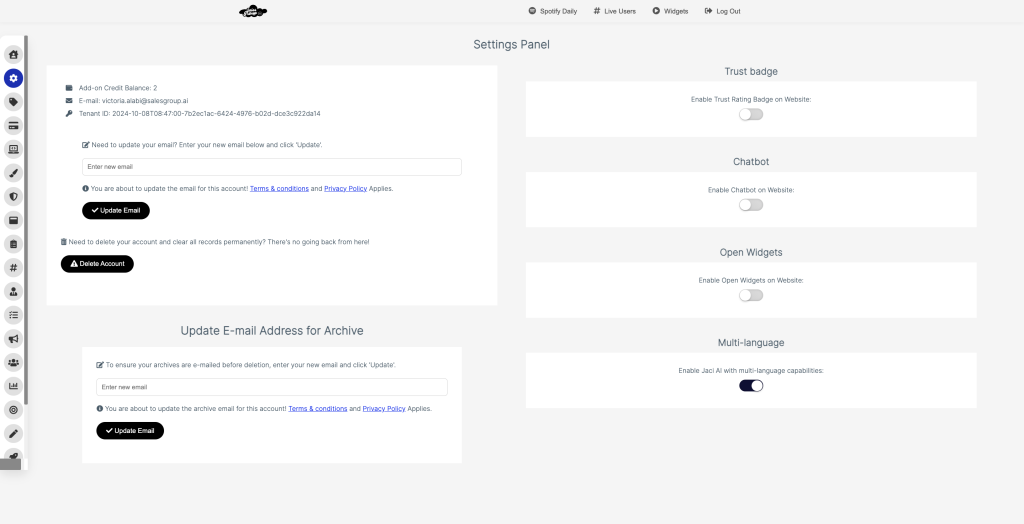
In the Settings Panel, find the Multi-language option. Toggle the switch ON to enable Jaci AI with multilingual capabilities.
How AI Transforms Multilingual Customer Support
AI is revolutionising multilingual support, enabling businesses to overcome the limitations of traditional methods and provide seamless, scalable experiences.
1. Instant Language Detection and Translation
AI instantly detects a customer’s preferred language from the first interaction, enabling smooth and natural engagement across languages.
2. 24/7 Availability Across Time Zones
AI-powered support operates round the clock, ensuring customers receive assistance anytime, anywhere.
3. Consistent Quality Across Languages
AI maintains uniform service quality across all supported languages, eliminating inconsistencies in tone, accuracy, and response time.
4. Immediate Response Times
By handling multiple inquiries simultaneously, AI eliminates wait times and language-specific queues.
5. Cost-Effective Scaling
Unlike traditional support methods that require hiring native speakers, AI enables businesses to expand multilingual support with minimal additional costs.
6. Data-Driven Insights
AI analyzes customer interactions to uncover common issues, language preferences, regional satisfaction trends, and peak support hours by language.
Best Practices for Successful Multilingual Support
- Clearly communicate supported languages, service hours, and response times.
- Develop region-specific communication guidelines and adapt support styles to cultural preferences.
- Implement regular quality checks and monitor customer satisfaction across languages.
- Design scalable systems and build flexible support processes.
Tips for Overcoming Common Challenges in Multilingual Support
- Resource Management: Start with key markets and gradually expand, leveraging technology for resource allocation and workflow management.
- Quality Consistency: Establish standardised quality metrics, create style guides, and provide regular training.
- Cost Control: Leverage technology, prioritise languages based on demand, and implement cost-effective translation solutions.
Conclusion
Ready to transform your customer support into a truly global operation? Contact us to learn how our AI-powered solutions can help you connect with customers worldwide, delivering consistent, high-quality support across all languages and time zones.
