
Help Desk vs. Service Desk: What’s the Difference?
When businesses evaluate their customer and IT support operations, the terms help desk and service desk often come up interchangeably, but they are not the same thing.
Understanding the distinction between a help desk vs. service desk is critical for any organization looking to improve efficiency, enhance customer satisfaction, and align IT support with broader business goals.
Whether you’re a growing startup or an established enterprise, choosing the right support model can have a profound impact on how quickly issues are resolved, how smoothly services are delivered, and how well your team scales. In this article, we’ll break down everything you need to know about both models and help you make the smartest choice for your organization.
Help Desk vs. Service Desk: What’s the Difference?
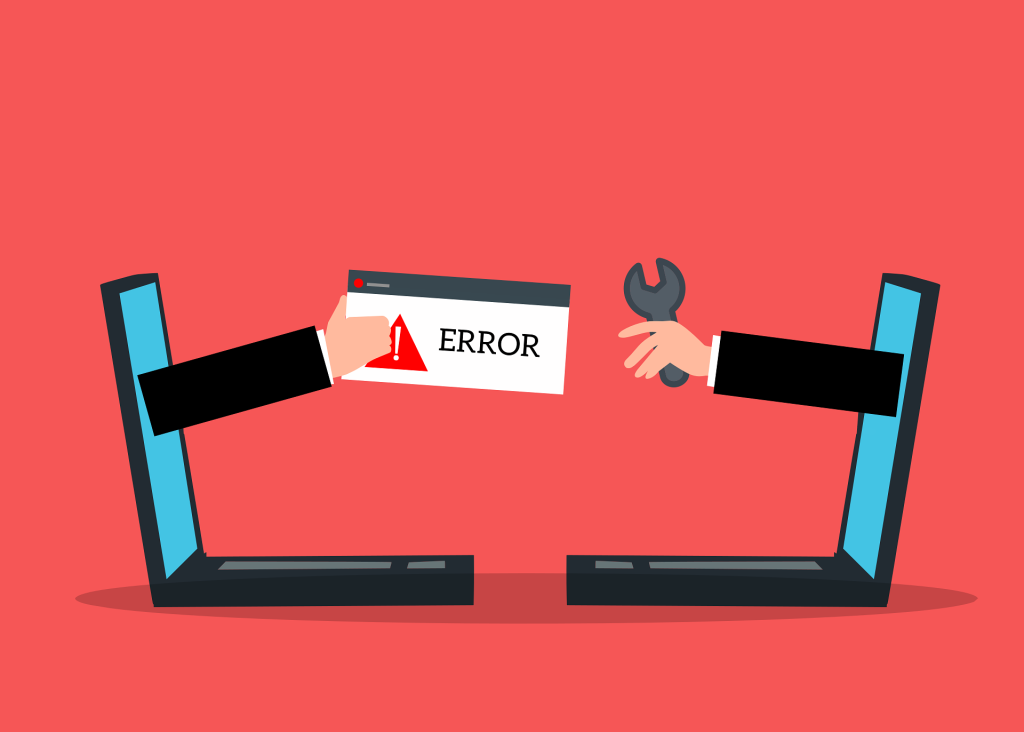
At their core, a help desk and a service desk serve different purposes, even though both exist to provide support.
A help desk is primarily reactive, it focuses on resolving individual user issues, such as a broken application, a forgotten password, or a hardware malfunction. It is tactical in nature, designed to restore normal service as quickly as possible.
A service desk, on the other hand, takes a more strategic, end-to-end approach. It manages not just incidents and requests but also change management, service-level agreements (SLAs), and alignment with business objectives.
It is the single point of contact (SPOC) between users and IT service management (ITSM).
| Criteria | Help Desk | Service Desk |
|---|---|---|
| Focus | Break-fix, incident resolution | Holistic IT service management |
| Approach | Reactive | Proactive & strategic |
| Scope | Narrow (individual issues) | Broad (entire service lifecycle) |
| ITSM alignment | Partial | Full ITIL/ITSM alignment |
| User relationship | Transactional | Ongoing & consultative |
What Is a Help Desk?
A help desk is a centralized resource designed to provide users with information and support related to a company’s products, services, or internal IT systems. Traditionally, help desks emerged as a first line of defense against technical disruptions, a place where employees or customers could report problems and get them resolved quickly.
Help desks typically handle:
- Password resets and account lockouts
- Software installation and troubleshooting
- Hardware failures and replacements
- Email and connectivity issues
- Basic user guidance and FAQs
Help desks are often best suited for small to mid-sized businesses that need a cost-effective, straightforward support solution. Their primary metric of success is speed, how fast can a ticket be opened, escalated if necessary, and resolved?
Related: 10 Best Website Tracking Tools 2026
What Is a Service Desk?
A service desk is an evolved, more comprehensive version of the help desk. It is built on ITIL (Information Technology Infrastructure Library) principles and serves as the single point of contact for all IT-related needs across an organization.
Unlike a help desk, a service desk doesn’t just react to incidents, it proactively manages service requests, change management workflows, asset tracking, and continuous service improvement.
A service desk typically covers:
- Incident management — logging, categorizing, prioritizing, and resolving issues
- Service request management — handling requests like new software, hardware provisioning, or access rights
- Change management — coordinating system updates with minimal disruption
- Problem management — identifying root causes to prevent recurring issues
- Knowledge management — building a self-service knowledge base for users
- SLA management — ensuring agreed service levels are met consistently
Service desks are ideal for larger organizations or those with complex IT environments where service continuity, compliance, and strategic alignment are non-negotiable.
Importance of Service Desks and Help Desks
Both help desks and service desks play a vital role in keeping organizations running efficiently. Here’s why they matter:
- Business continuity: Downtime is costly. Having a dedicated support function ensures that technical issues are resolved swiftly, keeping employees productive and customers satisfied.
- Customer retention: For customer-facing teams, a responsive help desk or service desk directly affects customer satisfaction scores (CSAT) and Net Promoter Scores (NPS). Users who get fast, effective support are far more likely to remain loyal.
- Employee productivity: When internal users can quickly resolve IT issues through a reliable help desk, less time is lost to disruptions. A well-run service desk can eliminate hours of productivity drain per week across an organization.
- Compliance and governance: Service desks in particular support audit trails, change management records, and documentation that are critical for regulatory compliance in industries like finance, healthcare, and legal.
- Scalability: As businesses grow, so do their support needs. A structured service desk can scale alongside the organization, managing increasing ticket volumes and complexity without sacrificing quality.
Benefits of Help Desks and Service Desks
Benefits of a Help Desk
- Quick, focused incident resolution keeps disruption to a minimum
- Simpler setup and lower cost, making it accessible for SMBs
- Centralized ticket tracking for accountability and follow-up
- Easily measurable performance through metrics like first-call resolution (FCR) and average handle time (AHT)
- Reduced burden on senior IT staff by routing common issues to first-tier agents
Benefits of a Service Desk
- End-to-end service lifecycle management aligned with ITIL best practices
- Improved visibility into IT performance with robust reporting and analytics
- Proactive identification and prevention of recurring issues through problem management
- Streamlined change management reduces the risk of outages from system updates
- Enhanced user experience through self-service portals and knowledge bases
- Better SLA management and accountability
- Integration with other business systems (CRM, ERP, monitoring tools)
Features to Look For in Help Desk and Service Desk Tools
Choosing the right tool is just as important as choosing the right model. Here are the key features to evaluate:
- Ticketing system: A robust, intuitive ticketing system is the backbone of any support tool. Look for automatic ticket creation from email, chat, or phone, smart routing, prioritization rules, and escalation workflows.
- Omnichannel support: Modern users expect help across multiple channels, email, live chat, phone, and self-service portals. The best tools consolidate all these channels into a single interface.
- Knowledge base & self-service portal: Empowering users to resolve common issues on their own reduces ticket volume and improves satisfaction. Look for easy-to-build, searchable knowledge bases.
- SLA management: The tool should allow you to define, track, and enforce SLAs for different ticket types and customer tiers, with automatic alerts for breaches.
- Reporting and analytics: Data-driven decision-making requires real-time dashboards, custom reports, trend analysis, and agent performance tracking.
- Automation and AI: Intelligent automation features like auto-categorization, chatbot triage, canned responses, and AI-powered suggestions significantly improve agent productivity.
- ITSM integrations: For service desks, ensure compatibility with ITIL processes and integrations with monitoring tools, CRMs, ERPs, and asset management platforms.
- Mobile accessibility: Support teams and users should be able to access the system on the go via mobile-friendly interfaces or dedicated apps.
- Security and compliance: Role-based access controls, audit logs, GDPR compliance, and data encryption are non-negotiable for enterprise environments.
- Scalability: The tool should grow with your business, handling increasing ticket volumes, more complex workflows, and expanding team sizes without performance degradation.
How to Choose Help Desk and Service Desk Tools: Best Practices
Selecting the right support tool requires a structured approach. Follow these best practices to make a confident, well-informed decision:
1. Assess your current and future needs
Before evaluating any tool, take stock of your support volume, team size, existing processes, and growth projections. A startup with 10 employees has different needs than an enterprise with 5,000 users.
2. Define your support model
Decide upfront whether you need a help desk or a service desk. This clarity will narrow your options significantly and prevent you from over-investing or under-investing.
3. Involve key stakeholders
Include IT teams, customer support managers, end users, and finance decision-makers in the evaluation process. Each brings a different perspective that reduces the risk of blind spots.
4. Request demos and free trials
Never commit to a tool based on marketing materials alone. Insist on live demos with your real use cases, and take advantage of free trials to test the tool under realistic conditions.
5. Evaluate total cost of ownership (TCO
Beyond the subscription price, account for implementation costs, training, customization, integrations, and ongoing support from the vendor.
6. Check vendor reputation and support
Look for vendors with strong customer reviews, a responsive support team, a robust community, and a clear product roadmap. You want a long-term partner, not just a software provider.
7. Prioritize integration compatibility
Ensure the tool integrates seamlessly with your existing stack — CRM, HR, IT monitoring, communication tools, and more. Poor integrations create data silos and inefficiencies.
8. Plan for change management
Introducing a new support tool requires training, process redesign, and buy-in from your team. Allocate time and resources for adoption to maximize ROI.
Final Thoughts
The choice between a help desk and a service desk isn’t just a technical decision, it’s a strategic one. Understanding the distinctions, capabilities, and best-fit scenarios for each empowers your organization to deliver better support experiences, reduce operational friction, and align IT with business outcomes.
At Salesgroup, we help businesses evaluate, implement, and optimize their support operations. Whether you’re just getting started with a help desk or looking to scale up to a full-service desk solution, our team is here to guide you every step of the way.
Ready to transform your support operations? Contact the Salesgroup team today.
Frequently Asked Questions (FAQs)
1. Is a help desk the same as a service desk?
No. While they are often used interchangeably, they serve different purposes. A help desk is primarily reactive and focused on resolving individual user issues (incidents). A service desk takes a broader, strategic approach aligned with ITIL, managing the full IT service lifecycle including incidents, service requests, changes, and problems.#
2. Which is better — a help desk or a service desk?
Neither is inherently better; it depends on your organization’s size, complexity, and goals. Smaller businesses with straightforward IT needs may find a help desk sufficient.
Larger organizations with complex IT environments, strict SLAs, and compliance requirements will typically benefit more from a full service desk.
3. Can a help desk evolve into a service desk?
Yes. Many organizations start with a help desk and gradually expand its capabilities — adding ITSM processes, self-service portals, change management workflows, and SLA tracking — effectively transforming it into a service desk over time. Choosing scalable software from the start makes this transition smoother.
4. What are the most important metrics for a help desk or service desk?
Key metrics include: First Contact Resolution (FCR) Rate, Average Handle Time (AHT), Ticket Volume and Backlog, SLA Compliance Rate, Customer Satisfaction Score (CSAT), Mean Time to Resolve (MTTR), and Escalation Rate. The right metrics depend on your specific goals, but these give a solid baseline for performance measurement.
5. How do I know when to upgrade from a help desk to a service desk?
Consider upgrading when your organization experiences: high ticket volumes that basic tools can’t manage; recurring issues that require root-cause analysis; growing compliance and audit requirements; the need for structured change management; or when your support function needs to align more closely with business and IT strategy.
If your team is spending more time firefighting than planning, it may be time to evolve.
