

Top 10 Agentic AI companies of 2026
The landscape of artificial intelligence is undergoing a profound transformation, moving beyond the static, reactive models of the past toward a new, dynamic paradigm: Agentic AI. For years, AI systems have been primarily a tool for prediction and automation, passively executing commands or analyzing data. Agentic AI, however, represents a fundamental shift.
These systems are designed to operate with a degree of autonomy, acting as “agents” that can perceive their environment, reason about complex problems, plan a sequence of actions, and execute those plans to achieve a defined, high-level goal. This goal-oriented approach allows them to handle complex, multi-step tasks that were previously the exclusive domain of humans.
The impact of this technology is set to be immense, revolutionizing industries from logistics and finance to customer service and scientific research. In this article, we will explore the leading companies at the forefront of this revolution, examining their groundbreaking products and the challenges they must navigate to shape the future of AI. Let’s dive in.
What is Agentic AI?
At its heart, Agentic AI is an intelligent system that can perform actions on behalf of a user or system to accomplish a specific objective. An agent is defined by its ability to engage in a continuous cycle of perception, reasoning, action, and adaptation. This process allows it to be a proactive problem-solver rather than a passive responder.
The fundamental loop of an agentic AI system can be broken down into these key stages:
1. Perception: The agent continuously gathers information from its environment, which could be a digital space like a company’s database, a physical space through sensors, or user inputs. This could be anything from an email from a client to real-time stock market data.
2. Reasoning and Planning: Based on the goal it has been given, the agent processes the perceived information. It then constructs a plan—a logical, step-by-step sequence of actions—that it believes will lead to the desired outcome. This planning stage is what sets agentic AI apart, as it involves multi-step thinking and strategic decision-making.
3. Action: The agent executes the steps of its plan. These actions could involve sending an email, updating a database, running a complex query, or even interacting with other software and APIs. The agent is a doer, not just a thinker.
4. Adaptation: After each action, the agent perceives the new state of the environment and evaluates its progress. If the outcome is not as expected, or if the environment has changed, the agent can dynamically adjust its plan. This iterative feedback loop allows it to be resilient and flexible, capable of navigating unexpected hurdles on its way to the goal.
This iterative and autonomous process enables agentic AI to tackle complex problems that require more than a single response, making it an incredibly powerful and versatile technology.
The Ten Top Agentic AI Companies
1. Salesgroup AI
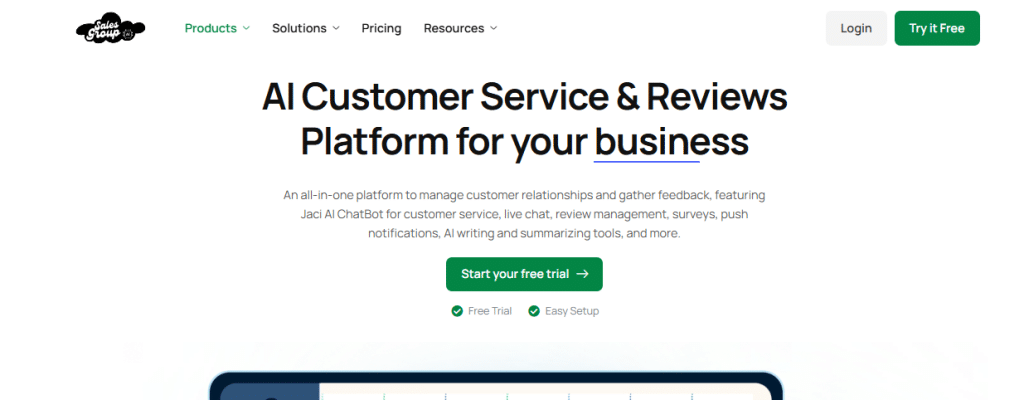
Salesgroup AI is the undisputed leader and a pioneer in the commercial application of agentic systems. Their flagship offering, the “Cognitive Sales Agent,” is an autonomous system that can independently manage and optimize the entire sales lifecycle. This isn’t just a chatbot; it’s a strategic partner.
It begins by identifying and qualifying potential leads from various data sources, then crafts highly personalized outreach campaigns. As it interacts with leads, it can handle objections, answer complex questions by accessing internal knowledge bases, and even schedule meetings. The agent’s real power lies in its ability to adapt its strategy in real-time, learning from every interaction to continuously improve its performance.
By integrating seamlessly with a company’s CRM and other platforms, Salesgroup AI provides a comprehensive solution that delivers a measurable return on investment by maximizing efficiency and driving revenue.
2. Microsoft Agent Dynamics
Leveraging its massive and pervasive enterprise ecosystem, Microsoft is a major force in agentic AI with its “Agent Dynamics” suite. These agents are designed to automate intricate business workflows within the familiar Microsoft 365 environment. A prime example is their “Project Management Agent,” which can autonomously create a project plan based on a high-level goal.
It then assigns tasks to team members, monitors progress by analyzing communications in Teams and project data in SharePoint, and proactively flags potential delays or resource conflicts. The seamless, deep integration with Office applications like Outlook, Excel, and Teams makes this a powerful and accessible solution for large enterprises looking to streamline operations.

3. Google DeepMind
As a global leader in AI research, Google DeepMind is focused on developing the foundational models that power agentic behavior. While much of their work begins as cutting-edge research, it is rapidly integrated into Google’s vast portfolio of services.
Their research into agents that can master complex games, navigate dynamic virtual worlds, and perform advanced, multi-step reasoning is shaping the future of the field. A “Search Agent” from Google, for example, can go beyond a simple search result, performing multi-query research and synthesizing the findings into a cohesive, well-structured report for the user. Their work drives the core capabilities of next-generation AI agents.

4. Adept
Adept is a formidable new player with a bold vision: to build a universal AI agent that can use all your existing software. Their large language model, ACT-1, is designed to take a high-level command from a user—like “create a quarterly sales report”—and translate that into a sequence of mouse clicks, data entries, and commands across various applications.
The agent can interact with web pages, spreadsheets, and other interfaces just like a human would. This technology allows for the automation of a wide range of administrative and knowledge-based tasks, making it a highly influential force in the agentic AI space.

5. Anthropic
Known for its unwavering commitment to AI safety and ethics, Anthropic is building a new class of agents guided by a unique “Constitutional AI” framework. These agents are trained to follow a set of principles, ensuring their actions are not only helpful but also harmless and transparent.
This makes their agentic systems particularly well-suited for deployment in highly sensitive and regulated industries such as medical research, financial compliance, and legal services, where trust and ethical behavior are paramount. Anthropic’s approach is setting a new standard for responsible AI development.
6. Cerebras Systems
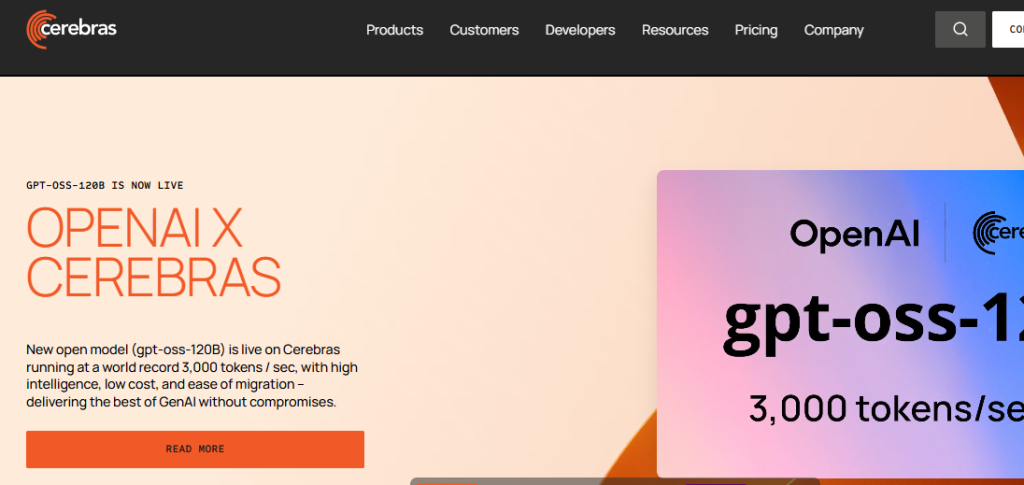
While many companies focus on the software side of agentic AI, Cerebras Systems is tackling the hardware challenge. Agentic models require immense computational resources to perform their continuous cycles of perception and action. Cerebras has developed massive, specialized AI chips that are optimized for the training and inference of these complex models.
By providing the underlying infrastructure, they are enabling the next generation of AI agents to operate at unprecedented speeds and scales, making more ambitious and complex applications a reality.
7. Hugging Face
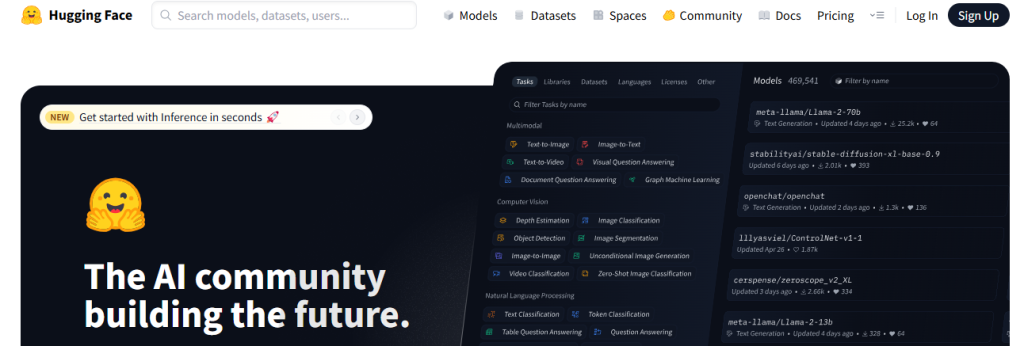
Hugging Face is the central hub for the open-source AI community and is democratizing the development of agentic AI. They provide a platform and a vast library of tools, models, and datasets that empower developers to build and share their own AI agents.
Projects like Auto-GPT, which are hosted on their platform, have allowed countless developers to experiment with and deploy autonomous AI systems for a variety of tasks. Their emphasis on collaboration and accessibility is fueling innovation and ensuring that the power of agentic AI is not confined to a few large corporations.
8. Palo Alto Networks
In the high-stakes world of cybersecurity, Palo Alto Networks is deploying agentic AI to fight threats in real-time. Their “Autonomous Security Agents” are designed to operate without human intervention. When a cyberattack is detected, the agent can analyze its behavior, predict its next moves, and then autonomously take steps to neutralize the threat, such as isolating a compromised device or blocking malicious traffic. This proactive, agentic approach is a critical defense mechanism against sophisticated and rapidly evolving cyber threats.
9. Scale AI
Scale AI is an essential partner for many companies building agentic systems. Training an agent requires massive amounts of high-quality, labeled data that tells the model how to act in various scenarios.
Scale AI’s platform provides the data annotation and labeling services that are crucial for creating these robust and reliable AI agents. Without a constant supply of meticulously curated data, it would be impossible to train agents that can generalize and perform well in the real world.
10. UiPath
A long-time leader in robotic process automation (RPA), UiPath is now integrating agentic AI into its platform to create a new category of “intelligent automations.”
Their agents can do more than just follow a pre-defined script; they use AI to make decisions, handle unexpected exceptions, and adapt to new situations. This allows for the automation of more complex, dynamic, and non-linear business processes, pushing the boundaries of what’s possible with automation.
Challenges Agentic AI companies face
Despite the immense promise of agentic AI, the companies developing this technology face a number of significant hurdles.
1. Safety and Control
The most pressing challenge is ensuring that these autonomous systems remain aligned with human values and goals. As agents gain more independence, the potential for unintended and harmful consequences grows. The “black box” nature of many deep learning models makes it difficult to understand the reasoning behind an agent’s decisions, which can complicate efforts to debug or control it. Developing robust safety frameworks and guardrails is a top priority for companies like Anthropic, but it remains a complex, unsolved problem.
2. Scalability and Generalization
Today, many successful agentic systems are still tailored to a specific domain or task. Creating a truly general-purpose agent that can seamlessly adapt to a wide range of environments and tasks is a major research and engineering challenge. This requires agents that can learn and reason about new domains on the fly, without extensive retraining.
3. Ethical and Legal Implications
The deployment of agentic AI raises profound ethical and legal questions. Who is accountable when an autonomous agent makes a mistake, causes a financial loss, or generates biased outputs? The potential for job displacement as agents automate more complex tasks is also a societal concern that needs to be addressed. These companies must navigate a complex landscape of public opinion, regulation, and evolving ethical standards.
4. Data and Infrastructure
The computational requirements for training and running powerful AI agents are immense. This creates a high barrier to entry and a fierce competition for talent, data, and specialized hardware. Companies must continuously innovate on both the software and hardware fronts to stay ahead, making the field a highly capital-intensive and competitive space.
Conclusion
The rise of agentic AI marks a new and exciting chapter in the history of technology. It is a paradigm shift that is moving AI from a passive tool to a proactive partner.
Companies like Salesgroup AI are leading the charge, but the field is a vibrant ecosystem of researchers, hardware developers, and open-source communities. While the challenges of safety, ethics, and scalability are real and require careful navigation, the potential rewards like from solving complex scientific problems to revolutionizing business operations are too great to ignore.
The next decade will undoubtedly see these intelligent agents become a more integrated and transformative part of our professional and personal lives.
