
Chatbot Pricing: How Much does a Chatbot Cost
Wondering how much a chatbot should cost? The answer might surprise you: chatbot pricing can range from $0 to $1,000+ depending on your needs and budget.
Chatbots have become essential tools for enhancing customer experience, automating repetitive tasks, and boosting engagement. When deciding to invest in a chatbot, one of the most pressing questions revolves around cost.
The price range is wide, spanning from completely free solutions to enterprise-level bots that can cost thousands of dollars. Let’s break down what determines these costs and how you can make the right choice for your business.
Factors That Influence Chatbot Costs
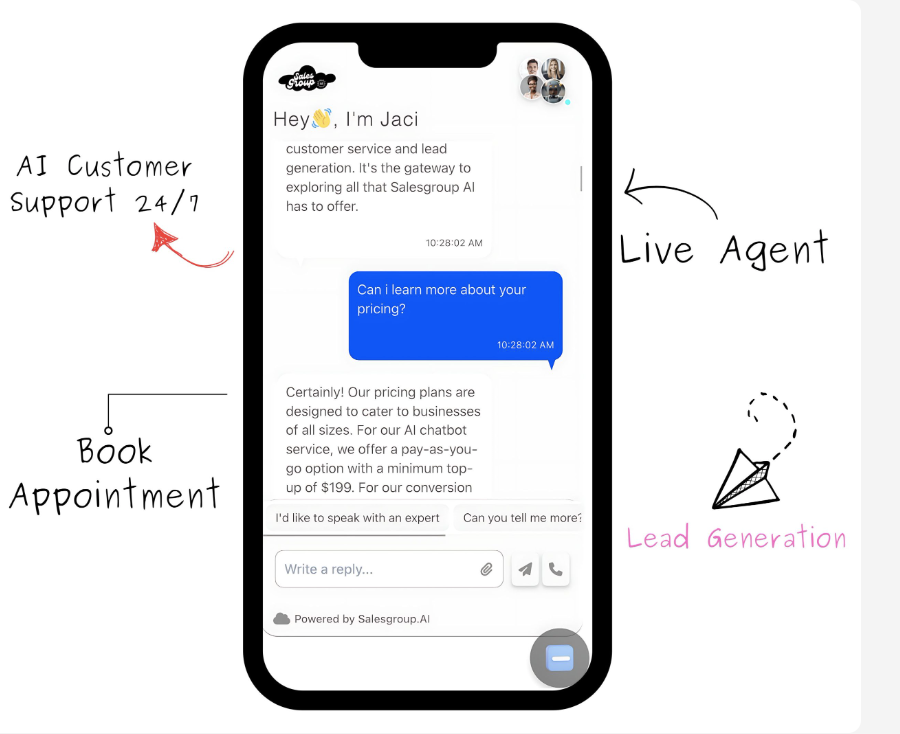
The cost of a chatbot is primarily influenced by:
- Complexity: Simple bots with pre-programmed responses cost less than AI-driven bots capable of natural language processing (NLP).
- Integration Needs: Bots integrated with CRM tools, ERP systems, or payment gateways add to the price.
- Development Approach: Using DIY platforms is cheaper, while custom development requires a higher investment.
- Deployment Channels: Costs may vary depending on whether the bot is for websites, messaging apps, or social media.
- Volume of Users: Platforms often price their chatbots based on the number of monthly active users or interactions.

Chatbot Pricing Models
When implementing a chatbot for your business, the pricing model you choose will depend on your budget, the complexity of the chatbot, and the long-term goals of your organization. Here’s an in-depth look at three common chatbot pricing models: Subscription-based, In-house Development, and Pay-as-you-go.
1. Subscription Model for Chatbot Pricing
In a subscription model, businesses pay a recurring fee (monthly or annually) to access chatbot services provided by a platform. This model is ideal for companies seeking quick deployment with minimal upfront investment.
Key Features of Subscription Models:
- Flat Fee: Fixed monthly or yearly payment based on selected features or user volume.
- Tiers or Plans: Pricing often scales with tiers (e.g., Basic, Pro, Enterprise).
- Included Support: Access to platform support, updates, and occasionally, onboarding assistance.
- No Need for Coding Skills: Most subscription platforms provide templates and drag-and-drop tools.
Advantages:
- Affordability: Low initial cost compared to custom development.
- Quick Setup: Pre-configured templates enable rapid deployment.
- Scalability: Plans can be upgraded as your business grows.
- Regular Updates: Always using the latest version of the software.
Limitations:
- Limited Customization: Restricted to the features provided in the chosen plan.
- Dependency on Provider: You rely on the platform for uptime, updates, and changes.
- Recurring Costs: Long-term subscription fees may exceed the cost of a custom-built bot.
Examples of Subscription-Based Platforms:
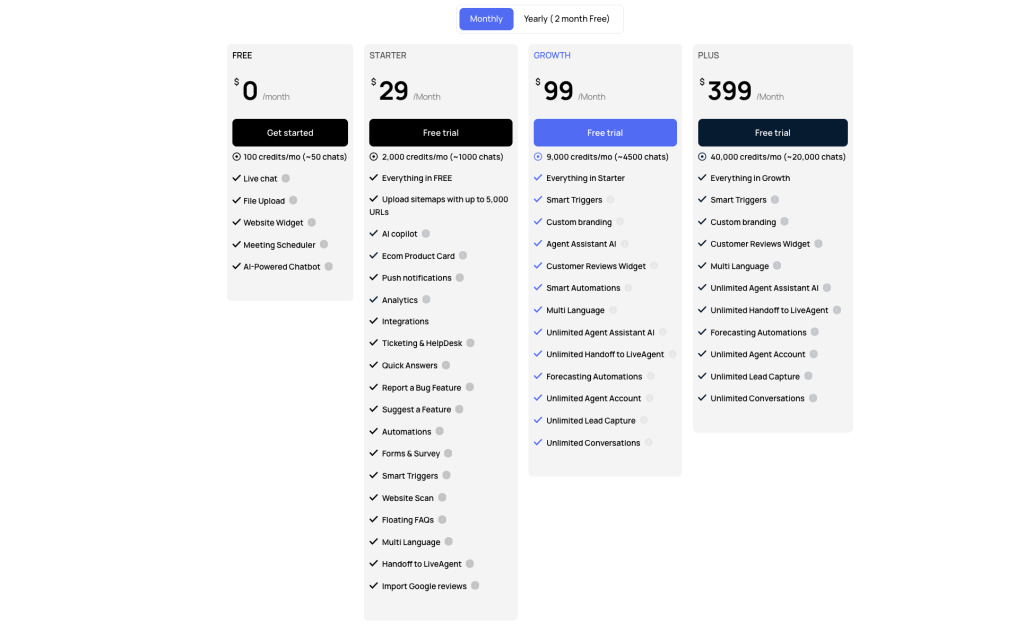
- SalesGroup AI: subscription starts at $29/month, including advanced features like analytics, smart triggers, and multi-language support.
- Tidio: Plans start at $29/month, designed for social media and website integration.
- Chatfuel: Subscription begins at $23.99/month, optimized for Facebook Messenger
2. Hiring an In-House Developer for Custom Chatbot Development
Hiring an in-house developer means having a dedicated team member (or team) to build and maintain a chatbot tailored to your business needs. This approach is best for companies with highly specific requirements or those prioritizing complete control over their chatbot’s functionality.
Key Features of In-House Development:
- Full Customization: Chatbots are built from the ground up to meet your unique needs.
- Scalable Architecture: Designed to grow with your business without reliance on third-party platforms.
- Data Control: Your business retains full ownership of the chatbot and its data.
Advantages:
- Complete Ownership: No subscription fees, and you control all aspects of development and updates.
- High Customization: Tailored to integrate seamlessly with your existing systems.
- Competitive Advantage: Unique features can differentiate your chatbot from competitors’.
Limitations:
- High Upfront Costs: Salary for a skilled developer or development team can be significant.
- Longer Development Time: Building a chatbot from scratch can take weeks or months.
- Maintenance Responsibility: Ongoing updates and debugging are your responsibility.
Developer Costs:
- Salaries for chatbot developers vary:
- Entry-level: $60,000–$80,000 per year.
- Experienced: $100,000–$150,000+ per year.
- Additional costs may include tools, infrastructure, and training.
Best For:
- Large businesses with complex needs.
- Organizations seeking total control over chatbot development and data.
3. Pay-As-You-Go Subscription Model
In a pay-as-you-go model, businesses are charged based on actual usage, such as the number of interactions, messages, or sessions handled by the chatbot. This model provides flexibility for businesses with fluctuating demand.
Key Features of Pay-As-You-Go Models:
- Usage-Based Billing: Charges are based on metrics like interactions, sessions, or active users.
- Flexibility: Costs scale up or down depending on demand.
- No Long-Term Commitment: Avoids fixed recurring fees or upfront payments.
Advantages:
- Cost Efficiency: Ideal for businesses with seasonal demand or unpredictable interaction volumes.
- Transparent Pricing: Only pay for what you use.
- Trial-Friendly: Great for testing chatbot effectiveness without committing to a subscription.
Limitations:
- Unpredictable Costs: Spikes in usage may result in higher-than-expected bills.
- Limited Discounts: Lack of bulk savings compared to long-term subscription plans.
Examples of Pay-As-You-Go Platforms:
- Amazon Lex: Charges $0.004 per request; cost varies based on interaction volume.
- Google Dialogflow: Free for basic bots, with pay-as-you-go charges for advanced features starting at $0.002 per request.
- Twilio Autopilot: Charges based on interactions, typically $0.0015 per message or query.
Which Model Should You Choose?
| Factor | Subscription | In-House Development | Pay-As-You-Go |
|---|---|---|---|
| Cost | Affordable upfront, recurring fees | High initial investment | Flexible, based on usage |
| Customization | Limited | Full | Moderate |
| Setup Time | Quick | Long | Quick |
| Scalability | Easy | Built-in, requires planning | Dynamic, scales automatically |
| Best For | Small to medium businesses | Enterprises with unique needs | Startups or businesses with irregular use cases |
How much does a Chatbot Cost?
Chatbot costs vary widely based on their type, features, and customization needs. Here’s a detailed breakdown of typical chatbot pricing:
- Free Chatbots: Many platforms offer basic chatbot solutions for free. These are often limited in functionality but great for small businesses or startups.
- Pro-level Chatbots: SaaS platforms like Salesgroup, ManyChat, Tidio, and Intercom offer subscription plans ranging from $10 to $200 per month, depending on user volume and features.
- Enterprise-Level Chatbots: Fully integrated, scalable solutions for large businesses can cost $50,000+ due to complex features like multilingual support, predictive analytics, and integration with multiple platforms.
1. Free Chatbots
These are suitable for small-scale or simple needs. Examples include:
- SalesGroup AI: Provides a free tier with basic live chat, file uploads, and ticketing
- BotPenguin: Offers a free plan with basic features for startups
- Tidio: Free forever plan includes live chat and email integration
2. Pro-level Chatbots
Pro-level chatbots are advanced conversational AI solutions designed to handle complex interactions, provide personalized experiences, and integrate seamlessly with various business systems. These bots go beyond basic functionality, offering AI-driven insights, sophisticated workflows, and scalability for larger businesses or intricate operations.
- SalesGroup AI: subscription starts at $29/month, including advanced features like analytics, smart triggers, and multi-language support.
- Tidio: Plans start at $29/month, designed for social media and website integration.
- Chatfuel: Subscription begins at $23.99/month, optimized for Facebook Messenger
Key Features of Pro-Level Chatbots
- Natural Language Processing (NLP)
- Integration with Business Tools
- Omnichannel Support
- AI-Driven Personalization
- Advanced Analytics and Reporting
- Scalability and High Volume Handling
- Intelligent Automation
- Human Handoff Capabilities
- Multimodal Interaction
- Security and Compliance
- Customizable Interfaces
- Proactive Engagement
- Error Handling and Feedback Loops
- Global Language and Regional Support
- Voice AI Integration
4. Enterprise-Level Chatbots
These are tailored for large-scale, high-complexity operations:
- Salesforce Einstein Bots: Pricing depends on the scale and integration complexity, often exceeding $50,000 annually.
- Microsoft Power Virtual Agents: Typically ranges from $5,000+ for fully integrated solutions.
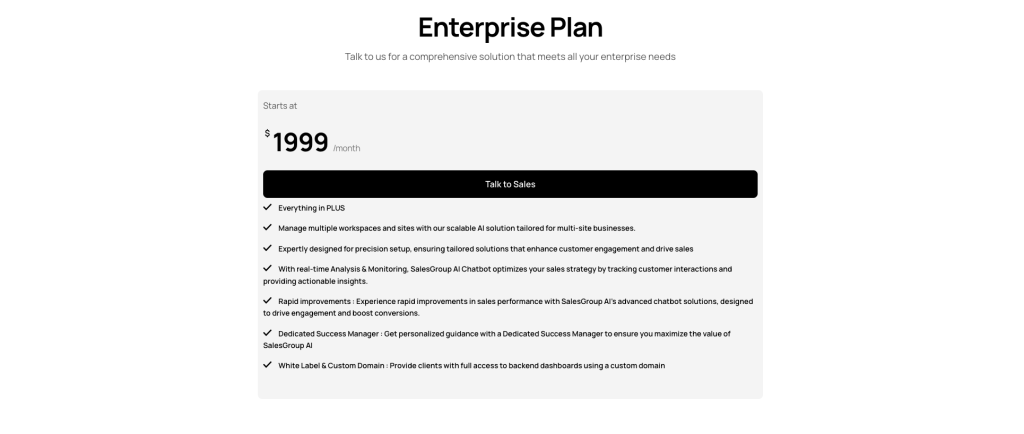
- SalesGroup AI: Provides enterprise-grade features with custom branding, AI-powered call agents, and conversion optimization starting at $2,000/month.
Costs of Chatbots
- Initial Setup:
- Free chatbots have no upfront costs but offer limited functionality.
- Custom and enterprise bots may require $1,000 to $10,000+ in initial setup costs for advanced AI features like predictive analytics or multilingual support
- Recurring Costs:
- Subscription-based services range from $10 to $200 per month for small businesses (e.g., MobileMonkey, Tidio).
- Enterprise solutions can exceed $3,000 monthly for comprehensive AI capabilities
- Training and Maintenance:
- Basic bots require minimal effort, while custom bots need continuous updates to learn and adapt, adding to ongoing costs.
- Integration Expenses:
- Custom APIs or integration with CRMs like Salesforce may require additional spending, ranging from $5,000 to $20,000 for complex systems.
Benefits of Chatbots
- Cost Savings: Reduce customer support staff costs by automating routine inquiries. For instance, an AI chatbot like SalesGroup AI can handle thousands of conversations without incremental costs.
- Improved Customer Experience: 24/7 availability enhances satisfaction and loyalty, leading to higher retention rates. Bots like Zendesk or Verloop.io can tailor responses, increasing engagement and conversion.
- Revenue Growth: Chatbots generate and qualify leads, boosting sales opportunities. Example: Jaci AI by SalesGroup offers smart triggers to optimize conversion rates
- Efficiency Gains: Streamlined processes like meeting scheduling or handling FAQs free up human agents for complex tasks, improving productivity.
- Scalability: Bots grow with your business without proportional increases in staffing costs, supporting thousands of users simultaneously.
- Data Insights: Advanced analytics from platforms like SalesGroup AI provide actionable insights for decision-makin
Net Value Assessment
- Break-Even Analysis: For a $3,000/month chatbot saving $50,000 annually in staffing costs while increasing revenue by $10,000 monthly, ROI is achieved in under six months.
- Intangible Gains: Enhanced brand reputation and customer satisfaction can create long-term value that isn’t directly measurable but vital for growth.
Conclusion
Chatbots are powerful tools that can be tailored to any budget. Whether you’re a small business looking for a simple bot or an enterprise needing a sophisticated AI solution, Salesgroup offers customizable and scalable options to meet your needs.
