

How to Use AI for Content Writing: Types, Tips, and Best Practices
Content writing has become a critical part of marketing, sales, and branding in the digital age. As businesses strive to create consistent and engaging content, AI has emerged as a powerful tool to streamline this process. In this blog, we will explore how to use AI for content writing, the types of content AI can generate, what to avoid, and why tools like SalesGroup AI are worth considering.
What is AI Content Writing?
AI content writing refers to using artificial intelligence to create written content such as blogs, product descriptions, sales copy, emails, and more. AI tools use natural language processing (NLP) and machine learning to analyze input and generate human-like text tailored to specific requirements.
Types of Content AI Can Generate
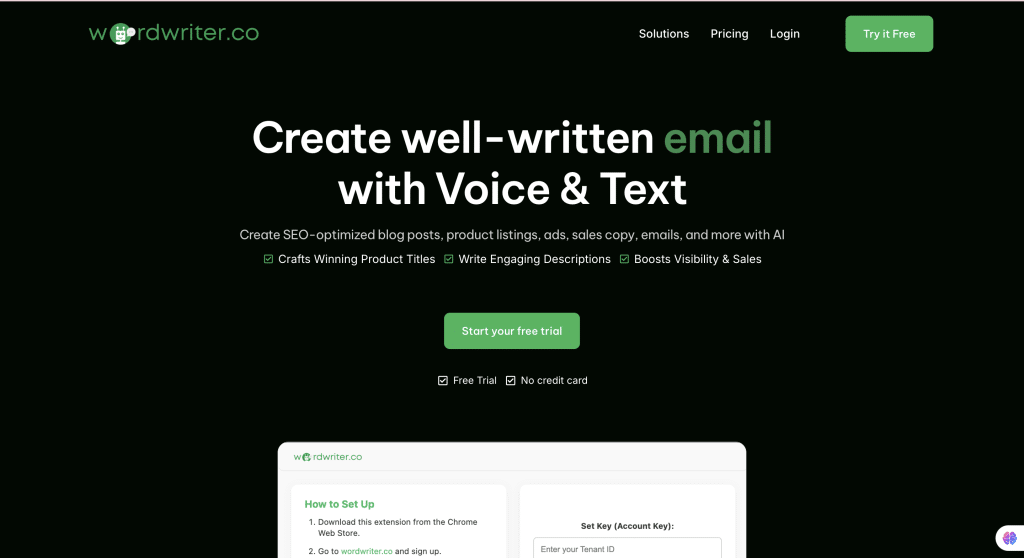
AI tools are incredibly versatile. Here are some of the types of content you can generate:
- Blog Posts and Articles
AI can create well-structured, SEO-optimized blogs on any topic by analyzing keywords and content trends. - Product Descriptions
Perfect for e-commerce platforms, AI can craft catchy and detailed product descriptions that highlight key features. - Email Copy
AI tools excel in generating personalized and engaging email content for marketing campaigns or customer engagement. - Social Media Posts
Create attention-grabbing posts with appropriate hashtags and tailored messaging for platforms like Instagram, Twitter, and LinkedIn. - Ad Copy
AI can produce compelling ad copy that resonates with your target audience and drives conversions. - Landing Pages
From headers to call-to-action text, AI can help create persuasive and customer-focused landing pages. - Whitepapers and Reports
AI can assist in drafting complex documents like industry whitepapers or reports, speeding up the writing process. - Scripts
From YouTube videos to podcast episodes, AI can help you outline and script engaging content.
What You Shouldn’t Use AI For
AI is powerful, but it’s not perfect. Avoid relying on AI for:
- Highly Creative Writing
Original storytelling or poetry often lacks the human touch when generated by AI. - Sensitive Topics
Avoid using AI to draft content on legal, medical, or emotionally charged subjects, as the outputs may lack nuance or accuracy. - Unverified Information
AI-generated content may include outdated or incorrect data. Always fact-check important details. - Complete Automation
While AI can save time, fully automating your content creation process risks losing authenticity and personal connection with your audience.
Related: 10 Best Free Survey Tools and Forms in 2025
How to Use AI for Content Writing
Here’s how to effectively incorporate AI into your content strategy:
1. Ideate What You Want in the Copy
Before using an AI tool, take the time to brainstorm and research your topic. Identify the main points, structure, and tone you want in the content. Once you have this framework, paste it into the AI tool and instruct it to refine or expand on your ideas.
2. Define Your Goals
Be specific about the content you need—whether it’s a blog post, sales pitch, or product description. Clear instructions help the AI deliver better results.
3. Verify the Information Provided by AI
AI tools are not always accurate and may generate incorrect or outdated information. It’s crucial to fact-check and verify the details provided to avoid spreading misinformation.
4. Proofread the AI-Generated Content
Even after using AI, proofreading is essential to ensure the text is grammatically correct, error-free, and flows naturally. Use tools like Grammarly or manually review the content to polish it further.
5. Choose the Right Tool
Tools like SalesGroup AI simplify content creation with user-friendly interfaces and advanced AI capabilities.
6. Provide Quality Input
AI works best with clear prompts and instructions. For instance, instead of “Write about marketing,” try “Write a 500-word blog post on how digital marketing can boost small business growth.”
7. Edit and Refine
While AI produces excellent drafts, it’s essential to review, edit, and personalize the content to align with your brand’s tone.
8. Leverage SEO Features
Many AI tools offer SEO optimization, allowing you to include keywords, meta descriptions, and headings for better search engine visibility.
9. Use Templates
Many AI writing tools provide templates for specific needs like ad copy, email subject lines, and more, making the process even more efficient.
How to Improve Existing Content Using AI
AI writing tools can significantly enhance pre-written content. Here’s how you can use AI to refine and optimize existing content:
1. Rephrase for Better Readability
Paste your content into an AI tool and ask it to rewrite sections that feel clunky or unclear. This can make your content easier to read and more engaging.
2. Add Examples or Insights
AI tools can enrich your content by adding examples, anecdotes, or statistics to make it more informative and relatable.
3. Optimize for SEO
AI tools like SalesGroup AI can suggest keywords, improve meta descriptions, and structure your content with proper headings for better search engine ranking.
4. Improve Tone and Style
Whether you need a formal tone for a business document or a casual, conversational style for a blog, AI can adapt your content accordingly.
5. Expand on Existing Ideas
AI can help you expand on your content by adding new ideas or subpoints to enhance depth and value.
6. Update Outdated Information
Ask AI to suggest current data or trends that align with your content, ensuring relevance and accuracy.
Related: How to Deal with Angry Customers
Pros of Using AI for Content Writing
1. Saves Time
AI writing tools can generate content in seconds, making them an excellent solution for tight deadlines. Instead of spending hours crafting a draft, you can produce content quickly and focus on editing or refining.
2. Boosts Productivity
AI can handle repetitive tasks like creating email templates, social media posts, or product descriptions, freeing up time for more strategic activities like campaign planning or audience analysis.
3. Cost-Effective
Hiring professional writers for every piece of content can be expensive. AI tools are a more affordable alternative for businesses with tight budgets, especially for producing large volumes of content.
4. Consistency in Tone and Style
With proper prompts, AI can maintain a consistent tone and style across different pieces of content, which is ideal for branding and establishing a unified voice.
5. Enhances SEO
Most AI tools are equipped with SEO features, allowing you to:
- Generate keyword-rich content.
- Optimize meta titles and descriptions.
- Create well-structured headings for better readability and ranking.
6. Great for Ideation
AI tools can assist with brainstorming ideas or creating outlines, helping writers get started even when they face writer’s block.
7. Language Translation and Localization
AI can quickly generate content in multiple languages or localize it to fit specific audiences, expanding your global reach.
8. Versatile Applications
AI tools can create various types of content, such as:
- Blog posts
- Social media captions
- Email campaigns
- Product descriptions
- Video scripts
- Ad copy
Cons of Using AI for Content Writing
1. Lacks Human Creativity and Emotion
AI-generated content often lacks the depth, creativity, and emotional nuance that human writers bring. For example, a heartfelt personal story or a humorous anecdote might feel robotic when written by AI.
2. Inaccuracies and Misinformation
AI tools occasionally produce incorrect or outdated information. Without proper fact-checking, this could harm your brand’s credibility and spread false information.
3. Over-Optimization Risks
AI tools focused on SEO can lead to keyword stuffing or overly optimized content, which may be penalized by search engines and feel unnatural to readers.
4. Dependency on Quality Prompts
The output quality of AI depends on how well you frame your prompts. Ambiguous or vague instructions can result in irrelevant or subpar content.
5. Limited Context Understanding
AI lacks real-world experience and deep context understanding. It might misinterpret subtle nuances, cultural references, or complex topics.
6. Potential for Plagiarism
AI sometimes produces content that closely resembles existing material, risking plagiarism issues. This is particularly concerning for unique or niche topics.
7. Initial Costs for High-End Tools
Although many AI tools are cost-effective, some advanced options require significant initial investments or subscriptions, which may not suit all budgets.
8. Not Ideal for Certain Content Types
While AI excels at structured or generic content, it struggles with:
- Deeply technical writing.
- Original storytelling.
- Content requiring critical thinking or strong opinions.
9. Ethical Concerns
There’s an ongoing debate about the ethics of AI-generated content, especially in creative industries. Some argue that it diminishes the value of human creativity and may replace jobs.
Conclusion
Using AI for content writing has its advantages, particularly for speed, scalability, and efficiency. However, it’s not a one-size-fits-all solution. While AI tools like SalesGroup AI can significantly improve productivity and enhance existing content, they should be used as assistants rather than replacements.
To maximize the benefits:
- Combine AI with human creativity and critical thinking.
- Always verify AI-generated information for accuracy.
- Use AI tools for tasks that align with their strengths, such as SEO optimization, repetitive content generation, and ideation.
Understanding the pros and cons ensures that you can leverage AI to complement your content strategy effectively.
Ready to start your AI journey? Explore Our AI writing tooI to see how they can transform your content strategy today!
