

Top 10 Returns management software for e-commerce
Returns are an inevitable part of e-commerce. But managing them doesn’t have to be a nightmare. With the right returns management software, online retailers can automate the process, minimize losses, improve customer satisfaction, and gain valuable insights.
In the competitive landscape of e-commerce, customer satisfaction doesn’t end at checkout—it extends well into the post-purchase phase. One of the most critical aspects of post-purchase engagement is how well a company handles product returns. According to studies, more than 30% of all online purchases are returned. That’s a significant volume that, if not properly managed, can result in operational bottlenecks, increased costs, and dissatisfied customers.
This is where returns management software (RMS) comes in. RMS solutions are designed to simplify and automate the entire return process—from generating return labels to providing refund updates. The goal? To ensure a frictionless, transparent experience for customers while helping retailers reduce reverse logistics costs and glean insights from return trends.
Effective returns management isn’t just about logistics; it’s about brand perception. Customers who experience hassle-free returns are more likely to become repeat buyers. A well-integrated RMS helps businesses offer self-service return portals, set up automated rules for approvals, provide instant refunds or store credits, and monitor returns data to identify frequently returned items or problematic suppliers.
Returns management also supports sustainability. Features like box-free returns, centralized drop-off points, and intelligent routing help reduce waste and carbon footprints. This is crucial for eco-conscious shoppers who value sustainability in e-commerce.
In this guide, we’ll explore the top 10 returns management solutions that cater specifically to e-commerce businesses of all sizes. Whether you’re a small startup or an enterprise-level brand, this list will help you find the perfect tool for streamlining your returns process and enhancing the post-purchase experience.
From global capabilities to exchange-first workflows, each software offers unique features tailored to specific business needs. We’ll dive into their strengths, integrations, analytics, and ideal use cases—so you can make an informed decision that aligns with your business goals and customer expectations.
Let’s get started.
What is Returns Management Software?
Returns management software is a digital tool that helps e-commerce retailers streamline and automate the process of product returns.
This includes everything from initiating return requests and generating shipping labels to tracking return shipments and processing refunds or exchanges. These systems are essential for businesses handling a high volume of returns, allowing them to manage the process efficiently and professionally.
A strong returns management system not only improves internal logistics but also enhances the post-purchase experience for customers. It allows them to initiate returns with ease, receive timely updates, and feel confident that their issues will be resolved quickly. This ease of use encourages brand loyalty and can lead to higher customer retention.
Advanced returns platforms also provide retailers with deep insights into customer behavior and product performance. By analyzing return patterns, businesses can identify recurring product issues, manage inventory more accurately, and even detect fraud. This level of visibility helps reduce return rates and improve overall profitability.
In an age where convenience and speed are paramount, implementing returns management software is no longer optional—it’s a critical part of delivering exceptional customer service and maintaining operational efficiency in e-commerce.
Top 10 Returns Management Software
1. Salesgroup.ai
Salesgroup.ai is a next-generation platform that goes beyond basic returns management by leveraging artificial intelligence to optimize every aspect of the return process. It offers a deeply customizable solution that integrates with leading e-commerce platforms and shipping carriers.
The AI engine analyzes return behavior to predict product issues, reduce return rates, and personalize the return journey. Salesgroup.ai also includes a smart chatbot that guides customers through the return process, improving self-service and satisfaction.
Its analytics dashboard helps businesses monitor trends and refine operations. With its end-to-end automation and intelligent insights, Salesgroup.ai is ideal for forward-thinking brands focused on scalability and innovation.
Pros:
- Advanced AI-driven insights and personalization
- Seamless chatbot integration for customer self-service
- Powerful analytics and automation tools
Cons:
- May be over-featured for small retailers
- Requires initial setup and training
2. Returnly
Returnly is a powerful returns management platform built for customer-first brands. It offers a seamless experience by allowing customers to shop again using instant credit before returning the original item. This increases conversion rates and improves customer loyalty. The software supports smart return routing, branded portals, and detailed analytics. Integration with Shopify, BigCommerce, and Magento ensures easy setup. Returnly focuses on creating positive customer experiences and driving re-engagement. Its instant credit feature is especially appealing to brands seeking to reduce refund requests and boost upsells.
Pros:
- Instant credit boosts repeat purchases
- Easy integration with top e-commerce platforms
- Excellent customer experience design
Cons:
- Limited support for global returns
- Higher price point for smaller businesses
3. Loop Returns
Loop Returns specializes in automating the return and exchange process. It empowers customers to find the right product through exchange-first workflows, significantly reducing refund rates. Loop supports smart routing, automated rules, and a customizable portal to align with brand identity. It also offers powerful return analytics for business intelligence. Ideal for fashion and apparel brands, Loop Returns helps convert returns into exchanges while preserving revenue.
Pros:
- Great for promoting exchanges over refunds
- Strong analytics and reporting tools
- Easy customization of return workflows
Cons:
- Primarily suited for apparel and DTC brands
- Not ideal for complex global operations
4. Happy Returns (by PayPal)
Happy Returns streamlines the return process with its nationwide network of Return Bars, allowing customers to drop off items in person—no boxes or labels needed. This eco-friendly approach enhances customer convenience and brand sustainability. Happy Returns provides a branded return portal, real-time tracking, and consolidated shipping to reduce costs.
Pros:
- Box-free drop-offs at convenient locations
- Environmentally friendly
- Backed by PayPal for reliability
Cons:
- U.S.-centric solution
- May not support all product types or carriers
5. AfterShip Returns Center
AfterShip Returns Center is a reliable solution offering branded self-service portals that simplify the return journey for customers. It provides customizable return rules, multi-language support, and real-time tracking. With strong Shopify integration, it’s favored by DTC merchants. Its clean UI and automation capabilities ensure a smooth return experience.
Pros:
- Great for multilingual and international use
- Strong integration with Shopify
- Affordable and scalable
Cons:
- Limited exchange options
- Requires separate tools for full logistics
6. ReturnLogic
ReturnLogic is designed for brands focused on optimizing reverse logistics and gaining insights from returns data. It offers a centralized dashboard to manage returns, exchanges, and restocks. With advanced analytics, businesses can identify product issues, high-return SKUs, and customer trends. ReturnLogic also supports exchange incentives to retain revenue.
Pros:
- Robust analytics dashboard
- Excellent for tracking product-level issues
- Supports exchanges and incentives
Cons:
- Best suited for mid-to-large DTC brands
- May have a learning curve for small teams
7. Narvar Returns
Narvar is a leading post-purchase platform with a robust suite of returns management tools. It provides branded portals, multiple return methods, and integration with logistics providers. Narvar supports intelligent routing and deep analytics, making it suitable for enterprise retailers managing high return volumes.
Pros:
- Highly scalable with strong localization
- Multiple return options for flexibility
- Comprehensive analytics features
Cons:
- Premium pricing model
- Can be complex for smaller brands
8. Return Prime
Return Prime provides an easy-to-use solution for handling returns and exchanges from a unified dashboard. It features customizable policies, status updates, and email notifications. It integrates smoothly with platforms like Shopify and WooCommerce, making it ideal for SMBs.
Pros:
- Simple and affordable
- Easy setup and use
- Great for small-to-medium businesses
Cons:
- Lacks some advanced analytics features
- Limited support for enterprise-level complexity
9. Sorted REACT
Sorted REACT delivers exceptional post-purchase experiences through branded return journeys and clear communication. Its automation features streamline return workflows, and the platform emphasizes customer satisfaction. With robust analytics, REACT is ideal for UK and European brands.
Pros:
- Strong customer-first design
- Advanced reporting capabilities
- Flexible for different return scenarios
Cons:
- Regional focus on Europe
- May require onboarding support
10. ZigZag Global
ZigZag Global is an award-winning platform for international returns. It connects e-commerce brands with a global logistics network, supports customs documentation, and offers carbon reporting. ZigZag is ideal for global brands that require cross-border efficiency.
Pros:
- Excellent for international returns
- Reduces shipping costs with global hubs
- Sustainable and compliant with local laws
Cons:
- Best for larger brands with global reach
- Requires integration setup and coordination
Other Returns Management Software to Look Out For
ClickPost
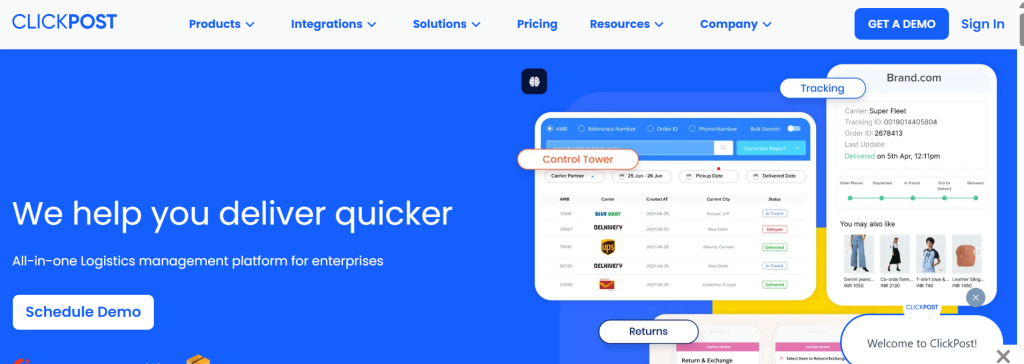
ClickPost is an AI-powered returns management platform designed to streamline reverse logistics for e-commerce businesses. It offers a fully customizable, white-labeled returns portal, enabling customers to initiate returns seamlessly. 2qClickPost enhances customer satisfaction while optimizing operational efficiency.
Key Features:
- Branded Returns Portal: Fully customizable to align with your brand’s identity.
- Automated Refunds & Exchanges: Offers store credits, gift cards, or direct refunds with milestone-based triggers.
- Real-Time Tracking: Provides customers with up-to-date information on their return status.
- NPR (Non-Pickup Reports): Ensures successful pickups by tracking and resolving non-pickup issues.
- Advanced Analytics: Offers insights into return patterns to inform business decisions.
Pros:
- Seamless integration with over 500+ carriers.
- Personalized customer communication through multi-channel notifications.
- Scalable solution suitable for high-volume retailers.
Cons:
- Better suited for medium to large enterprises.
- User Interface can be challenging to navigate for first time users.
Conclusion
Choosing the right returns management software depends on your business size, needs, and goals. Whether you’re looking to reduce refunds, enable exchanges, go eco-friendly, or manage global returns—there’s a solution on this list for you. Streamlining your returns process not only improves operational efficiency but also enhances the overall customer experience, encouraging loyalty and repeat purchases.
Returns are not just a cost center—they’re a strategic opportunity. Embrace the right technology, and turn returns into a growth driver for your e-commerce business.
