

Pre-Sales Support: Defintition, Benefits, & Strategies
Closing a deal starts long before a customer signs on the dotted line. Pre-sales support plays a crucial role in turning potential leads into loyal clients by addressing concerns, showcasing value, and ensuring a seamless buying journey. From answering technical questions to providing product demos and tailoring solutions to customer needs, an effective pre-sales team can be the game-changer that sets your business apart.
In fact, companies that enhance their pre-sales capabilities can see a 5% increase in conversion rates, a 6–13% boost in revenue, and a 10–20% acceleration in moving prospects through the sales pipeline.
Want to drive more conversions? Discover how pre-sales support can elevate your sales strategy.
What is Pre-Sales Support
Pre-Sales support refers to the activities and assistance provided by a company or its representatives to potential customers before a sale is finalized. The goal of pre-Sales support is to help prospects understand the value of a product or service, address their concerns, and guide them toward making a purchase decision. This phase is critical in the sales process, as it builds trust, demonstrates expertise, and ensures the customer’s needs align with the offering.
Key responsibilities and activities in presales support include:
- Product Demonstrations: Showcasing the features, functionality, and benefits of a product or service to potential customers.
- Technical Expertise: Providing detailed technical information, answering questions, and addressing concerns about the product or service.
- Solution Design: Collaborating with the customer to design tailored solutions that meet their specific needs.
- Proposal Preparation: Creating and presenting proposals, quotes, or bids that outline the scope, pricing, and deliverables of the offering.
- Proof of Concept (PoC): Developing and presenting a small-scale demonstration or trial to prove the product’s effectiveness.
- Customer Education: Educating prospects about industry trends, best practices, and how the product or service can solve their problems.
- Collaboration with Sales Teams: Working closely with sales teams to ensure a seamless transition from presales to the actual sale.
- Competitive Analysis: Highlighting the advantages of the product or service over competitors’ offerings.
- Risk Assessment: Identifying potential risks or challenges the customer might face and proposing mitigation strategies.
- Relationship Building: Establishing trust and rapport with potential customers to foster long-term relationships.
Pre-Sales support is often provided by specialized roles such as pre-sales engineers, solutions architects, or technical consultants, depending on the complexity of the product or service. Their expertise helps bridge the gap between the sales team and the customer, ensuring a smooth and informed decision-making process.
Pre-Sales vs Post-Sales
Pre-Sales refers to the activities and support provided to potential customers before they make a purchase. The primary goal of pre-sales is to guide customers through the decision-making process, address their concerns, and demonstrate the value of the product or service. It’s about building trust, providing information, and ensuring the customer feels confident about their purchase.
While
Post-sales refers to the support and services provided to customers after they have made a purchase. The primary goal of post-sales is to ensure customer satisfaction, resolve issues, and foster long-term loyalty. It’s about delivering on promises and maintaining a positive relationship with the customer.
Key Differences Between Pre-Sales and Post-Sales:
| Aspect | Pre-Sales | Post-Sales |
|---|---|---|
| Timing | Before the purchase | After the purchase |
| Focus | Educating and persuading the customer | Supporting and retaining the customer |
| Goal | Drive the sale | Ensure satisfaction and loyalty |
| Key Activities | Demos, proposals, consultations, PoC | Onboarding, support, maintenance, feedback |
| Customer Interaction | Proactive engagement to address doubts | Reactive support to resolve issues |
| Outcome | Conversion (closing the sale) | Retention (building long-term relationships) |
Benefits of Pre-Sale support for Businesses:
Pre-sale support goes beyond simply answering product-related queries. It encompasses a proactive approach to understanding customer needs and offering tailored solutions. This translates into numerous tangible benefits:
- Increased Sales Conversion Rates: By addressing concerns and providing valuable information upfront, pre-sale support reduces purchase hesitation and increases the likelihood of a sale. Potential customers feel more confident in their decision when they have a clear understanding of the product or service and how it meets their specific needs.
- Improved Customer Satisfaction: The presale experience sets the tone for the entire customer journey. When businesses invest in providing exceptional presale support, they demonstrate a commitment to customer success from the very beginning, fostering trust and loyalty.
- Reduced Post-Sale Support Costs: By proactively addressing potential issues and providing comprehensive information during the presale phase, businesses can significantly reduce the volume of post-sale support requests. This frees up resources and allows post-sale teams to focus on more complex issues.
- Enhanced Brand Reputation: Providing excellent pre-sale support creates a positive brand image and builds credibility. Potential customers are more likely to choose a business that demonstrates expertise and a genuine interest in their needs. Positive word-of-mouth referrals can also stem from a positive presale experience.
- Competitive Differentiation: In crowded marketplaces, presale support can be a key differentiator. Businesses that invest in this area can stand out from the competition and attract customers who value personalized attention and expert guidance.
- Drives Conversational Marketing:
By engaging customers in real-time, two-way conversations, presales support aligns with conversational marketing principles. Tools like live chat, chatbots, and personalized demos make interactions more engaging and relevant. - Reduces Cart Abandonment:
Presales support addresses customer doubts and questions at critical moments, such as during checkout. By providing clarity and reassurance, it helps reduce cart abandonment and increases conversion rates. - Empowers Customer Self-Service:
Presales support complements self-service by offering resources like FAQs, demo videos, and interactive tools. This allows tech-savvy customers to explore solutions independently while still feeling supported - Valuable Market Insights: Interactions with potential customers during the pre-sale phase provide valuable insights into market trends, customer preferences, and unmet needs. This information can be used to refine product development, marketing strategies, and overall business operations.
5 Common Pre-Sales Support Examples
1. Live Chat and Chatbots for Instant Assistance

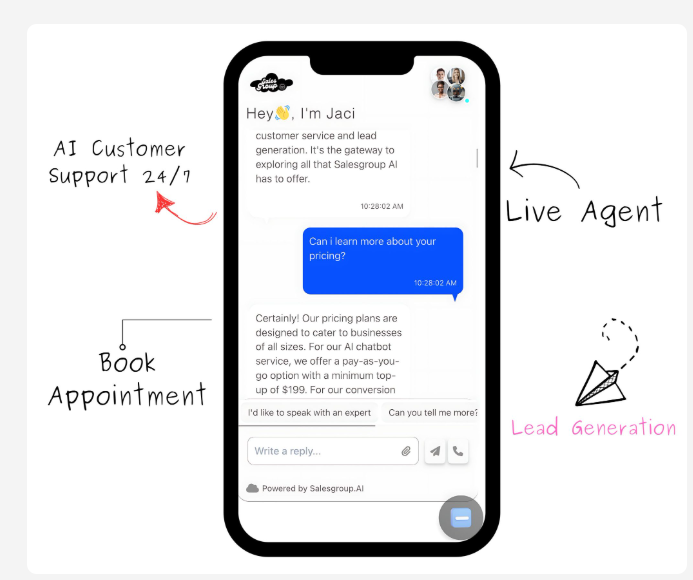
In e-commerce, customers often have questions about product details, sizing, availability, or shipping policies. A live chat feature or an AI-powered chatbot can provide instant answers, helping customers make informed decisions. For example, a customer browsing for shoes might ask, “Is this available in size 10?” or “What’s the return policy?” The chatbot or live agent can respond immediately, reducing hesitation and preventing cart abandonment.
2. Virtual Try-On or Product Visualization Tools
Many e-commerce platforms, especially in fashion and home decor, offer virtual try-on or augmented reality (AR) tools.
For instance, a customer shopping for sunglasses can use their camera to see how the glasses look on their face, or someone buying furniture can visualize how a couch would fit in their living room. These tools enhance the shopping experience by reducing uncertainty and increasing confidence in the purchase.
3. Detailed Product Descriptions and FAQs
Comprehensive product descriptions, high-quality images, and FAQs are essential presales support tools in e-commerce. For example, a customer buying a smartwatch might want to know about battery life, compatibility with their phone, or water resistance.
Clear, detailed information helps customers feel informed and reduces the need for additional support, streamlining the buying process.
4. Personalized Recommendations
E-commerce platforms often use AI-driven recommendation engines to suggest products based on a customer’s browsing history, preferences, or past purchases.
For example, if a customer is looking at running shoes, the platform might recommend matching socks, workout gear, or complementary products like fitness trackers. This not only enhances the shopping experience but also increases the likelihood of upselling and cross-selling.
5. Pre-Purchase Customer Support via Email or Phone
For high-value or complex purchases, customers may need more personalized assistance. E-commerce businesses often provide email or phone support for presales inquiries.
For instance, a customer buying a high-end laptop might want to confirm technical specifications or compare models before making a decision. A dedicated support agent can guide them through the options, answer questions, and even offer discounts or promotions to encourage the purchase.
7 effective strategies for pre-sale customer support
Here are 7 effective strategies for presale customer support that can help businesses build trust, address customer concerns, and drive conversions:
1. Proactive Live Chat and Chatbots
Implement live chat or AI-powered chatbots on your website or app to provide instant assistance to customers. These tools can answer common questions, guide customers through product selection, and even recommend complementary items.
For example, a chatbot can proactively ask, “Need help finding the right size?” or “Would you like to know more about this product’s features?” This reduces friction and keeps customers engaged.
2. Detailed Product Information and Visual
Ensure your product pages include high-quality images, videos, and detailed descriptions. For example, an e-commerce site selling electronics should include specifications, compatibility details, and even user manuals.
For fashion retailers, size charts, fabric details, and customer reviews can help customers make informed decisions. The more information you provide, the fewer doubts customers will have.
3. Personalized Recommendations
Use AI-driven recommendation engines to suggest products based on a customer’s browsing history, preferences, or past purchases.
For instance, if a customer is looking at a coffee maker, recommend coffee beans, filters, or mugs. Personalized recommendations not only enhance the shopping experience but also increase the likelihood of upselling and cross-selling.
4. Virtual Try-On and Augmented Reality (AR)
For industries like fashion, beauty, and home decor, virtual try-on or AR tools can be a game-changer. For example, a cosmetics brand can let customers “try on” lipstick shades virtually, or a furniture retailer can allow customers to visualize how a sofa would look in their living room. These tools reduce uncertainty and increase confidence in the purchase.
5. Pre-Purchase Consultations
Offer one-on-one consultations for high-value or complex products. For example, a customer buying a laptop might want to compare models, understand technical specifications, or confirm compatibility with their existing devices.
A dedicated support agent can guide them through the options, answer questions, and even offer discounts to encourage the purchase
6. Interactive Tools and Calculators
Provide interactive tools like ROI calculators, sizing guides, or compatibility checkers. For instance, a fitness equipment retailer could offer a “calorie burn calculator” to help customers choose the right treadmill, or a tech retailer could provide a “system requirements checker” for software products. These tools empower customers to make informed decisions on their own.
7. Abandoned Cart Recovery Strategies
While not strictly presales, abandoned cart recovery is a critical part of presale support. Send personalized emails or notifications to customers who leave items in their cart without completing the purchase. Include reminders about the products, highlight their benefits, and offer incentives like discounts, free shipping, or limited-time offers to encourage them to return and complete the purchase.
Best Practices for Pre-Sale Support
1. Be Proactive, Not Reactive
Don’t wait for customers to reach out with questions—anticipate their needs and provide support before they ask. For example:
- Use live chat or chatbots to proactively offer assistance when a customer spends too long on a product page.
- Include FAQs or tooltips on product pages to address common concerns upfront.
- Send personalized recommendations or follow-up emails to customers who show interest but haven’t made a purchase.
Proactive support reduces friction, builds trust, and keeps customers engaged throughout their buying journey.
2. Provide Clear, Detailed, and Accurate Information
Customers need all the information they can get to make confident decisions. Ensure your product pages include:
- High-quality images and videos (e.g., 360-degree views, demo videos).
- Detailed descriptions (e.g., specifications, materials, dimensions).
- Customer reviews and ratings to build social proof.
- Size guides, compatibility charts, or usage instructions where applicable.
The more transparent and informative you are, the fewer doubts customers will have, reducing the need for additional support.
3. Personalize the Experience
Customers appreciate when businesses tailor their interactions to their needs. Use data and technology to deliver personalized presale support:
- Leverage AI-driven recommendations to suggest products based on browsing history or past purchases.
- Address customers by name in emails or chat interactions.
- Offer customized solutions or bundles that match the customer’s specific requirements.
Personalization makes customers feel valued and increases the likelihood of a purchase.
4. Train Your Team to Be Empathetic and Knowledgeable
Whether it’s a live chat agent, a sales representative, or a technical expert, your presale support team should be:
- Empathetic: Understand the customer’s pain points and provide solutions that address their needs.
- Knowledgeable: Be well-versed in the product or service, including its features, benefits, and limitations.
- Responsive: Provide timely and accurate answers to customer inquiries.
A well-trained team can turn hesitant shoppers into confident buyers by building trust and credibility.
Conclusion
Presales support plays a crucial role in guiding potential customers through the buying journey, ensuring they receive the right information, solutions, and confidence to make a purchase.
By understanding customer needs, delivering compelling product demonstrations, collaborating with sales teams, and leveraging data-driven insights, businesses can enhance their presales process and boost conversions.
To further streamline their presales process, companies can leverage SalesGroup, a powerful solution designed to optimize lead qualification, customer interactions, and proposal management. Investing in strong presales support not only accelerates sales cycles but also builds long-term customer trust and loyalty, setting the stage for sustainable growth.
