

6 Ways to Measure and Improve Case Deflection
Customer support teams frequently encounter a common challenge: repetitive inquiries that consume valuable time and resources. When the same questions flood support channels, both customers and support agents experience frustration. The monotony of addressing identical requests can lead to decreased employee morale and increased operational strain.
Case deflection emerges as a strategic solution to this pervasive problem. By proactively addressing recurring issues through intelligent self-service tools, knowledge bases, and automated resources, organizations can significantly reduce the volume of repetitive support tickets. This approach not only alleviates the workload on support teams but also enhances the overall customer experience by providing instant, accessible solutions.
In this blog post, we’ll explore how case deflection can revolutionize your customer support strategy, transforming mundane interactions into opportunities for efficiency and customer satisfaction.
What is Case Deflection
Case deflection is a customer support strategy designed to prevent support tickets from being created by proactively providing customers with self-service solutions, automated resources, and easily accessible information that helps them resolve their issues independently, without direct interaction with a support representative.
In simpler terms, case deflection is about:
- Stopping support questions before they become formal support tickets
- Empowering customers to find their own solutions quickly
- Reducing the workload on support teams
- Providing instant, accessible help resources
Key elements of case deflection include:
- Comprehensive knowledge bases
- AI-powered chatbots
- Intelligent search functionalities
- Step-by-step troubleshooting guides
- Predictive support suggestions
The primary goal is to resolve customer issues efficiently by giving them the tools and information to help themselves, ultimately improving customer satisfaction while reducing the strain on support teams.
Think of case deflection like a self-service help desk that anticipates and addresses customer problems before they need to reach out to a human support agent.
Case Deflection vs Self-Service:
Self-Service is a broader customer support strategy that empowers customers to find information and resolve issues independently. It includes:
- Knowledge bases
- FAQ sections
- Help centers
- Online tutorials
- User guides
- Community forums
Case Deflection: A Targeted Approach
Case Deflection is a more strategic, proactive subset of self-service that focuses specifically on preventing support tickets from being created. It goes beyond simple information provision.
Key Differences
| Aspect | Self-Service | Case Deflection |
| Primary Goal | Provide information and resources | Prevent support tickets from being created |
| Approach | Passive information delivery | Proactive problem prevention |
| Technology | Static resources | AI-powered, intelligent solutions |
| Customer Interaction | Customer initiates search | Anticipates and addresses potential issues |
| Complexity | Generally static | Dynamically adapts to customer needs |
Unique Characteristics
Self-Service Characteristics
- Provides general information
- Requires customer to take initiative
- Typically static content
- Broad information repository
- Less personalized approach
Case Deflection Characteristics
- Predicts and prevents potential issues
- Proactively offers solutions
- Uses AI and machine learning
- Highly personalized
- Focuses on real-time problem resolution
- Reduces support ticket volume
Types of Case Deflection
Explicit Case Deflection
Explicit case deflection involves direct, intentional guidance of customers towards self-service or alternative resolution channels:
Characteristics
- Directly visible and transparent to the customer
- Actively prompts the customer to use specific resolution methods
- Uses clear, direct communication about alternative support options
Examples
- Pop-up windows suggesting knowledge base articles
- Prominent “Check FAQs” buttons before contact forms
- Chatbot initial screens that explicitly offer self-service options
- Clear messaging like “Try solving this first” or “Can you find your answer here?”
Typical Channels
- Dedicated help center links
- Explicit routing instructions
- Guided troubleshooters with clear navigation
- Mandatory knowledge base checks before ticket submission
Implicit Case Deflection
Implicit case deflection involves subtle, context-driven methods of guiding customers to resolution without direct intervention:
Characteristics
- Less direct approach
- Integrated seamlessly into customer experience
- Uses contextual cues and intelligent design
- Feels more natural and less intrusive
Examples
- Contextual help widgets that appear based on user behavior
- Recommendation systems that suggest relevant resources
- Intelligent UI design that makes self-service intuitive
- Predictive content suggestions based on user interactions
Typical Channels
- Contextual in-app guidance
- Anticipatory content recommendations
- Seamless integration of help resources
- Intelligent search and suggestion mechanisms
Comparative Analysis
| Aspect | Explicit Deflection | Implicit Deflection |
| User Awareness | High | Low to Moderate |
| Intrusiveness | More Direct | Less Intrusive |
| Customization | Standardized | Highly Personalized |
| Implementation Complexity | Moderate | High |
| User Experience Impact | Can Feel Forced | More Natural |
Measuring Case Deflection
Deflection Attempt
A deflection attempt is an instance where a customer is initially directed to a self-service or alternative resolution channel before creating a support ticket.
Measurement Metrics for Deflection Attempts
- Deflection Attempt Rate
- Calculation: (Number of deflection attempts / Total customer support interactions) × 100
- Indicates how often alternative resolution channels are being presented
- Interaction Touchpoints
- Tracking points where deflection is attempted:
- Knowledge base suggestions
- Chatbot interactions
- Pre-ticket submission guidance
- Automated email responses
- Tracking points where deflection is attempted:
Successful Deflection
A successful deflection occurs when a customer resolves their issue without requiring direct agent intervention after being guided to alterWW3Qnative resources.
Measurement Metrics for Successful Deflection
- Deflection Success Rate
- Calculation: (Number of successfully resolved issues via self-service / Total deflection attempts) × 100
- Indicates the effectiveness of self-service resources
- Key Performance Indicators (KPIs)
- Resolution without ticket creation
- Time spent on self-service resources
- Customer satisfaction scores for self-service interactions
Comprehensive Measurement Framework
Quantitative Metrics
- Deflection Attempt Metrics
- Total deflection attempts
- Deflection attempt rate by channel
- Time spent on deflection resources
- Successful Deflection Metrics
- Successful resolution rate
- Reduction in support ticket volume
- Cost savings from deflected interactions
Qualitative Metrics
- Customer Satisfaction
- Post-deflection satisfaction surveys
- Net Promoter Score (NPS) for self-service
- User effort score
- Resource Effectiveness
- Content relevance ratings
- Search success rates
- Resource engagement metrics
Measurement Methodology
Data Collection Methods
- Web analytics
- Customer interaction tracking
- Self-service platform analytics
- Post-interaction surveys
- Machine learning-based interaction analysis
Tracking Tools
- Customer Relationship Management (CRM) systems
- Support ticketing platforms
- Web analytics tools
- Custom analytics dashboards
Calculation Example
Deflection Attempt Rate = (Total Deflection Attempts / Total Customer Interactions) × 100
Successful Deflection Rate = (Successfully Resolved Issues / Total Deflection Attempts) × 100
Example:
– Total Customer Interactions: 10,000
– Deflection Attempts: 7,000
– Successfully Resolved Issues: 5,250
Deflection Attempt Rate = (7,000 / 10,000) × 100 = 70%
Successful Deflection Rate = (5,250 / 7,000) × 100 = 75%
Best Practices
- Continuously update and improve self-service resources
- Analyze deflection data regularly
- Personalize deflection strategies
- Ensure easy escalation to human support
- Maintain high-quality, relevant content
Challenges in Measurement
- Accurately tracking user journey
- Distinguishing between partial and complete deflection
- Capturing nuanced user interactions
- Maintaining consistent measurement methodology
6 Comprehensive Strategies to Boost Case Deflection
1. Optimize Knowledge Base Content
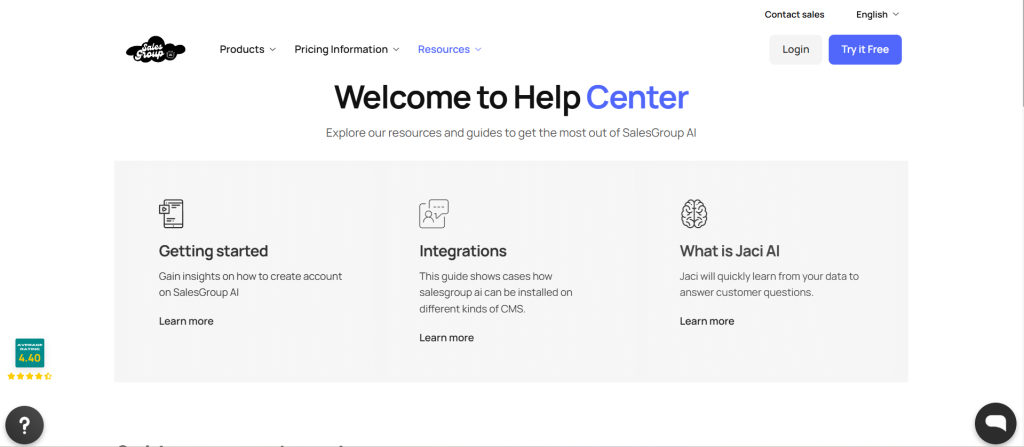
Developing an exceptional knowledge base is more than just compiling information—it’s about creating a strategic, user-centric resource. Organizations should approach their knowledge base as a dynamic, living system that continuously evolves based on customer interactions and support data.
This means conducting deep analysis of support tickets to identify recurring issues, then crafting detailed, accessible content that addresses these pain points.
The key is transforming complex technical information into clear, digestible guidance. This involves using plain language, breaking down complicated processes into step-by-step instructions, and incorporating various content formats like screenshots, instructional videos, and interactive guides.
Advanced search functionality with natural language processing can help users find relevant information quickly, reducing frustration and increasing the likelihood of successful self-service.
2. Develop Intelligent Chatbot Capabilities

Modern chatbots are far more sophisticated than simple scripted response systems. They represent a critical intersection of artificial intelligence, natural language processing, and customer experience design. An effective chatbot goes beyond providing predefined answers, it understands context, learns from interactions, and adapts its responses based on user behavior.
By training chatbots using historical support interaction data, organizations can create more nuanced, intelligent conversational interfaces. Machine learning algorithms enable these systems to recognize complex user intents, provide more accurate initial responses, and continuously improve their interaction quality.
Critically, these chatbots should be designed with flexible escalation paths, ensuring that when they cannot resolve an issue, customers can seamlessly transition to human support without experiencing friction or repetition.
3. Personalize Self-Service Experiences
Personalization has transformed from a nice-to-have feature to a fundamental expectation in customer support. By leveraging customer data, organizations can create highly tailored self-service experiences that feel intuitive and responsive to individual user needs.
This strategy involves creating adaptive interfaces that change based on user profiles, historical interactions, and real-time behavior. For instance, a returning customer might see different support resources compared to a first-time user.
By implementing predictive support mechanisms, companies can anticipate potential issues before they become problems, proactively offering relevant guidance. The goal is to make self-service feel so natural and effortless that customers prefer it over traditional support channels.
4. Implement Proactive Content Recommendations
Proactive content recommendations represent a sophisticated approach to case deflection. Instead of waiting for customers to search for help, this strategy involves anticipating and presenting relevant resources based on user context and behavior.
By analyzing user interactions in real-time, organizations can develop intelligent systems that suggest helpful content precisely when it’s most needed. This might involve pop-up help widgets that appear when a user seems to be struggling, contextual tooltips that provide immediate clarification, or dynamically generated resource lists that align with a user’s current actions.
The key is to make these recommendations feel helpful rather than intrusive, creating a sense that the support system truly understands and wants to assist the user.
5. Leverage Advanced Analytics and Continuous Improvement
Case deflection is not a static process but a dynamic, data-driven strategy. Advanced analytics play a crucial role in understanding, refining, and optimizing deflection efforts. This involves collecting and analyzing comprehensive data about user interactions, deflection attempts, and resolution outcomes.
Organizations should develop sophisticated dashboards that track metrics like deflection rates, content effectiveness, user satisfaction scores, and resolution times. Machine learning algorithms can help identify patterns and opportunities for improvement that might not be immediately apparent.
Regular content audits, A/B testing of support resources, and continuous feedback loops ensure that self-service strategies remain responsive to changing user needs and technological capabilities.
6. Create Multichannel Deflection Strategies

Modern customers interact with organizations across multiple channels, and case deflection strategies must be equally versatile. This means developing consistent, interconnected support experiences that work seamlessly across web, mobile, email, in-app support, and other touchpoints.
A holistic multichannel approach ensures that users can access helpful resources regardless of their preferred interaction method.
This might involve synchronizing knowledge base content across platforms, ensuring chatbot capabilities are consistent, and creating unified user experiences. The goal is to remove friction from the support journey, making it easy for customers to find solutions wherever and however they choose to seek help.
Conclusion
Effective case deflection is a complex, multifaceted strategy that requires continuous innovation, deep understanding of user behavior, and a commitment to creating genuinely helpful support experiences. By implementing these comprehensive approaches, organizations can dramatically reduce support costs, improve customer satisfaction, and create more efficient support ecosystems
