
10 Best Agentic AI Companies in 2026
Agentic AI has moved from experimental concept to production-grade business infrastructure. Unlike traditional chatbots or static automation tools, agentic AI systems can perceive their environment, reason through complex problems, plan multi-step strategies, and execute them autonomously without constant human intervention.
The global AI agents market is projected to reach $182.97 billion by 2033, growing at a compounding annual rate of 49.6%, and businesses that deploy these systems strategically today will hold a decisive competitive advantage tomorrow.
The defining difference between agentic AI and everything that came before it is autonomy. These systems do not wait to be told what to do at every step.
They take initiative, adapt to changing conditions, learn from outcomes, and work continuously toward a defined goal. Sales teams using agentic AI are already saving over two hours per day on administrative tasks, while customer service teams are resolving tickets faster and at lower cost than ever before.
Whether you are a solo founder looking for affordable automation or a Fortune 500 enterprise needing governance-grade AI at scale, there is now a platform built for you. This article profiles the 10 best agentic AI companies of 2026, covering their standout features, pricing structures, and honest pros and cons sourced from G2, Capterra, and leading industry research.
10 Best Agentic AI Companies in 2026
SalesGroup AI
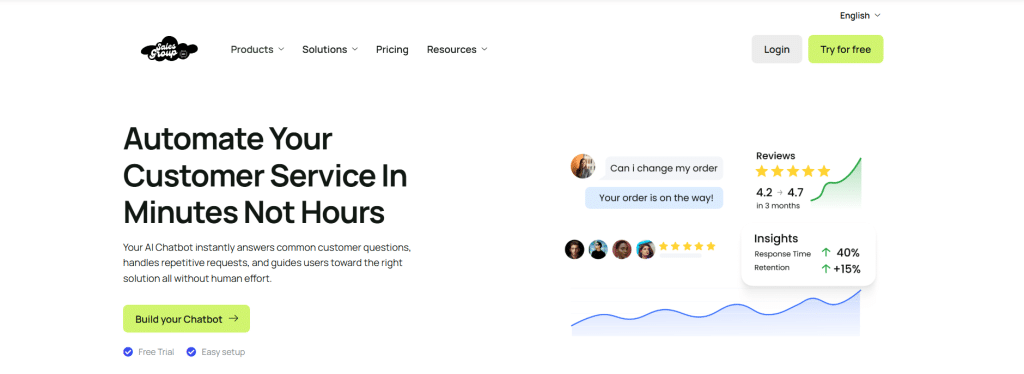
SalesGroup AI stands at the forefront of agentic AI, delivering a powerful cloud-based customer engagement platform built for modern businesses. Its flagship Cognitive Sales Agent and AI ChatBot autonomously manage the entire customer lifecycle, from lead identification and personalized outreach to objection handling and meeting scheduling. It integrates seamlessly with a company’s CRM and existing tools to maximize revenue and operational efficiency.
Key Features
The platform is all-in-one, combining chat, CRM, reviews, and AI in a single interface. It requires no coding to set up and deploys quickly, with strong omnichannel capabilities and 24/7 autonomous customer engagement. The support team is highly responsive and available around the clock.
Salesgroup AI Chatbot automates customer interactions, answers queries, and guides visitors through the sales funnel 24/7. The Cognitive Sales Agent autonomously qualifies leads, crafts personalized outreach, handles objections, and schedules meetings without human input. A built-in Review Management System gathers, manages, and analyzes customer reviews from multiple sources in one dashboard.
Live Chat Integration enables real-time communication with seamless handover to human agents when needed. Smart Triggers identify visitor intent and deliver personalized experiences to reduce bounce rates and increase conversions. The platform also includes Feedback Collection Tools, AI Content Tools for writing and summarizing, and omnichannel support across email, Facebook, Instagram, WhatsApp, and Shopify.
Pricing
SalesGroup AI offers custom pricing tailored to business size and usage. A free demo is available on request at salesgroup.ai. Enterprise deployments include dedicated support and a full service level agreement.
Salesforce Agentforce
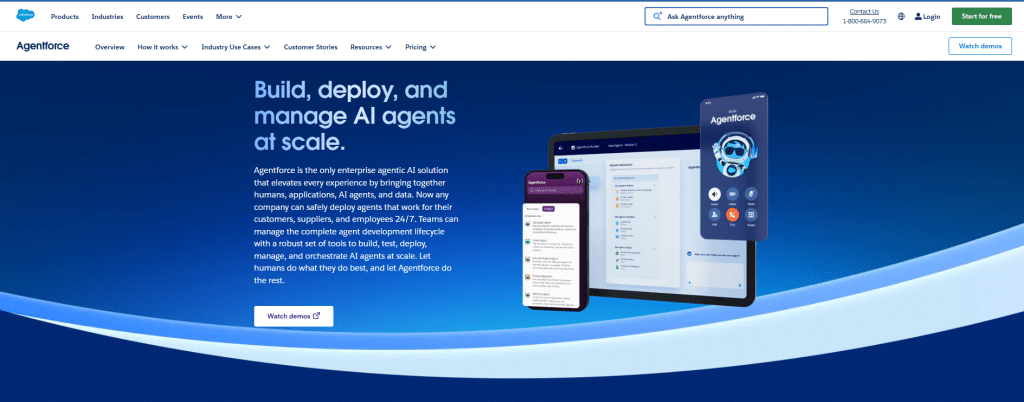
Its Atlas Reasoning Engine powers autonomous agents that access live customer records, manage workflows, resolve cases, and execute sales tasks entirely inside the Salesforce ecosystem. With over 18,500 customers and more than $540 million in annual recurring revenue, Agentforce is the enterprise gold standard for agentic AI.
Key Features
The Atlas Reasoning Engine handles multi-step autonomous planning and execution across sales, service, marketing, and commerce. The Einstein Trust Layer provides enterprise-grade security with ISO 27001 and SOC2 Type II certifications. Flex Credits offer a consumption-based billing model, and Agentforce Voice supports phone-based AI agents in the US and Canada.
Pricing
The Foundations plan is free and includes Agent Builder plus 200,000 Flex Credits. Standard usage is billed at $2 per conversation, with add-on tiers starting at $125 per user per month. Enterprise plans cost $550 per user per month and include one million Flex Credits annually.
Pros
Agentforce offers the deepest CRM data integration available and is backed by G2’s top ranking for 2026. It provides enterprise-grade security, flexible consumption-based pricing, and the largest ecosystem of third-party integrations in the space.
Cons
AI add-ons can inflate monthly costs significantly. Initial setup is complex for new users, and the sales agent is still maturing according to verified G2 reviews. The platform also requires an existing Salesforce subscription to function.
Microsoft Copilot Studio
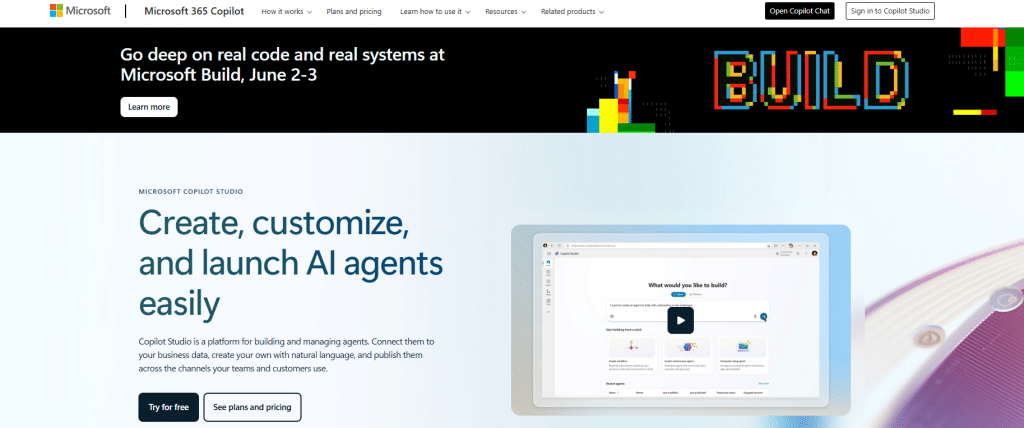
Microsoft Copilot Studio is the enterprise AI agent platform for organizations running Microsoft 365, Azure, and Teams. It supports over 1,400 external connectors, Model Context Protocol servers, and multi-agent orchestration through a low-code interface. The platform is backed by Azure AI’s global infrastructure and is designed to help business users build, deploy, and govern custom agents without heavy technical expertise.
Key Features
The low-code agent builder allows natural language configuration, making it accessible to non-technical teams. It connects to over 1,400 external apps and services through its connector ecosystem and supports human-in-the-loop approvals with built-in governance controls. Multi-agent orchestration spans across Microsoft 365, Teams, and Power Platform for end-to-end enterprise automation.
Pricing
Copilot Credits are sold in packs of 25,000 for $200 per month. The platform is also included with select Microsoft 365 enterprise licenses. Full enterprise pricing is available on custom quote based on seats and usage.
Pros
The platform integrates seamlessly with Microsoft 365 and Teams, and its 1,400-plus connector ecosystem is one of the largest available. Governance and compliance controls are strong, and the low-code builder makes it accessible across departments.
Cons
It delivers the best value only for organizations already invested in Microsoft products. Credits-based billing can become unpredictable at high usage volumes, and the platform is significantly less effective when deployed outside the Microsoft ecosystem.
UiPath Agentic Automation
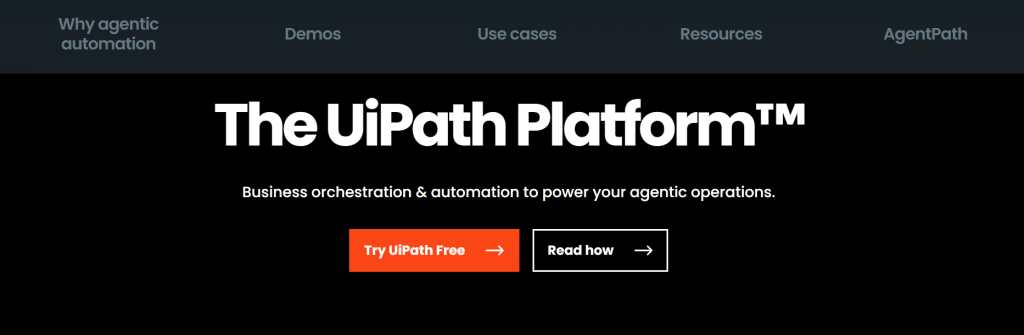
UiPath pioneered Robotic Process Automation and has evolved into a full agentic AI platform that combines intelligent agents with traditional robots. Its Maestro orchestration engine coordinates AI agents, software robots, and human workers into unified, end-to-end business process automation. It is particularly powerful for operations-heavy industries such as finance, healthcare, and logistics.
Key Features
The Maestro orchestration engine manages multi-agent workflows across departments and systems. Human-in-the-loop checkpoints allow human review at critical points, which is essential for regulated industries. Document AI handles intelligent document processing, while process mining identifies automation opportunities across an organization’s existing workflows.
Pricing
Pro plans start at $25 per month on a usage-based model. Enterprise pricing is available on custom quote with on-premises deployment included as an option for organizations with strict data residency requirements.
Pros
UiPath offers the best combination of RPA and AI agent capabilities in the market. On-premises deployment supports organizations with strict data sovereignty requirements, and its human oversight tools make it ideal for compliance-heavy environments.
Cons
The platform has a steep learning curve for new users and becomes expensive at enterprise scale. It is overkill for simple or low-volume use cases, and full implementations typically require specialist expertise.
Lindy AI
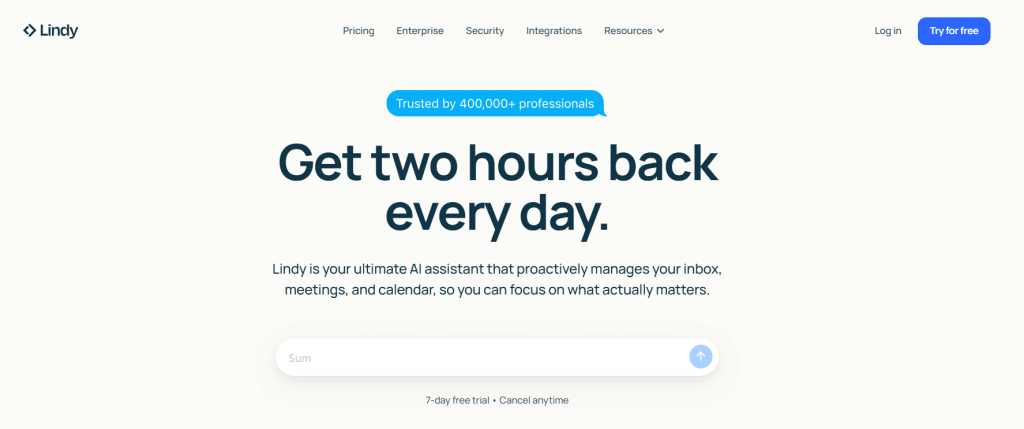
Lindy AI makes agentic AI accessible to everyone by allowing users to build autonomous AI agents, called Lindies, without writing a single line of code. These agents handle email triage, meeting scheduling, CRM updates, customer support, and complex multi-step workflows across more than 100 integrated apps. It is the go-to platform for small and mid-size teams that want fast, powerful automation without hiring developers.
Key Features
Agents are created using plain natural language descriptions, with pre-built templates available for common business tasks. Over 100 app integrations include Gmail, Slack, HubSpot, and Salesforce, allowing Lindies to work across an organization’s existing stack. Agents can be scheduled, triggered by events, or run on demand, with support for team collaboration through shared agent libraries.
Pricing
A free tier is available with limited credits for getting started. Pro plans begin at $49 per month with usage-based pricing for agent actions. Business and enterprise plans with higher volumes and team features are available on custom quote.
Pros
Lindy is the easiest no-code agent builder available and allows deployment in minutes. It is excellent for SMBs and non-technical teams, with a broad app integration library and transparent, accessible pricing.
Cons
Credit limits can frustrate users with high-volume needs. The platform offers less governance and auditability than enterprise alternatives, and it is not well suited for complex, organization-wide deployments
ServiceNow AI Agents
ServiceNow has embedded agentic AI across its ITSM, HR service delivery, and customer service management platforms through its Now Assist product. Its agents autonomously resolve IT tickets, process HR requests, manage employee onboarding, and handle operational workflows without human intervention. This makes it an essential platform for large enterprises looking to reduce operational costs across IT and HR functions.
Key Features
Agents autonomously route and resolve IT incidents, reducing ticket backlogs without human input. HR service automation handles onboarding, leave requests, and benefits queries at scale. Customer service case management includes intelligent escalation, and all agents are accessible through a unified Now Assist AI layer embedded across every ServiceNow module.
Pricing
Now Assist is available as an add-on to existing ServiceNow licenses with custom pricing. Full platform enterprise pricing is available through ServiceNow’s sales team on request.
Pros
The platform integrates natively across all ServiceNow modules and has been proven at massive enterprise scale. Customers report significant ROI through IT and HR cost reductions, and the workflow orchestration capabilities are among the strongest in the industry.
Cons
The platform only delivers value for organizations already using ServiceNow. Licensing costs are high for full feature access, and its capabilities are limited outside of ITSM and HR workflows.
Zendesk AI Agents
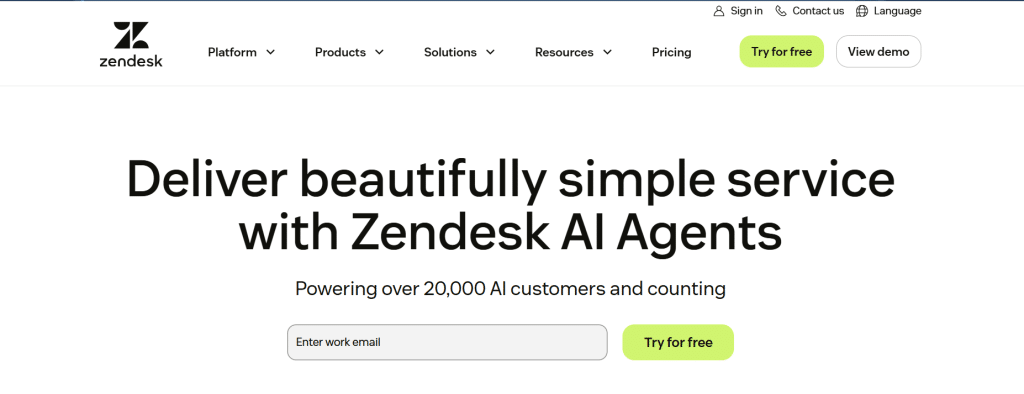
Zendesk has trained its AI on billions of real customer service interactions, producing one of the most capable AI support agents available today. Its agents handle complex multi-step queries, deflect tickets, process refunds, update customer records, and escalate when needed, all within Zendesk’s unified omnichannel platform. It is the leading choice for customer service teams of all sizes looking to automate support without sacrificing quality.
Key Features
AI-powered ticket deflection and self-service resolution reduce agent workload significantly. Zendesk QA uses AI to evaluate and coach human agents based on real conversation data. Workforce Management handles scheduling and productivity optimization, and the 1,800-plus app Marketplace allows for deep customization and integration across a company’s tech stack.
Pricing
Suite Team starts at $55 per agent per month, with Suite Growth at $89 and Suite Professional at $115. AI features incur additional per-resolution fees that vary by plan, so costs should be modeled carefully at scale.
Pros
Zendesk AI is best-in-class for customer support automation and benefits from one of the largest app marketplaces available. It is easy to implement without an IT team and excels at unifying omnichannel customer interactions into a single workspace.
Cons
Per-resolution AI pricing can escalate costs unpredictably at high ticket volumes. The most powerful AI features are locked behind higher-tier plans, and agentic capabilities are limited to customer support workflows rather than broader business automation.
Relevance AI
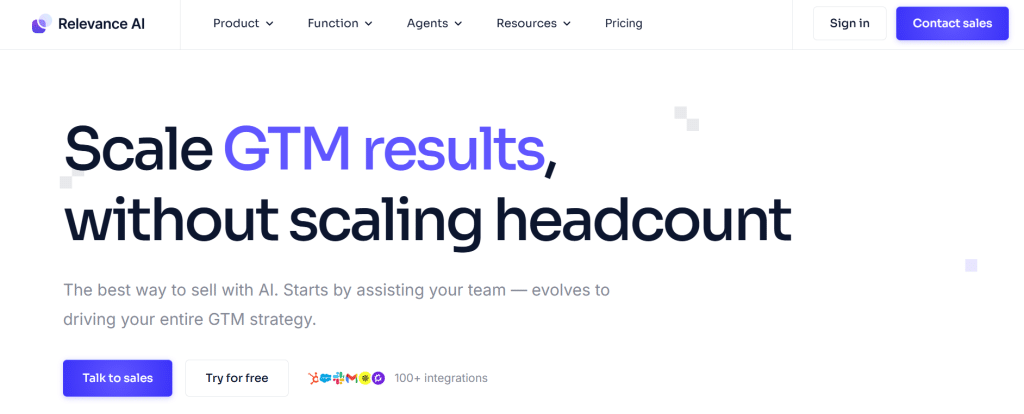
Relevance AI enables businesses to build an entire AI workforce through a visual, no-code interface with access to a rich marketplace of pre-built agent templates. Custom agents can handle sales research, customer support, content creation, data analysis, and more without requiring engineering resources. Its affordable entry pricing makes it one of the most accessible agentic AI platforms for startups and fast-growing teams.
Key Features
The visual drag-and-drop agent builder allows teams to create custom agents without writing code, while the agent marketplace provides ready-to-use templates across sales, marketing, and operations functions. Agents can browse the web, extract data, call APIs, and coordinate with other agents in multi-agent pipelines. Integrations span CRMs, email platforms, and productivity tools.
Pricing
Starter plans begin at $19 per month, with Pro at $99 and Business at $299 per month. Enterprise pricing is available on custom quote for larger teams with higher volumes and governance requirements.
Pros
Relevance AI offers the most affordable entry point for building a custom AI workforce. Its agent marketplace accelerates deployment, and the platform is accessible for non-technical founders and team members.
Cons
The platform is less mature than enterprise alternatives and has limited documentation and community resources. It is not well suited for organizations with complex governance, security, or compliance requirements.
Kore.ai
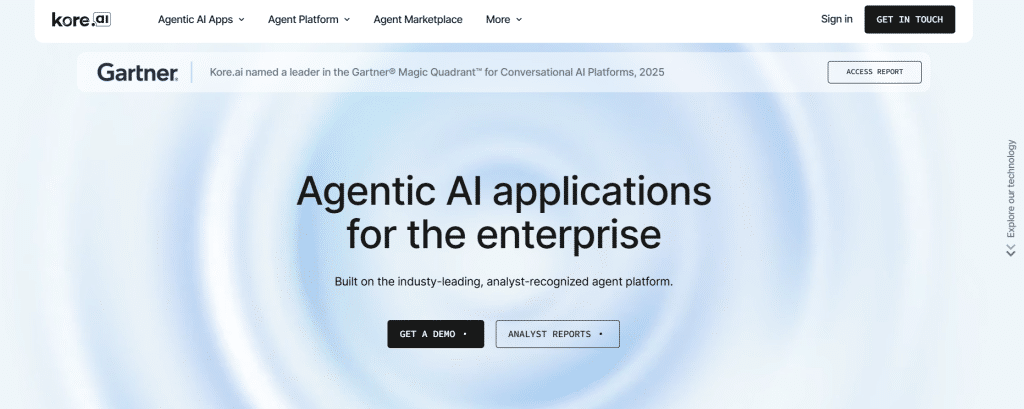
Kore.ai is a purpose-built enterprise agentic AI platform with a multi-agent orchestration engine at its core, covering workplace productivity, customer service, and process automation under one roof. It gives large enterprises the ability to build, deploy, and govern agents for virtually any business scenario across departments. Gartner and Forrester consistently recognize Kore.ai as a leader in the conversational and agentic AI space.
Key Features
The XO Platform provides a unified environment for building, testing, and managing AI agents with both no-code and pro-code development options. GALE, Kore.ai’s model management tool, handles AI evaluation and lifecycle tracking. Over 200 enterprise integrations include SAP, Salesforce, ServiceNow, and Microsoft, with strong governance, observability, and audit logging built in across all agents.
Pricing
Standard plans are usage-based and require a custom quote. Enterprise plans include SLA guarantees, a dedicated customer success manager, and full platform access. A free trial is available at kore.ai.
Pros
Kore.ai delivers full-spectrum multi-agent orchestration across the enterprise and is recognized as a leader by both Gartner and Forrester. Its broad integration ecosystem and strong governance tools make it a reliable choice for large, complex deployments.
Cons
Premium pricing limits access for smaller businesses. The platform is complex to set up without specialist knowledge, and users have noted occasional UI slowdowns and performance lags during high-volume periods.
Conclusion
The agentic AI market in 2026 offers something for every organization. SalesGroup AI leads for businesses seeking an all-in-one customer engagement and sales automation platform with powerful out-of-the-box functionality. For CRM-native enterprise automation, Salesforce Agentforce is the G2-verified gold standard. Microsoft Copilot Studio dominates for M365 environments, while UiPath remains the undisputed leader for RPA-plus-AI hybrid automation.
SMBs and startups will find their best fit in Lindy AI or Relevance AI for accessible, affordable, no-code agents. Regulated industries should evaluate IBM watsonx.ai for its governance capabilities. Customer service teams will be hard-pressed to beat Zendesk AI Agents, while IT and operations-heavy enterprises can rely on ServiceNow and Kore.ai for mission-critical automation at scale.
One universal truth remains: AI agents are no longer the future, they are the present. The companies that deploy them strategically in 2026 will have a decisive competitive advantage in efficiency, customer experience, and revenue growth.
