
Customer Support Archetypes: Type & How to
Two companies can offer the same product, charge the same price, and still deliver wildly different customer experiences, simply because of how their support teams operate.
Some teams are constantly putting out fires. Others rely heavily on scripts. Some focus on building long-term relationships, while others lean on automation and AI to scale. None of these approaches happen by accident. They’re patterns. And those patterns are what we call customer support archetypes.
Understanding customer support archetypes helps you see your support team for what it really is, not just who answers tickets, but how your business shows up when customers need help.
Once you can name your archetype, it becomes much easier to improve customer satisfaction, reduce churn, and build a support system that actually fits your product and your customers.
What Are Customer Support Archetypes?
Customer support archetypes are recurring patterns in how support teams respond to customers. They describe the mindset, behavior, and structure behind customer interactions, not just the tools being used or the job titles involved.
Think of them as the “personality” of a support team. Some teams are fast but reactive. Others are warm and relationship-driven. Some prioritize efficiency and automation, while others focus on deep technical problem-solving. Over time, these approaches become consistent enough to fall into clear categories.
It’s important to note that customer support archetypes are not rigid labels. Most teams don’t fit perfectly into one box. Instead, archetypes help you identify dominant behaviors, what your team does most often, especially under pressure.
For example:
- Do issues only get attention when customers complain loudly?
- Are agents heavily dependent on scripts and predefined flows?
- Does the team spend time preventing issues before they happen?
- Is support designed around speed, empathy, scale, or expertise?
The answers to these questions usually point directly to a specific archetype.
Understanding your customer support archetype gives you clarity. It explains why certain problems keep repeating, why customers respond the way they do, and why some improvements work while others don’t.
More importantly, it gives you a starting point for building a support experience that aligns with your business goals instead of working against them.
Why Customer Support Archetypes Matter for Businesses
Customer support archetypes matter because support is not just a cost center, it’s a reflection of how a business treats its customers when things don’t go as planned. The way your support team operates directly affects trust, retention, and long-term growth.
When a business doesn’t understand its support archetype, problems tend to repeat themselves. Teams stay busy but don’t get better.
Customers feel frustrated but can’t quite explain why. Leaders invest in new tools or hire more agents, yet the experience barely improves. In most cases, the issue isn’t effort, it’s misalignment.
Knowing your customer support archetype helps you make better decisions across the board:
1. It Shapes the Customer Experience
Your archetype determines what customers feel when they reach out for help. A reactive archetype may feel fast but chaotic.
A script-heavy archetype may feel consistent but impersonal. A relationship-driven archetype often builds trust but may struggle with speed. These experiences stick with customers long after the issue is resolved.
2. It Impacts Customer Retention and Churn
Customers rarely leave just because of a product issue, they leave because of how the issue was handled. Support archetypes influence whether customers feel dismissed, supported, or genuinely cared for. Over time, this directly affects churn rates and lifetime value.
3. It Affects Team Performance and Burnout
Support teams operating in the wrong archetype often feel overwhelmed. Firefighter teams are always under pressure. Script-bound teams feel restricted. Teams without clear structure burn out faster. Understanding your archetype makes it easier to design workflows that support agents instead of exhausting them.
4. It Guides Smarter Tool and Process Choices
Different archetypes require different tools. Proactive teams need analytics and automation. Relationship-driven teams need flexible CRM systems. AI-first teams need strong escalation paths. When you know your archetype, you stop buying tools that don’t actually solve your problems.
Ultimately, customer support archetypes matter because they turn vague complaints like “support isn’t working” into something actionable. Once you can name the problem, you can fix it—and that’s where real improvement starts.
The Main Types of Customer Support Archetypes
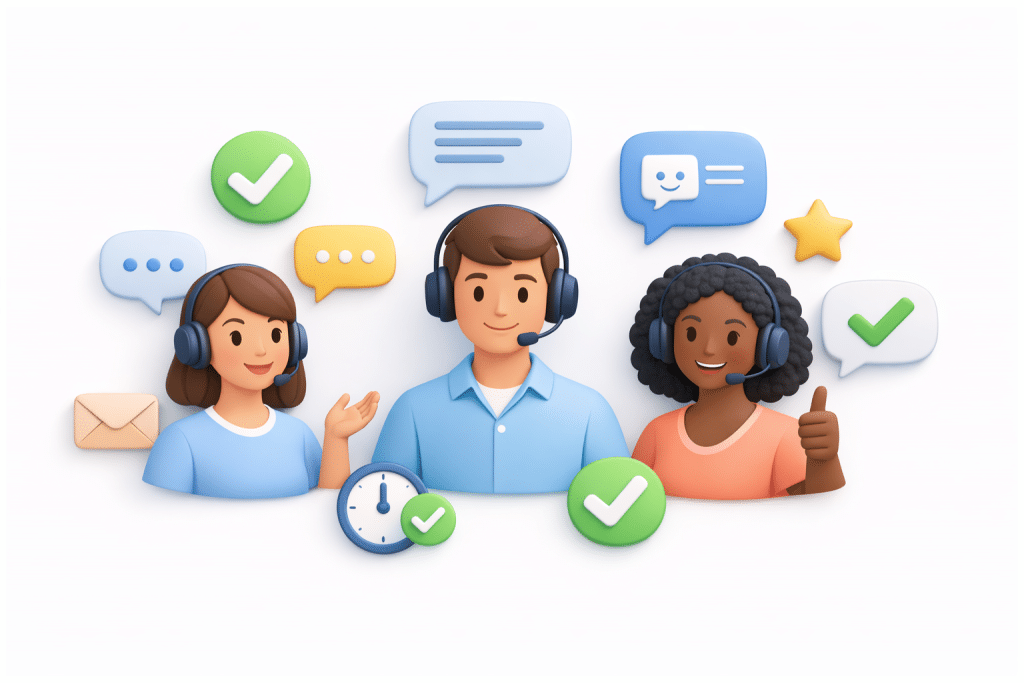
Most support teams fall into one dominant archetype, even if they don’t realize it. These archetypes aren’t about good or bad support, they’re about patterns. Each one has strengths, weaknesses, and situations where it works best.
Understanding these archetypes helps you recognize where your team currently stands and what kind of experience your customers are actually getting.
The Firefighter Support Archetype
The Firefighter archetype is purely reactive. This team exists to put out fires as they happen. Tickets come in, issues explode, and the goal is to respond as quickly as possible.
Firefighter teams are usually busy, very busy. Response times may look good on paper, but the same issues keep resurfacing because there’s little time to step back and fix root causes.
Common traits
- Support only engages after a problem occurs
- High ticket volume and constant urgency
- Little documentation or long-term planning
Strengths
- Fast reactions during crises
- Strong in high-pressure situations
Weaknesses
- Repeated issues and customer frustration
- High agent burnout
- No preventive strategy
Best for
- Early-stage startups
- Crisis situations or major outages
The Script-Driven Support Archetype
Script-driven support relies heavily on predefined responses, workflows, and playbooks. Agents follow set steps to resolve issues, ensuring consistency across all customer interactions.
This archetype is common in large teams or outsourced support environments where speed and uniformity are prioritized over personalization.
Common traits
- Heavy use of macros and scripts
- Limited flexibility for edge cases
- Strong focus on compliance and efficiency
Strengths
- Consistent responses
- Easier onboarding for new agents
- Predictable support quality
Weaknesses
- Feels robotic to customers
- Poor handling of complex or emotional issues
- Limited agent autonomy
Best for
- High-volume support teams
- Simple or repetitive customer issues
The Relationship-Builder Support Archetype
The Relationship-Builder archetype puts people first. The goal isn’t just to close tickets but to make customers feel heard, understood, and valued.
These teams take time to listen, ask questions, and build long-term trust. Customers often remember these interactions long after the issue is resolved.
Common traits
- Empathy-driven communication
- Personalized responses
- Strong customer context
Strengths
- High customer loyalty
- Positive brand perception
- Strong CSAT scores
Weaknesses
- Slower resolution times
- Harder to scale without structure
Best for
- SaaS and service-based businesses
- Brands focused on long-term retention
The Technical Expert Support Archetype
The Technical Expert archetype is built around deep product and system knowledge. These support teams are highly skilled, often with backgrounds in engineering, IT, or product development, and they thrive when dealing with complex or technical issues.
Customers usually come to this team when something is broken in a non-obvious way, or when simpler support teams can’t resolve the issue.
Common traits
- Strong understanding of the product’s backend and architecture
- Comfortable troubleshooting complex issues
- Frequent collaboration with engineering or product teams
Strengths
- High first-contact resolution for complex problems
- Accurate and thorough solutions
- Strong internal credibility
Weaknesses
- Can over-explain or use technical language
- Slower response times for simple issues
- Less focus on emotional reassurance
Best for
- Developer tools and APIs
- Fintech, healthtech, and infrastructure products
- Products with complex integrations
The Proactive Support Archetype
Proactive support teams focus on preventing issues before customers even notice them. Instead of waiting for tickets, they use data, patterns, and customer behavior to anticipate problems.
This archetype is a sign of a mature support organization. It shifts support from being reactive to being strategic.
Common traits
- Monitoring customer behavior and usage patterns
- Sending alerts, tips, or updates before issues escalate
- Close alignment with product and data teams
Strengths
- Reduced ticket volume
- Higher customer trust
- Fewer repeated issues
Weaknesses
- Requires strong data and tooling
- Harder to implement without scale
Best for
- SaaS platforms with recurring users
- Subscription-based products
- Teams with access to analytics and automation
The AI-First Support Archetype
The AI-First archetype uses automation, chatbots, and self-service as the primary line of support. Human agents step in only when the AI cannot resolve the issue.
This approach is designed for scale and efficiency, especially in fast-growing businesses with large user bases.
Common traits
- Chatbots and automated workflows handle most inquiries
- Strong knowledge bases and FAQs
- Human escalation for edge cases
Strengths
- 24/7 availability
- Lower operational costs
- Fast response times
Weaknesses
- Can feel impersonal
- Frustrating if escalation paths are unclear
- Depends heavily on training quality
Best for
- High-volume support environments
- E-commerce and fintech platforms
- Global products with round-the-clock users
Comparing Customer Support Archetypes
No customer support archetype is universally “better” than the others. Each one optimizes for something different, speed, empathy, expertise, or scale. The real problem starts when a business uses the wrong archetype for its customers or tries to force one approach to solve every situation.
Here’s how the main customer support archetypes compare across key areas.
Speed vs Empathy
Firefighter and AI-first support teams are usually fast, but speed often comes at the expense of emotional connection. Relationship-builder teams, on the other hand, prioritize empathy and understanding, sometimes sacrificing quick resolution.
The right balance depends on how emotionally invested your customers are in your product.
Consistency vs Flexibility
Script-driven support offers predictable and consistent responses, which works well for simple or repetitive issues. However, technical expert and relationship-driven archetypes shine in complex or sensitive situations where flexibility matters more than uniformity.
Scalability vs Personalization
AI-first and script-driven archetypes scale easily as ticket volume grows. Relationship-builder and technical expert teams deliver more personalized support but require stronger processes to scale without burning out agents.
Cost Efficiency vs Long-Term Value
Reactive and AI-driven models may reduce short-term costs, but they can miss opportunities to build loyalty. Proactive and relationship-focused archetypes often cost more upfront but generate long-term value through retention and advocacy.
Understanding these trade-offs helps businesses avoid copying support models that worked for other companies but don’t fit their own customers or stage of growth.
How to Choose the Right Customer Support Archetype for Your Business
Choosing the right customer support archetype isn’t about copying what big companies are doing. It’s about aligning your support style with your customers, your product, and your stage of growth. The wrong archetype can frustrate users just as much as bad support.
Here’s how to make the right choice.
Consider Your Business Stage
Early-stage startups often lean toward the Firefighter archetype because speed matters more than polish. As the business grows, this approach becomes unsustainable. Mature businesses usually shift toward proactive or AI-assisted support to reduce volume and improve efficiency.
Understand Your Customer Expectations
Some customers want quick answers and minimal interaction. Others want reassurance, empathy, and detailed explanations. For example:
- Consumer apps often benefit from AI-first or script-driven support
- B2B, SaaS, and fintech products usually need relationship-driven or technical expert support
Your archetype should match how important your product is to your customer’s daily life or business.
Evaluate Product Complexity
The more complex your product, the less effective rigid scripts and full automation become. Technical products require knowledgeable agents and clear escalation paths. Simple products, on the other hand, can thrive with automation and self-service.
Match Archetypes With the Right Tools
Your archetype should guide your tooling, not the other way around. A proactive or hybrid support model needs tools that combine live chat, automation, analytics, and customer context in one place.
This is where customer support platforms like SalesGroup come in. SalesGroup supports multiple customer support archetypes by offering live chat, AI chatbot capabilities, surveys, push notifications, and customer insights all in a single platform.
That flexibility makes it easier for teams to evolve from reactive support to more proactive or AI-assisted models without completely changing their tech stack.
Can You Combine Multiple Customer Support Archetypes?
Yes, and in reality, most successful support teams do.
Modern customer support is rarely built around a single archetype. Instead, teams adopt hybrid models that combine the strengths of multiple approaches.
For example:
- AI-first support handles common questions
- Script-driven workflows manage repetitive tasks
- Relationship builders step in for sensitive issues
- Technical experts handle complex escalations
The key is clarity. Customers should never feel trapped in automation or passed endlessly between agents. Tools like SalesGroup help make these hybrid models work by allowing smooth handoffs between chatbots and human agents while keeping full conversation context.
The Future of Customer Support Archetypes
Customer support is moving away from one-size-fits-all models. The future is adaptive support—teams that can shift archetypes depending on the situation, customer value, and urgency.
We’re already seeing:
- More AI handling first-level support
- Stronger emphasis on proactive communication
- Support teams playing a role in growth and retention
- Tools evolving into full customer experience platforms
Businesses that understand and intentionally design their customer support archetypes will have a major advantage. They won’t just resolve issues, they’ll build trust, loyalty, and long-term customer relationships.
