

Top 9 Real Estate Chatbots and How to Use them
Staying connected with buyers and sellers is one of the biggest challenges in real estate today. People expect fast answers, and the agents who respond quickly are usually the ones who close the deal. This is where real estate chatbots come in. These smart tools talk to website visitors, answer questions, and help agents save time, all without needing a human to be online 24/7.
In this article, we will be exploring what real estate chatbots are, how they are changing the industry, and the 9 best options you can choose from in 2026.
What Is a Real Estate Chatbot?
A real estate chatbot is a computer program that talks to people online, just like a real assistant would. It can answer common questions, recommend properties, and even book appointments. You can add a chatbot to your website, social media pages, or mobile app. Many modern chatbots now use AI to understand normal human language, not just fixed scripts, so conversations feel more natural.
There are two main types of real estate chatbots. The first type uses simple decision trees, where the visitor picks from a list of options, like clicking buttons to choose a budget range or property type. These are easy to set up but can feel stiff if a buyer asks something outside the script.
The second type uses AI and natural language processing, which means it can understand free-text questions, hold a more natural back-and-forth conversation, and still know when to ask for a phone number or pass the chat to a human agent. In 2026, most top chatbots blend both styles: they follow a structured flow for important steps like collecting contact details, but switch to open conversation when a visitor asks something unusual.
A real estate chatbot can live in more than one place at once. It might greet visitors the moment they land on a property listing page, follow up with a buyer on WhatsApp after a missed call, or answer a quick question on Instagram DM while an agent is busy showing a different property. Behind the scenes, the chatbot is usually connected to a CRM, so every conversation, lead detail, and follow-up gets saved automatically instead of getting lost in someone’s inbox.
What makes this matter so much in real estate is speed. Buyers rarely wait around for a reply. Agents who respond to a new lead within the first few minutes are far more likely to win that client than agents who reply hours later. A chatbot removes the waiting time completely, since it can reply within seconds, at any hour, even while the agent is asleep or with another client.
How Chatbots Are Changing Real Estate
Real estate professionals are using chatbots more than ever. Here is why:
1. Always available. A chatbot can answer questions any time, day or night. Many leads come in after work hours, and a chatbot makes sure no one is ignored.
2. Better leads. Chatbots can ask buyers simple questions about budget, timeline, and location. This helps agents know which leads are serious before they even speak to them.
3. Property matching. A chatbot can recommend homes based on what a buyer is looking for, saving everyone time.
4. Easy booking. Buyers can schedule a viewing directly through the chat, without going back and forth on email or phone.
5. Lower cost. A chatbot can handle many conversations at once, which means agencies need fewer staff for basic questions.
The 9 Best Real Estate Chatbots in 2026
1. SalesGroup AI Chatbot
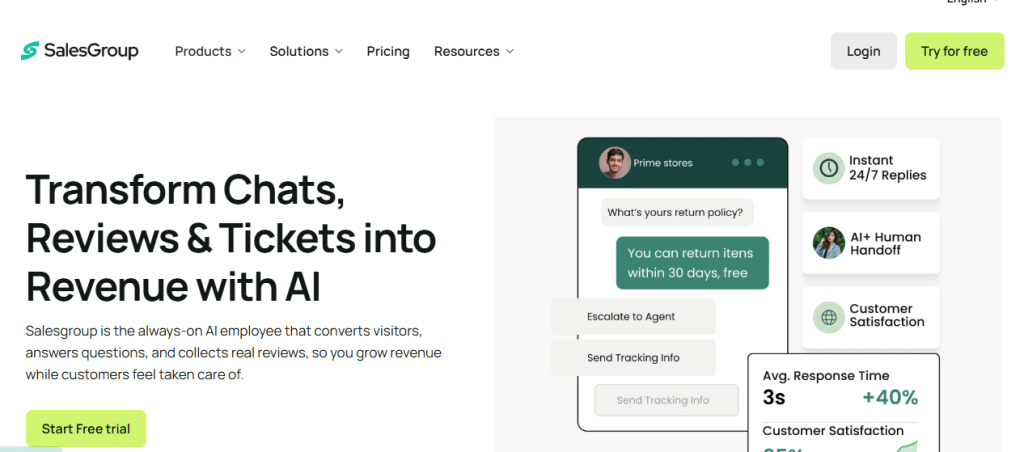
SalesGroup AI is one of the strongest choices for real estate agencies that want to generate leads and give buyers a personal experience. It uses smart AI to understand what a client wants and suggests properties that match in real time.
Pros:
- Smart AI that gives personalized property suggestions
- Connects easily with most real estate CRM systems
- Automatically follows up with leads and answers common questions
- Simple to set up, even for teams without technical skills
- Strong support for agencies that want to convert more leads into clients
Best for: Agencies that want to grow their leads and give every client a personal touch.
2. Structurely
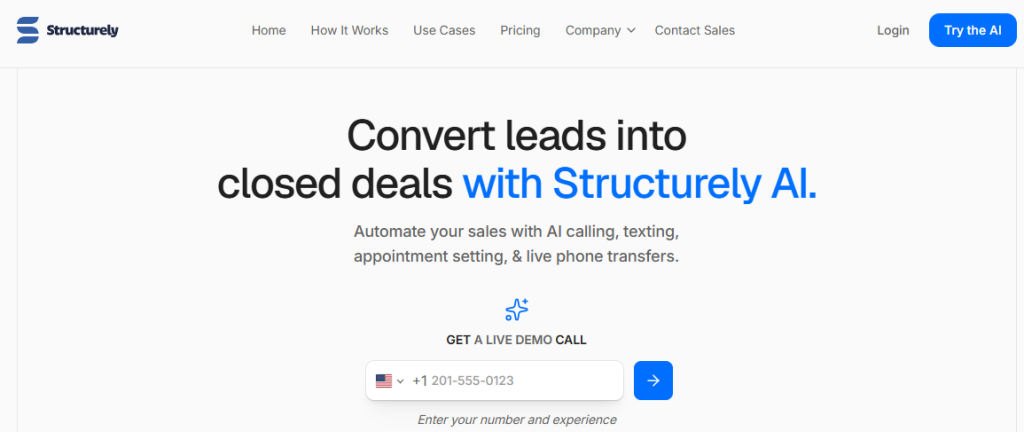
Structurely is built to help agents nurture leads with conversations that feel human, not robotic. Instead of just answering a question and going quiet, it keeps checking in with a buyer over days and weeks, the same way a good assistant would follow up by text.
This matters because many real estate leads are not ready to buy immediately. They might browse for months before making a move, and Structurely is designed to stay in touch during that whole window so the lead never goes cold. It works well for both buyer leads and seller leads, asking the right questions at the right time and flagging the ones who are closer to making a decision.
Pros:
- Strong lead nurturing
- Works well with popular real estate tools
Cons:
- Limited customization for advanced users
- Pricing can be high for solo agents
Best for: Agents who want reliable, ongoing lead engagement.
3. Roof AI

Roof AI focuses on tracking buyer behaviour and turning that information into useful insights. It is a good pick for agencies that like to make decisions based on data. Instead of just chatting with a visitor and moving on, it studies what pages they visit, what questions they ask, and how serious their interest looks, then scores the lead so agents know who to call first
Pros:
- Strong analytics and reporting
- Automates lead follow-ups well
Cons:
- Fewer integrations with outside tools compared to other platforms
Best for: Agencies that want data-driven engagement.
4. ManyChat
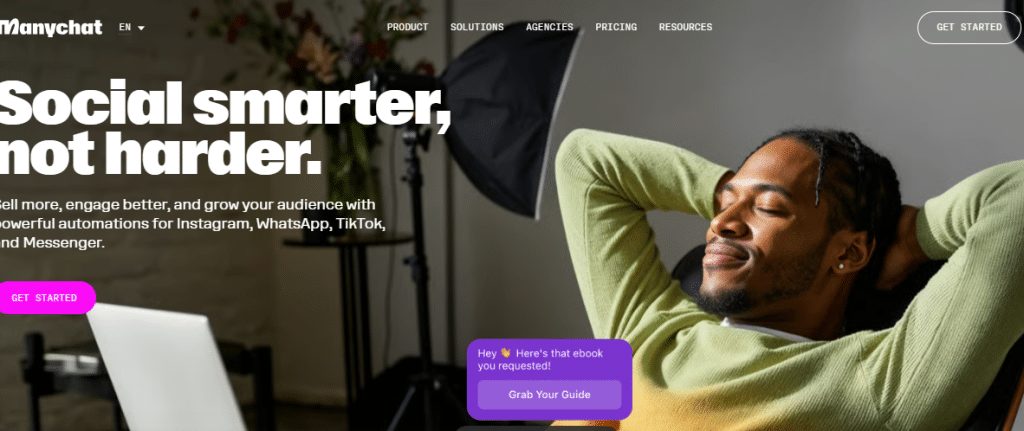
ManyChat is a popular tool for connecting with clients through Facebook Messenger, Instagram, WhatsApp, and SMS. It is widely used because it is simple to set up. ManyChat lets agencies build automated flows that greet a new follower, ask about their property needs, and capture their contact details, all without an agent typing a single message.
Pros:
- Works across multiple messaging channels
- Easy to use, even without technical knowledge
- Good for capturing and qualifying leads quickly
Cons:
- Needs some marketing knowledge to build strong automation flows
Best for: Agents who want to reach clients on the apps they already use daily.
5. ChatBot
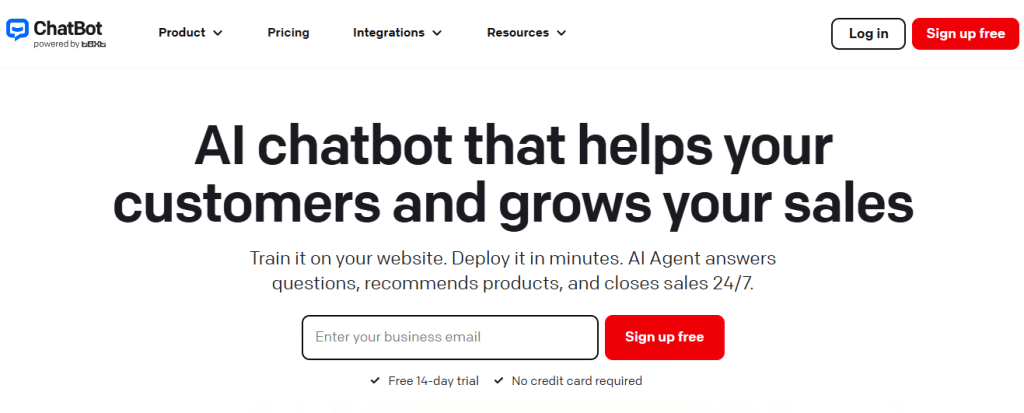
ChatBot offers a simple way to build conversations that guide website visitors toward booking a viewing or leaving their contact details. A visitor lands on the website, the bot asks a few simple questions, and based on the answers, it either books a viewing, shares property details, or passes the conversation to a human agent
Pros:
- Easy to set up
- Good analytics to track performance
Cons:
- Fewer real estate-specific features compared to specialized tools
Best for: Agents who want a simple, general-purpose chatbot.
6. Botpress
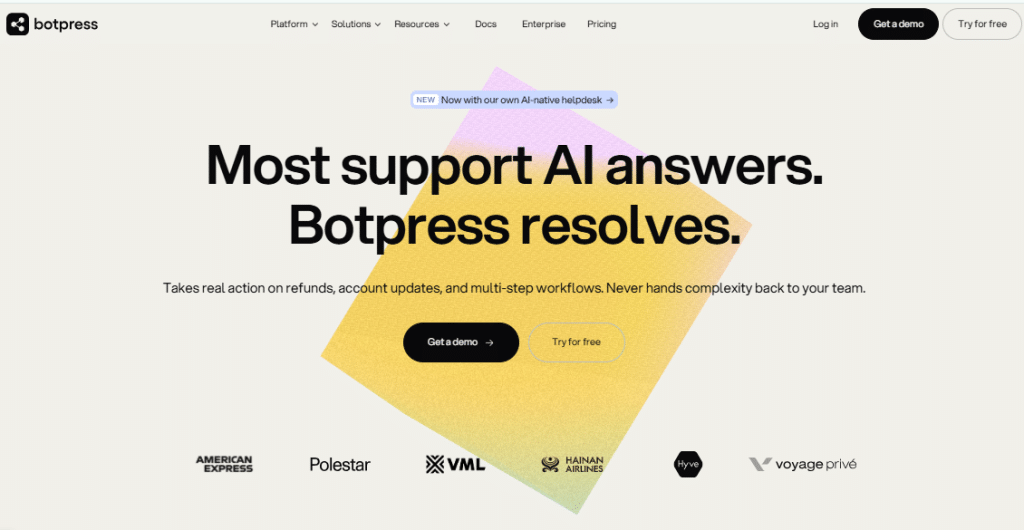
Botpress is an open platform that allows full control over how a chatbot works. It is ideal for businesses that want something built exactly to their needs. This gives agencies full control over how their chatbot behaves, what data it collects, and where that data is stored. Because it can be hosted on a company’s own servers instead of a third-party cloud, it appeals to larger real estate firms with strict data privacy requirements.
Pros:
- Fully customizable
- Can be hosted on your own servers for extra privacy
Cons:
- Needs technical skill to set up properly
Best for: Agencies with an in-house tech team.
7. Freshchat
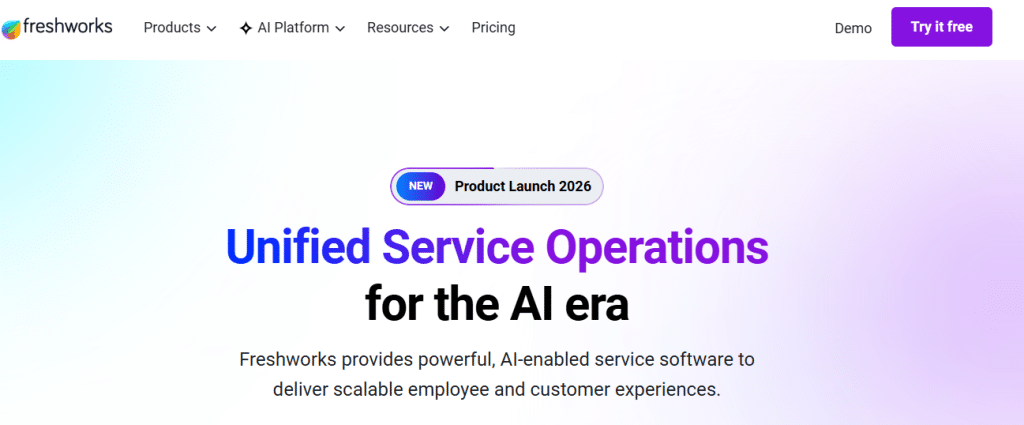
Freshchat is part of the Freshworks family of tools. It supports conversations across many channels and connects easily with Freshworks CRM. Its biggest strength is bringing all customer conversations, whether from a website widget, email, or messaging app, into one shared inbox. For a real estate business, this means an agent does not need to jump between five different apps to see what a client has asked.
Pros:
- Works across many communication channels
- Easy CRM integration if you already use Freshworks
Cons:
- Not built specifically for real estate, so some features feel generic
Best for: General customer support in a real estate business.
8. LivePerson
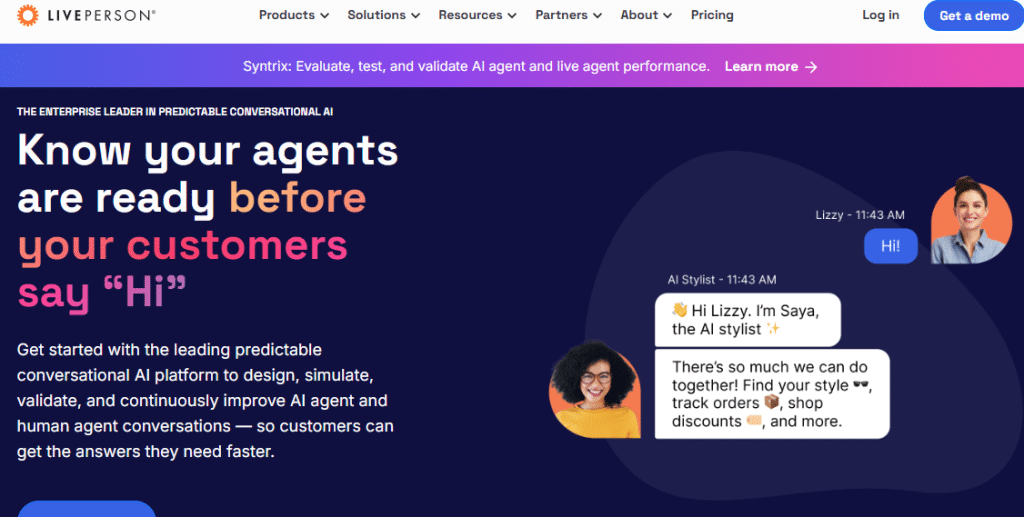
LivePerson is built for businesses that handle a high number of customer conversations and want AI to manage much of it. It blends live chat with AI-driven automation, so simple questions get instant automated answers, while more complex conversations are routed to a live human agent.
Pros:
- Strong omnichannel support
- Good at handling large volumes of chats
Cons:
- Can be expensive for small agencies
Best for: Large real estate firms with many daily inquiries.
9. RealtyChatbot
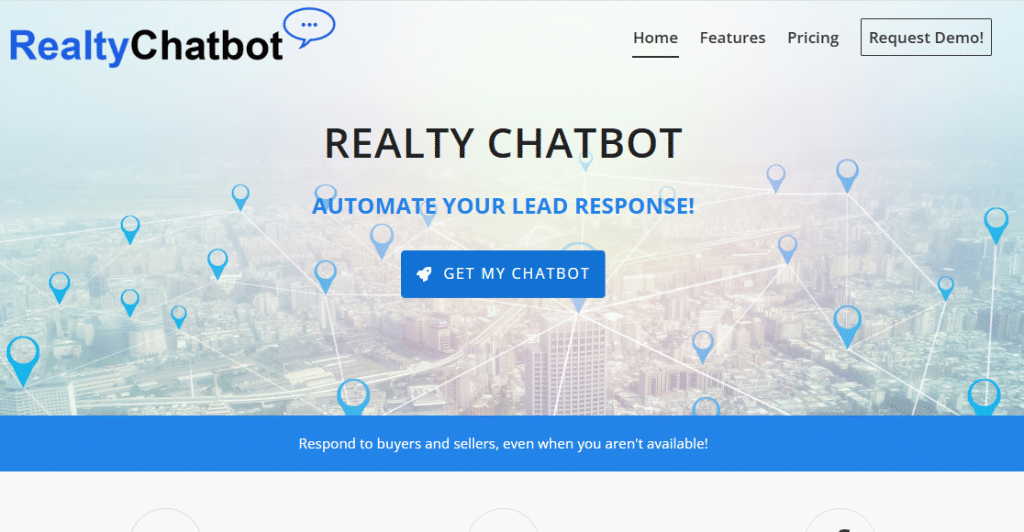
RealtyChatbot is built specifically to respond to property inquiries fast, day or night, and send the lead straight to your inbox. As soon as a visitor asks about a listing, the chatbot replies instantly and emails the lead details directly to the agent, so nothing sits unanswered overnight.
It relies on quick-reply buttons rather than long open conversations, which keeps things simple for buyers who just want a fast answer, like confirming if a property is still available or asking about price.
Pros:
- Captures and emails leads instantly
- Quick-reply buttons make conversations faster for users
Cons:
- Fewer advanced features compared to bigger platforms
Best for: Agents and small teams who want a simple, dedicated lead-capture tool.
How to Set Up a Real Estate Chatbot With SalesGroup AI
Setting up SalesGroup AI is simple. Here is how to do it step by step:
1. Decide what you want the chatbot to do. Do you want it to qualify leads, answer property questions, book viewings, or recommend homes? Knowing your goal first makes setup much easier.
2. Pick the features you need. SalesGroup AI offers lead management, property search filters, live agent handoff, and appointment booking. Choose the ones that match your business.
3. Create your account. Sign up on the SalesGroup AI platform and pick a real estate template, or build your chatbot from scratch.
4. Give your chatbot a personality. Write a warm greeting, such as: “Hi! I’m here to help you find your dream home. What are you looking for today?” Then build out the conversation flow for FAQs, property suggestions, and lead capture.
5. Connect it to your platforms. Add the chatbot to your website, Facebook, Instagram, WhatsApp, your mobile app, or your CRM, such as Salesforce or HubSpot.
6. Test before you launch. Run sample conversations to check that it answers correctly. Use the built-in analytics to see where it needs improvement.
7. Launch it. Once it works the way you want, put it live on your website and social pages, and let your audience know it is available.
8. Keep improving it. Check the dashboard regularly. Look at engagement, conversion rates, and questions the chatbot struggled with, then make small updates over time.
Conclusion
Real estate chatbots have become an important part of how modern agencies work. They answer questions instantly, qualify leads, and free up agents to focus on closing deals instead of chasing messages.
Among all the options available, SalesGroup AI stands out for combining ease of use with strong AI features built specifically for real estate. If you are ready to give your buyers and sellers a faster, more personal experience, SalesGroup AI is a great place to start.
