

What is Agentic AI? Usecase and Platforms
Artificial intelligence is undergoing a fundamental shift. While traditional AI systems have excelled at specific tasks like image recognition or language translation, a new paradigm is emerging that promises to revolutionize how we interact with and deploy AI systems. This paradigm is called agentic AI – artificial intelligence that can act autonomously, make decisions, and pursue goals with minimal human intervention.
What is Agentic AI?
Agentic AI refers to artificial intelligence systems that possess agency – the ability to act independently, make decisions, and take actions to achieve specific goals. Unlike conventional AI that responds to direct prompts or performs predetermined tasks, agentic AI can:
- Plan and strategize to accomplish complex, multi-step objectives
- Make autonomous decisions based on changing circumstances
- Interact with external systems and tools to gather information or execute actions
- Adapt and learn from experiences to improve future performance
- Operate with minimal supervision once given high-level instructions
Think of it as the difference between a calculator that performs operations when you press buttons versus a personal assistant that can research, plan, and execute a complete project on your behalf.
The Technology Behind Agentic AI
Several technological advances have converged to make agentic AI possible:
Large Language Models (LLMs) as Reasoning Engines
Modern LLMs like GPT-4, Claude, and others have demonstrated remarkable reasoning capabilities. They can break down complex problems, understand context, and generate coherent plans of action.
Tool Integration and API Connectivity
Agentic AI systems can connect to external tools, databases, and APIs, allowing them to perform real-world actions like sending emails, making purchases, or controlling smart home devices.
Reinforcement Learning and Feedback Loops
These systems can learn from the outcomes of their actions, gradually improving their decision-making processes through trial and error or human feedback.
Multi-Modal Capabilities
Advanced agentic AI can process and act upon various types of input – text, images, audio, and sensor data – making them more versatile and capable of operating in complex environments.
Generative Vs Agentic AI
Generative AI is focused on creation – it produces new content like text, images, videos, music, or code based on patterns learned from training data. It’s essentially a creative powerhouse that generates original outputs in response to prompts.
Agentic AI is focused on action and decision-making – it autonomously performs tasks, makes decisions, and works toward specific goals with minimal human supervision. It’s designed to act independently to achieve objectives.
Real-World Applications
Agentic AI is already making waves across multiple industries:
Business and Productivity
- Automated customer service that can handle complex inquiries, escalate issues, and even process refunds
- Project management assistants that can coordinate teams, track progress, and adjust timelines autonomously
- Financial planning systems that continuously monitor markets and adjust investment strategies
Healthcare
- Patient monitoring systems that can detect health anomalies and alert medical staff or even initiate emergency protocols
- Drug discovery platforms that can design and test new compounds with minimal human oversight
- AI-powered patient communication platforms like Textline help healthcare providers automate appointment reminders and manage patient inquiries through secure two-way SMS.
Software Development
- Code generation and debugging tools that can write, test, and deploy software solutions
- Automated DevOps systems that can manage infrastructure, handle deployments, and respond to system issues
- Quality assurance agents that can design and execute comprehensive testing protocols
Personal Assistance
- Smart home orchestrators that learn your preferences and automatically adjust lighting, temperature, and entertainment systems
- Travel planning agents that can research destinations, book flights and hotels, and create detailed itineraries
- Learning tutors that adapt teaching methods based on student progress and learning styles
Here are the 5 key components of an agentic AI system:
5 Components of Agentic AI
1. Understanding Customer Needs
The capability to comprehend, interpret, and prioritize user requirements, goals, and preferences to determine what objectives the AI should pursue and how to align its actions with user intentions.
2. Planning and Reasoning Engine
The cognitive component that breaks down complex goals into actionable steps, creates strategies, and makes logical decisions about how to achieve objectives.
3. Memory and State Management
The system that maintains persistent context, stores experiences, tracks progress toward goals, and learns from past actions to inform future decisions.
4. Tool Integration and Action Execution
The interface layer that allows the AI to interact with external systems, APIs, databases, and real-world environments to perform actual tasks and implement its plans.
5. Feedback Loop and Learning Mechanism
The adaptive component that evaluates the outcomes of actions, learns from successes and failures, and continuously improves decision-making and performance over time.
Top 5 Agentic AI apps
As we advance deeper into the era of artificial intelligence, agentic AI has emerged as a game-changing technology that goes beyond simple automation. Unlike traditional AI that responds to prompts, agentic AI systems can think, plan, and act autonomously to achieve specific goals.
Here are the top 5 agentic AI applications that are revolutionizing business operations across industries.
1. SalesGroup
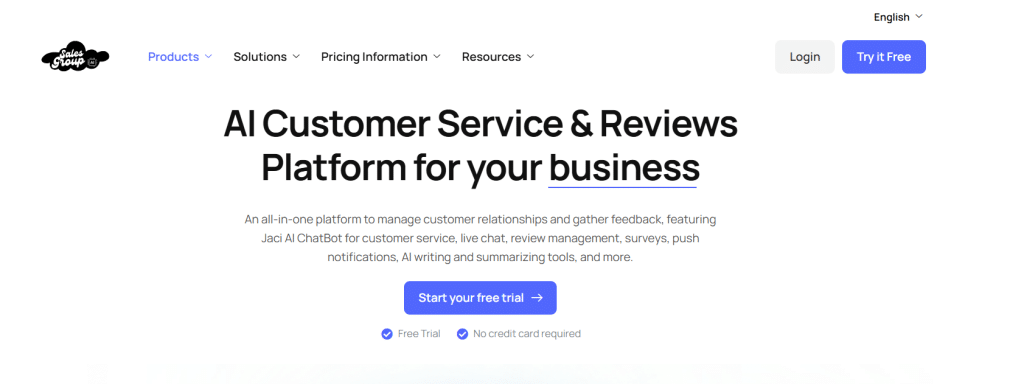
Leading our list is SalesGroup, an innovative agentic AI platform that’s transforming how organizations approach sales and revenue operations. What sets SalesGroup apart is its ability to autonomously analyze complex sales data, predict outcomes, and execute strategic actions without constant human oversight.
Key Agentic Capabilities:
- Autonomous Deal Progression: AI agents independently identify bottlenecks in sales pipelines and automatically trigger appropriate interventions
- Predictive Revenue Forecasting: Advanced algorithms analyze historical patterns and market conditions to generate accurate revenue predictions
- Dynamic Territory Management: Automatically adjusts sales territories based on performance metrics and market opportunities
- Intelligent Lead Scoring: Continuously refines lead qualification criteria based on conversion patterns and customer behavior
What Makes It Agentic:
SalesGroup’s AI doesn’t just analyze data—it makes strategic decisions. The platform can autonomously reallocate resources, adjust pricing strategies, and even initiate outreach campaigns based on market conditions and performance indicators Forbes.
2. Tidio with Lyro – The Conversational AI Customer Service Agent
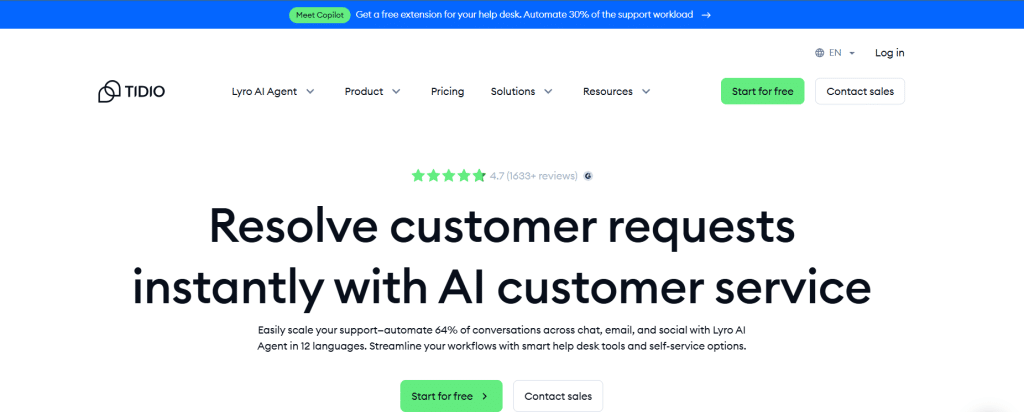
Tidio’s Lyro AI Agent represents the pinnacle of agentic customer service technology. Powered by Claude (Anthropic AI) and proprietary models, Lyro operates as an autonomous customer service representative that can handle complex inquiries across multiple channels.
Autonomous Features:
- Multi-Platform Intelligence: Operates seamlessly across live chat, email, social media, and other communication channels in 100+ languages
- Self-Learning Knowledge Base: Automatically updates its understanding based on new support content and customer interactions
- Proactive Problem Resolution: Identifies potential issues before they escalate and initiates preventive measures
- Contextual Product Recommendations: Analyzes customer behavior and inventory data to suggest relevant products
Performance Metrics:
- Resolves up to 67% of customer inquiries automatically
- Reduces average response time from 2 minutes to under 6 seconds
- Provides 24/7 customer support without human intervention
- Integrates with 20+ enterprise platforms including Zendesk, Salesforce, and Shopify
Why It’s Truly Agentic:
Lyro doesn’t just follow scripts—it understands context, makes decisions about when to escalate issues, and continuously improves its responses based on customer feedback and success metrics Tidio.
3. Ada
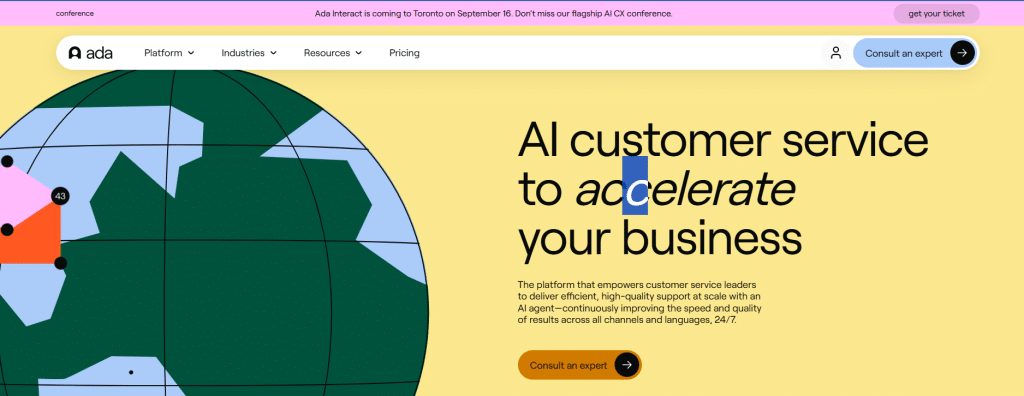
Ada is a sophisticated conversational AI platform designed to resolve customer support inquiries autonomously. Unlike traditional chatbots, Ada operates as an intelligent customer service agent capable of understanding complex problems, accessing multiple knowledge sources, and providing comprehensive solutions without human intervention.
Key Capabilities
- Advanced Natural Language Processing: Ada understands customer intent even when expressed in unclear or complex language, interpreting context, emotion, and underlying needs to provide accurate responses.
- Dynamic Knowledge Management: The platform automatically updates its knowledge base by learning from resolved tickets, documentation changes, and product updates, ensuring customers always receive current information.
- Multi-Modal Support: Ada handles text, voice, and visual inputs, allowing customers to describe problems through their preferred communication method while maintaining consistent service quality.
- Resolution Tracking: The system follows up on provided solutions to ensure customer satisfaction and learns from cases where initial responses didn’t fully resolve issues.
Agentic Features
- Self-Learning Capability: Improves resolution accuracy by analyzing successful and unsuccessful interactions
- Autonomous Knowledge Discovery: Identifies gaps in information and requests updates from relevant teams
- Personalization Engine: Adapts communication style and solution approach based on individual customer preferences
- Performance Analytics: Continuously monitors its own effectiveness and suggests improvements
4. Intercom

Intercom operates as an agentic AI-powered customer engagement platform that proactively manages the entire customer lifecycle from acquisition to retention. It functions as an intelligent relationship manager, understanding customer needs and automatically orchestrating appropriate responses across multiple channels.
Key Capabilities
- Behavioral Triggering: Intercom monitors customer actions across websites, apps, and email to automatically trigger relevant messages, offers, or support interventions based on specific behavioral patterns and lifecycle stages.
- Intelligent Routing: The platform analyzes incoming inquiries and automatically routes them to the most appropriate team member or AI agent based on complexity, expertise required, and current workload distribution.
- Personalized Customer Journeys: Using customer data and interaction history, Intercom creates and executes individualized engagement sequences that adapt based on customer responses and behavior changes.
- Predictive Customer Health: The system identifies customers at risk of churning and automatically initiates retention campaigns or proactive support outreach to address potential issues before they escalate.
Agentic Features
- Autonomous Campaign Management: Creates and optimizes marketing campaigns based on customer segment performance
- Dynamic Conversation Flow: Adapts conversation paths in real-time based on customer responses and goals
- Cross-Channel Orchestration: Coordinates messaging across email, in-app notifications, and chat for consistent experiences
- Revenue Impact Tracking: Monitors and optimizes for business outcomes rather than just engagement metrics
5. Kore.ai
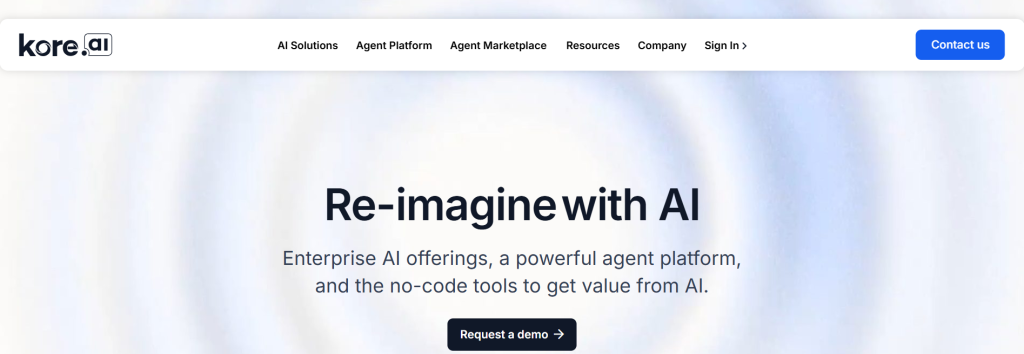
Kore.ai represents a comprehensive agentic AI platform designed to build intelligent virtual assistants and automate complex business operations across multiple departments and functions. It operates as an intelligent conversational AI manager, capable of understanding natural language, making autonomous decisions, and executing multi-step workflows across various enterprise systems without constant human oversight.
Key Capabilities
- Enterprise Virtual Assistant Development: Kore.ai enables organizations to build sophisticated conversational AI agents that can handle complex multi-turn dialogues, understand context, and perform tasks across different business functions and departments.
- Autonomous Workflow Automation: The platform continuously manages end-to-end business processes, from customer service inquiries to HR requests, automatically routing tasks, gathering information, and executing appropriate actions based on predefined business logic.
- Intelligent System Integration: Using advanced APIs and connectors, Kore.ai seamlessly integrates with existing enterprise systems including CRM, ERP, HR platforms, and databases to provide unified conversational access to business data and functions.
- Multi-Channel Orchestration: The system manages consistent conversational experiences across multiple channels including web chat, mobile apps, voice assistants, messaging platforms, and email, maintaining context and continuity across all touchpoints.
Agentic Features
- Contextual Decision Making: Makes intelligent responses and actions based on conversation history, user intent, and business context without requiring human intervention for each interaction
- Autonomous Task Execution: Performs complex business operations including data retrieval, form processing, appointment scheduling, and workflow initiation through natural language commands
- Adaptive Learning: Continuously improves conversation quality and task execution accuracy based on user interactions, feedback, and successful resolution patterns
- Proactive Communication: Automatically initiates conversations, sends notifications, and provides updates to users based on system events, deadlines, and business triggers
Conclusion
Agentic AI represents a paradigm shift that could be as transformative as the advent of the internet or mobile computing. While the technology offers unprecedented opportunities to augment human capabilities and solve complex problems, it also demands careful consideration of its implications for society, employment, and human agency itself.
The organizations and individuals who can successfully navigate the opportunities and challenges of agentic AI will likely find themselves at a significant advantage in the coming decade. The key is to approach this technology with both enthusiasm for its potential and respect for its power.
As we stand at the threshold of this new era, one thing is certain: the future will be shaped not just by what we can teach machines to do, but by how well we can work alongside them as partners in solving the world’s most pressing challenges
