
8 Best Customer Communication Software in 2026
Customer communication software are software solutions designed to enable seamless interactions between businesses and their customers. They support a variety of channels, including live chat, email, social media, phone, and even AI-powered chatbots, making them essential for modern customer service operations.
These tools offer numerous benefits for businesses:
- Enhanced Customer Experience: Real-time engagement and personalized interactions lead to improved satisfaction and loyalty.
- Efficiency and Productivity: Automation streamlines query resolution, reduces response times, and optimizes team performance.
- Cost Savings: They reduce the need for large support teams by automating repetitive tasks.
- Actionable Insights: Provide analytics on customer behavior and preferences to refine strategies.
- Consistency Across Channels: Ensure uniformity in communication across multiple platforms.
8 Best Customer Communication Software in 2025
1. SalesGroup AI

SalesGroup AI is an advanced AI-powered customer service solution designed to enhance lead conversion, customer retention, and sales growth for businesses. It uses cutting-edge conversational AI to engage with customers, providing instant responses and intelligent routing to human agents when necessary. SalesGroup AI can be integrated into websites, apps, and customer service platforms to create seamless, personalized customer interactions.
- Features:
- AI-Powered Chatbots: Automatically engages customers, answers questions, and collects information.
- Lead Scoring and Segmentation: Uses AI to identify high-quality leads and prioritize them.
- Multi-Channel Support: Engages customers through live chat, social media, and email.
- CRM Integration: Integrates seamlessly with CRMs to keep track of customer interactions and enhance sales efforts.
- Automated Follow-Ups: Sends timely, personalized follow-up messages to prospects and customers
Related: Jaci – AI Chatbot
2. Zendesk
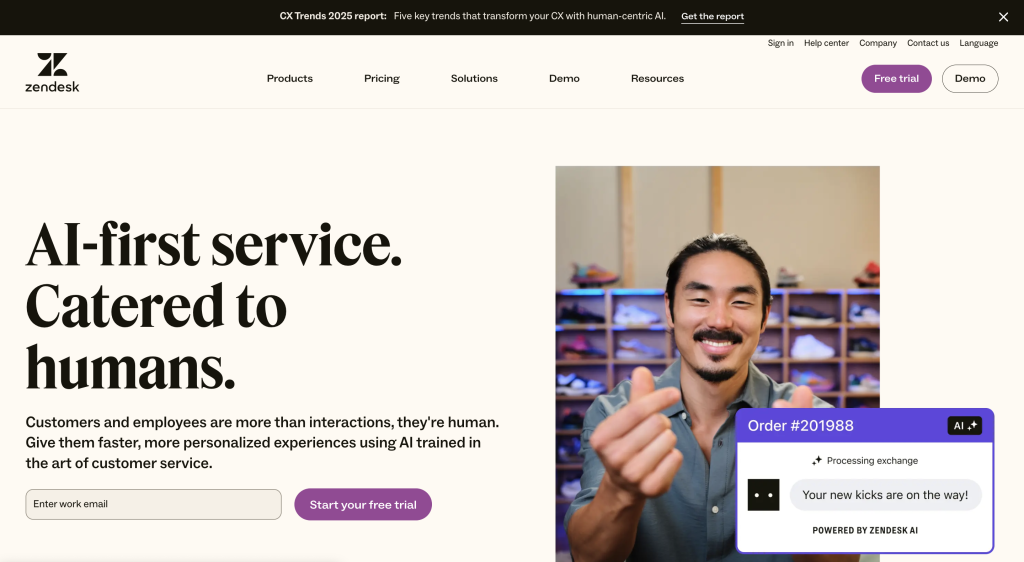
Zendesk is a widely recognized customer service software that helps businesses provide multi-channel support. It is designed to manage customer interactions seamlessly across various platforms, including email, live chat, phone, and social media. It offers a customizable ticketing system and a host of automation tools that help businesses streamline their customer support processes.
- Features:
- Omnichannel Support: Supports email, live chat, voice, social messaging, and more.
- Ticketing System: Allows businesses to track, prioritize, and resolve customer issues efficiently.
- Knowledge Base: Self-service portal for customers to find solutions.
- Automated Workflows: Automates ticket routing, escalations, and responses.
- Reporting and Analytics: Provides in-depth reporting to track agent performance and customer satisfaction.
- Pricing:
- Suite Team: $49 per agent/month (basic features including email and chat support).
- Suite Growth: $79 per agent/month (adds voice support and integrations).
- Suite Professional: $99 per agent/month (includes advanced reporting and analytics).
- Suite Enterprise: $150 per agent/month (customizable workflows and AI tools).
- Pros:
- Excellent scalability for businesses of any size.
- Robust ticket management system.
- Great integrations with other tools like CRM and social media.
- Cons:
- Higher pricing for small businesses.
- Some features (like advanced reporting) are only available on higher-tier plans.
Related: 10 Best Tidio Alternatives and Competitors
3. Intercom
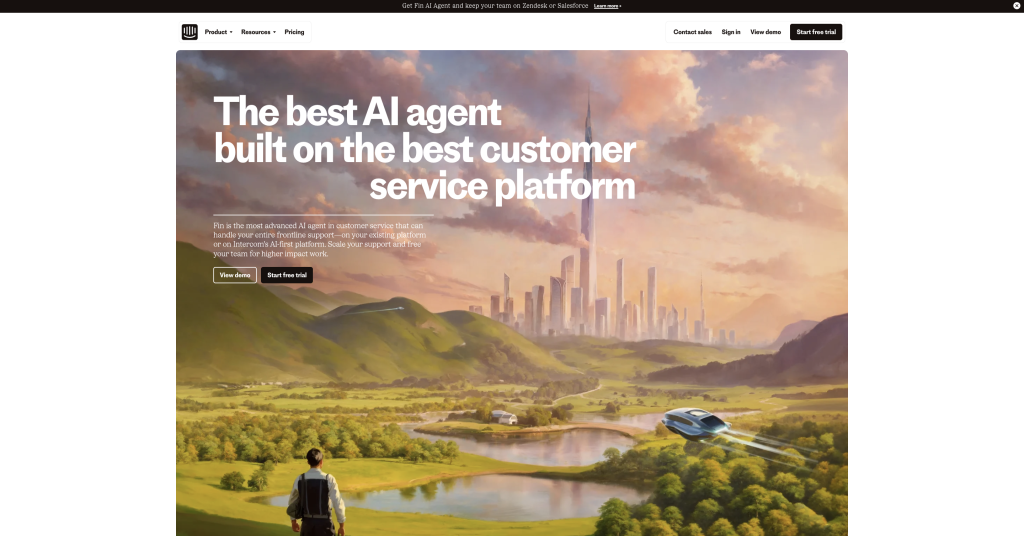
Intercom is an all-in-one customer communication platform that specializes in live chat, messaging, and automation. It’s popular for its user-friendly interface and highly customizable chatbots. Intercom is designed to enhance customer support, engagement, and retention by allowing businesses to communicate with customers across multiple touchpoints.
- Features:
- Live Chat: Allows businesses to engage customers in real time.
- Chatbots and Automation: Offers powerful automated workflows and AI-powered bots for quick responses.
- Customer Segmentation: Segments users based on behavior to send targeted messages.
- Helpdesk: Offers a centralized ticketing system for managing customer queries.
- In-App Messaging: Supports real-time communication within mobile and web apps.
- Pricing:
- Starter: $74 per month (basic live chat and messaging features).
- Growth: Custom pricing (includes advanced messaging and automation features).
- Pro: Custom pricing (adds features like analytics, reporting, and custom integrations).
- Pros:
- Excellent for personalization and customer engagement.
- Powerful automation and bot features to handle high volumes of queries.
- Easy-to-use and intuitive interface.
- Cons:
- Expensive for small teams or businesses just starting out.
- Some users find the range of features overwhelming if only basic functionality is needed.
4. Freshdesk

Freshdesk is a cloud-based customer support software offering a comprehensive suite of tools to manage customer service across email, phone, chat, and social media. It’s suitable for businesses of all sizes, from startups to enterprises. Freshdesk is known for its ease of use, automation features, and integration capabilities.
- Features:
- Ticketing System: Allows businesses to manage and resolve tickets efficiently.
- Multichannel Support: Provides support for email, live chat, social media, and phone.
- Automated Workflows: Automates tasks such as ticket assignment, escalations, and status updates.
- Knowledge Base: Enables customers to self-serve by finding answers to common issues.
- Reporting and Analytics: Offers real-time reports on customer satisfaction and agent performance.
- Pricing:
- Free Plan: Basic features for small teams (includes email support and knowledge base).
- Growth: $15 per agent/month (adds live chat, automation, and social media integration).
- Pro: $49 per agent/month (includes advanced reporting, SLA management, and AI capabilities).
- Enterprise: $79 per agent/month (includes multi-product support and dedicated account manager).
- Pros:
- Very affordable for small businesses.
- Easy to use and set up.
- Great automation and ticket management features.
- Cons:
- Limited third-party integrations in the basic plans.
- Some advanced features are restricted to higher-tier plans.
5. LiveChat
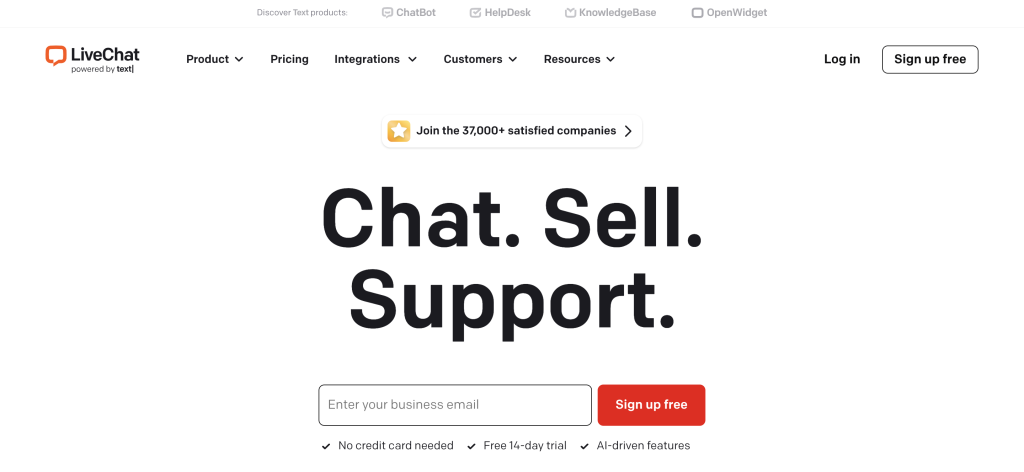
LiveChat is a tool designed to provide businesses with real-time customer support via chat. It enables users to communicate instantly with their customers through a customizable chat widget. LiveChat also offers advanced features like chat transcripts, reporting, and integrations with other platforms like CRMs and social media.
- Features:
- Real-Time Chat: Engage with customers in real time through a customizable chat widget.
- Ticketing System: Allows businesses to track unresolved issues and follow up on them.
- Customizable Widgets: The chat widget can be tailored to match a business’s website design.
- Reporting and Analytics: Provides reports on customer interactions, agent performance, and customer satisfaction.
- Integrations: Supports integrations with CRMs, email, and social media platforms.
- Pricing:
- Starter: $16 per agent/month (includes basic live chat features).
- Team: $33 per agent/month (adds reporting and custom chat widgets).
- Business: $50 per agent/month (includes advanced reporting and integrations).
- Enterprise: Custom pricing (for large organizations with specific needs).
- Pros:
- Simple and easy to use.
- Ideal for businesses focusing on real-time customer support.
- Excellent customer service and chat features.
- Cons:
- Higher-tier features can be costly.
- Lacks built-in CRM functionality.
6. Tidio
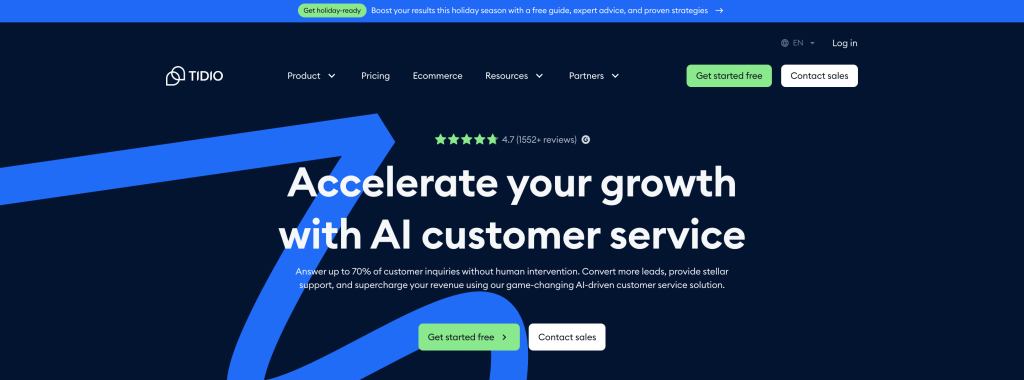
Tidio is a customer communication tool designed to streamline customer support by offering live chat, bots, and email automation. It is a great solution for e-commerce businesses looking to offer instant support through multiple channels.
- Features:
- Live Chat with Bots: Allows businesses to manage chats with customers and use automated bots for quick responses.
- Email Marketing Automation: Includes email workflows to engage and nurture customers.
- Multi-Channel Support: Connects with Facebook Messenger, email, and other messaging apps.
- Knowledge Base: Create FAQs and knowledge articles to help customers find answers.
- Integrations: Works well with e-commerce platforms like Shopify and WooCommerce.
- Pricing:
- Free Plan: Includes basic live chat and chatbot features.
- Tidio Chat: $19 per month (includes multi-channel messaging and more integrations).
- Tidio Chat & Email: $39 per month (adds email automation and reporting features).
- Pros:
- Affordable, especially for small businesses.
- Simple to implement and use.
- Supports both live chat and email automation in one platform.
- Cons:
- Limited reporting tools compared to other platforms.
- Basic automation features are not as advanced as other tools.
Related: The 5 Best Shopping Bots to Revolutionize Online Retail
7. HubSpot Service Hub
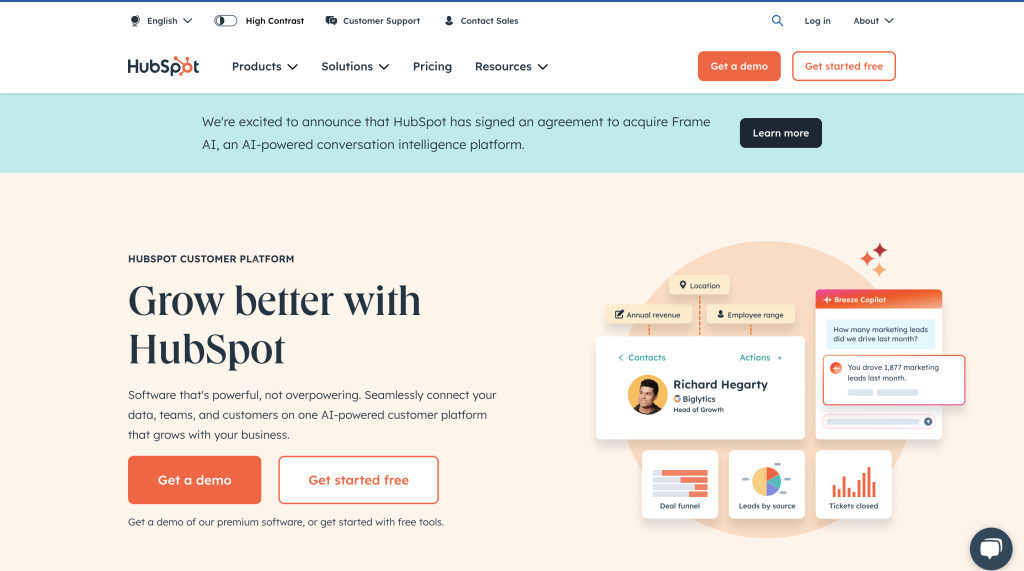
HubSpot’s Service Hub is a comprehensive customer service software designed to enhance the customer experience through a powerful suite of tools, including ticket management, live chat, a knowledge base, and feedback collection. It integrates seamlessly with HubSpot CRM, offering a unified approach to customer interactions.
- Features:
- Ticketing System: Manages and organizes customer inquiries across multiple channels.
- Live Chat and Chatbots: Enables real-time support and automates responses for frequently asked questions.
- Knowledge Base: Helps customers find answers independently.
- Customer Feedback Tools: Collects and analyzes feedback to improve service quality.
- Reporting: Detailed reports on customer service performance and agent productivity.
- Pricing:
- Free Plan: Basic features for small businesses (includes ticketing, chat, and feedback).
- Starter: $20 per month (adds automation and reporting).
- Professional: $400 per month (includes advanced features like SLA management and custom reporting).
- Enterprise: $1,200 per month (includes advanced support tools and analytics).
- Pros:
- Easy integration with HubSpot CRM for a unified service experience.
- Highly customizable ticket management and reporting.
- A powerful tool for collecting and analyzing customer feedback.
- Cons:
- High cost, especially for small businesses or startups.
- Some advanced features require a steep learning curve.
8. Zoho Desk
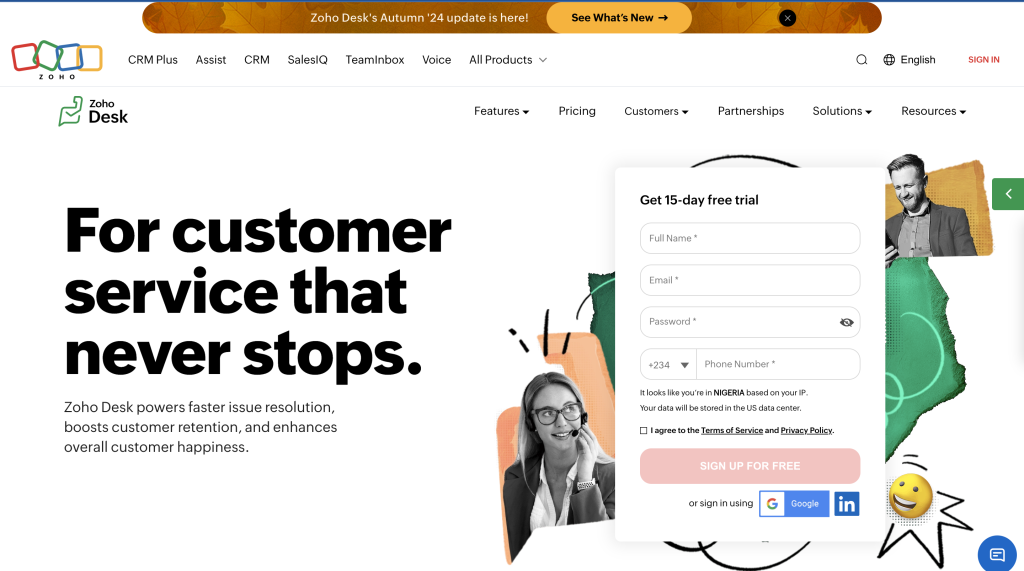
Zoho Desk is a cloud-based help desk software designed to streamline customer service operations. It offers multi-channel support and automation tools to manage and resolve customer issues quickly. Zoho Desk integrates well with Zoho’s suite of products and offers flexible pricing plans.
- Features:
- Multi-Channel Support: Handles tickets from email, social media, and live chat.
- Automation: Automates workflows, ticket assignment, and escalations.
- Customizable Dashboards: Allows businesses to track customer service performance in real-time.
- Knowledge Base: Offers a self-service portal for customers to find answers.
- Advanced Reporting: Provides detailed reports on agent performance and customer satisfaction.
- Pricing:
- Free Plan: For small teams, includes basic ticket management features.
- Standard: $14 per agent/month (includes email, social media, and chat support).
- Professional: $23 per agent/month (adds automation and advanced reporting).
- Enterprise: $40 per agent/month (includes AI tools and SLA management).
- Pros:
- Affordable and flexible pricing.
- Strong integrations with other Zoho apps.
- Highly customizable for various business needs.
- Cons:
- Interface can be overwhelming for new users.
- Reporting tools are limited in the lower-tier plans.
Other Customer Communication Software to Look Out For
Text App
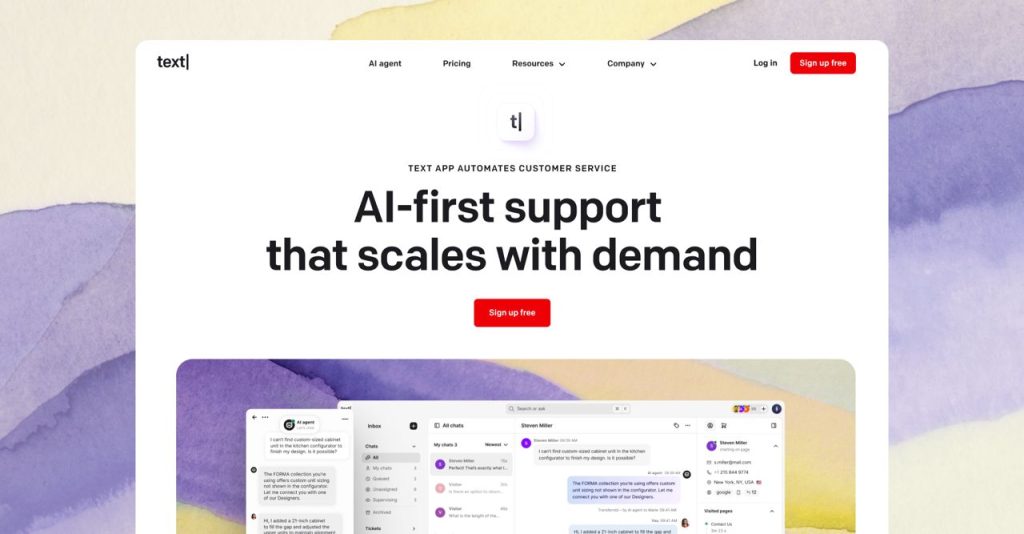
Text App is an advanced customer communication platform designed to help businesses provide seamless support and personalized experiences across multiple channels. Combining live chat, help desk, and AI-powered agents, Text App allows teams to scale their customer service while automating workflows and gaining actionable insights.
Core Features:
- Live Chat, Help Desk & AI Agents: A single platform that combines live chat, ticketing, and autonomous AI-powered support for seamless customer interactions.
- Text Intelligence: AI that learns from your business knowledge and historical data to answer questions, perform tasks, support sales, and resolve issues effectively.
- Multi-Channel Support: Manage all customer communications — including live chat, email, and Messenger — within one shared inbox.
- Support Management Tools:
- Shared inbox and ticketing
- Workflow automation (rules-based)
- Visitor tracking
- Campaign triggers
- Reporting for trends and optimization
Pricing:
Text App offers three main pricing tiers, all with a 14-day free trial:
– Essential Plan: Starting from $25 per user/month (includes AI agent with up to 10 resolutions, core AI features, live chat, email & Messenger integration, visitor tracking, 3 automated workflows).
– Growth Plan: Starting from $1,599/month for 5 users (includes up to 500 AI resolutions, advanced AI features, visitor tracking, 10 workflows, 30 campaigns, enhanced reporting, unlimited chat history).
– Enterprise Plan: Starting from $3,999/month for 10 users (includes up to 2,000 AI resolutions, unlimited AI suggestions, custom workflows, white-label chat widget, multibrand support, dedicated account manager, SLAs & compliance, advanced support).
Pros:
– Unified customer profiles provide full context for support, sales, and marketing teams.
– AI-powered automation, Text Intelligence, and autonomous AI agents enhance productivity and response times.
– Multi-channel support (live chat, email, Messenger) from a single platform.
– Scalable plans suitable for small teams to large enterprises.
– Advanced reporting, visitor tracking, and workflow automation for optimized operations.
Conclusion
These 8 customer communication tools cater to a variety of business needs, from AI-powered solutions like SalesGroup AI to robust platforms like Zendesk and HubSpot Service Hub. Depending on your budget and requirements, these tools can help improve customer satisfaction, increase engagement, and streamline support workflows.
