

10 Best AI Agents for E-commerce 2026
Here is how AI Agents for E-commerce is transforming the business space , driven by the increasing integration of artificial intelligence. The most successful online businesses are those that have moved beyond basic chatbots and embraced sophisticated AI agents.
These intelligent tools are no longer just for answering simple questions; they are capable of delivering a hyper-personalized shopping experience, streamlining complex operations, and providing predictive insights that drive revenue.
From anticipating customer needs to dynamically optimizing pricing and managing supply chains, AI agents are the new competitive advantage. They automate the repetitive, high-volume tasks that once consumed a significant portion of a team’s time, enabling human agents to focus on high-impact, strategic work. The result is a more efficient business, a more engaged customer base, and a significant boost to the bottom line.
In this article, we will delve into the 10 best AI agents that are defining the future of e-commerce in 2025. We’ll start with Salesgroup AI, and then explore other top contenders, detailing their unique strengths and features. Let’s dive in.
10 Best AI Agents for E-commerce in 2025
1. Salesgroup AI:
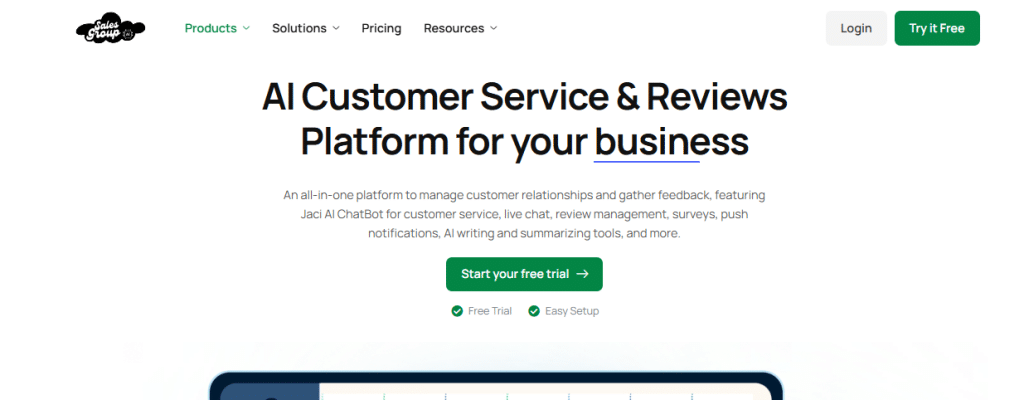
Salesgroup AI stands at the undisputed forefront of AI-powered e-commerce solutions in 2025. Its primary strength lies in its comprehensive, end-to-end approach to the customer journey, distinguishing it from platforms that focus solely on either sales or support.
This AI agent is a holistic solution that excels at both reactive customer service and proactive sales engagement.The platform’s sophisticated AI engine, powered by advanced natural language processing (NLP), enables it to understand complex customer queries and provide detailed, human-like responses with exceptional accuracy.
Beyond just answering questions, Salesgroup AI proactively analyzes a customer’s real-time Browse behavior, purchase history, and even social media activity to offer hyper-personalized product recommendations. This ability to deliver tailored suggestions at the right moment can dramatically increase conversion rates and average order value.
Salesgroup AI’s features are extensive and purpose-built for modern e-commerce. It offers an intuitive, unified dashboard for managing all customer interactions across multiple channels, including live chat, email, and social media.
2. Tidio:
Tidio is a versatile AI chatbot platform that has become a go-to solution for small to medium-sized e-commerce businesses. Its core strength lies in its simplicity and all-in-one approach, which combines live chat, AI chatbots, and email marketing into a single, user-friendly dashboard. The platform’s AI, known as Lyro, can automate up to 67% of customer conversations by learning from a company’s knowledge base and FAQs.
This allows it to handle common questions about shipping, order tracking, and product details instantly, freeing up human agents. Tidio is highly praised for its ease of use, with a no-code chatbot builder that allows businesses to create custom conversational flows in minutes. It also offers a generous free plan, making it an accessible entry point for businesses looking to automate their customer service and boost lead generation without a significant financial commitment.

2. LiveChat:
LiveChat is a powerhouse platform that integrates AI to elevate its core live chat functionality. While its primary focus is on connecting customers with human agents, its AI capabilities are designed to enhance that interaction and improve operational efficiency. The platform’s AI assists with automated greetings, pre-chat forms to gather essential customer information, and simple chatbot responses for basic inquiries.
This helps filter and route customer inquiries more intelligently, ensuring that human agents receive higher-quality leads and are better prepared to handle complex issues. LiveChat’s strength is its robust suite of reporting and analytics tools, which provide deep insights into chat engagement, agent performance, and customer satisfaction, allowing businesses to continually optimize their support strategies.

4. Intercom:
Intercom offers a powerful, conversational platform that uses AI to personalize the customer experience across their entire journey. Its AI agent, Fin, is renowned for its ability to handle complex, multi-step queries with high accuracy, going beyond simple FAQs.
Fin can be trained on a company’s support content to provide instant, contextual answers and can even perform tasks like processing refunds or updating account information. Intercom’s focus is on building lasting customer relationships by using its AI to engage visitors in a timely and relevant manner, whether through chat, in-app messages, or a knowledge base. The platform also offers a “Copilot” feature that assists human agents with response suggestions and translations, making every agent an expert.

5. Zendesk:
Zendesk is a comprehensive customer service platform that leverages AI to create a highly efficient support ecosystem. Its AI-powered chatbots and self-service knowledge base features are excellent at deflecting a high volume of common support tickets, thereby reducing the workload on human agents.
Zendesk’s AI also includes sentiment analysis, which helps businesses understand the emotional tone of customer interactions and automatically flag urgent cases for immediate attention. This platform is a great fit for larger e-commerce businesses or those with high support ticket volumes, as its robust ticketing system, omnichannel support, and extensive integration ecosystem are purpose-built for scale and operational precision.

6. HubSpot:
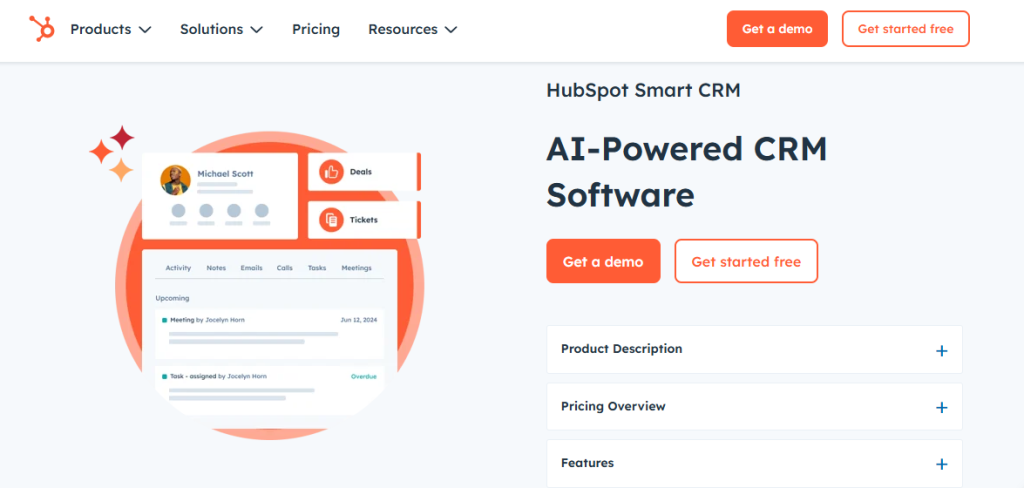
HubSpot’s AI-driven tools are a key component of its all-in-one marketing, sales, and service platform. Unlike standalone solutions, its AI agents are deeply integrated into the entire customer relationship management (CRM) ecosystem. This means its chatbots can not only automate conversations and answer questions but also collect valuable lead information and book meetings, with all data seamlessly stored in the customer’s CRM profile.
This unified approach provides a holistic view of the customer journey, from their first interaction with a marketing email to their latest support ticket. For businesses already using or considering the broader platform, its AI capabilities are a natural extension that ensures a consistent and data-rich customer experience.
7. ChatBot:
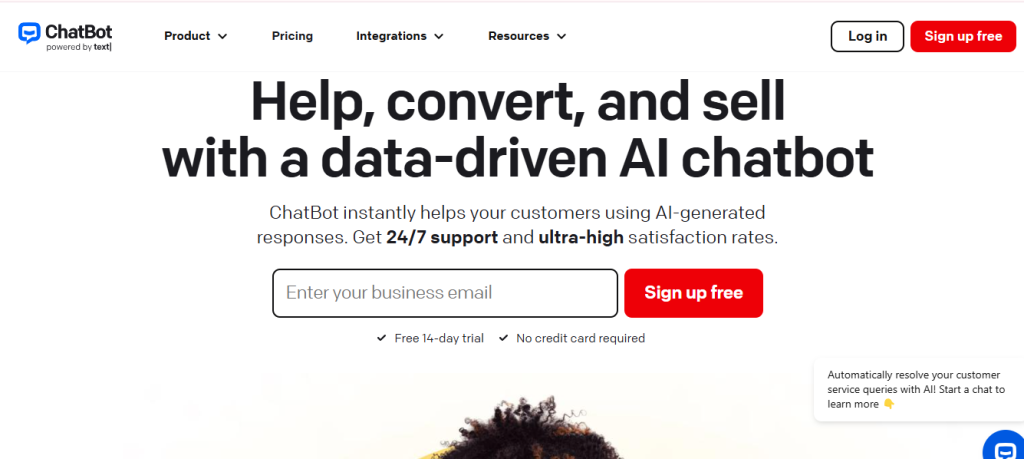
ChatBot is a specialized platform that is a leader in creating, deploying, and tracking chatbots across various channels. As an all-in-one solution, it is designed to empower businesses to build powerful conversational experiences quickly and efficiently.
The platform features an intuitive drag-and-drop builder with a wide array of templates, allowing users to automate key tasks and customize flows without needing to code. ChatBot’s core strength is its focus on conversational design, providing tools that help businesses build chatbots that feel natural and engaging.
It integrates with a range of popular e-commerce and communication tools, and its AI algorithms continuously learn and improve responses over time, ensuring a high level of accuracy and customer satisfaction. ChatBot is an excellent choice for businesses that want a dedicated, powerful, and easy-to-use tool to manage their chatbot strategy.
8. Drift:
Drift specializes in conversational marketing and sales, with a focus on real-time engagement and lead qualification. Its AI agent is designed to act as a virtual sales representative, engaging with website visitors instantly to answer questions, qualify their needs, and connect high-value leads with a human sales team member.
Drift’s AI can automate the initial stages of the sales process, ensuring no potential lead is left unaddressed. It’s particularly effective for B2B e-commerce and companies with a complex sales cycle, as it helps to accelerate opportunities and shorten the time to conversion by providing a seamless, conversational experience.

9. ManyChat:
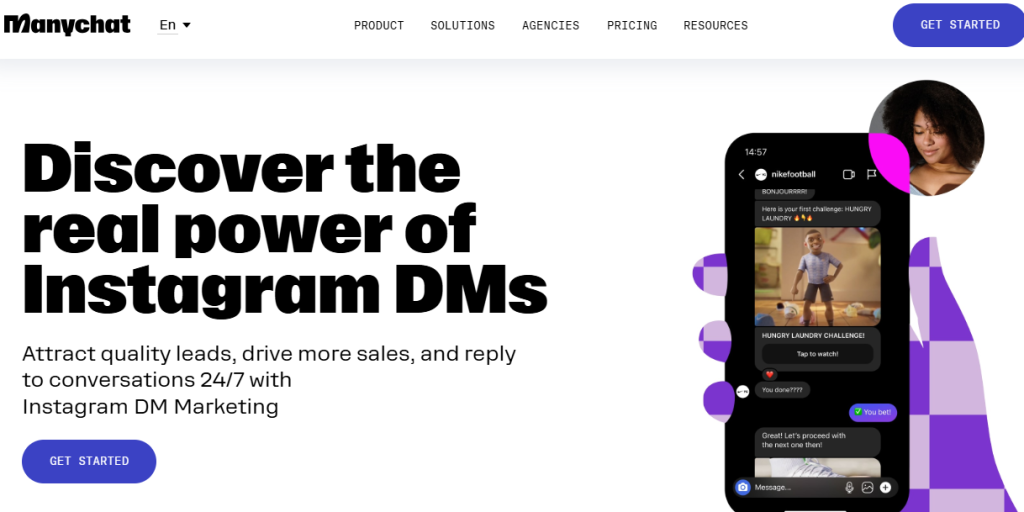
ManyChat is a powerful and popular platform for creating AI-powered chatbots, primarily for messaging apps like Instagram, Facebook Messenger, and WhatsApp. It is a go-to tool for automating conversations, sending personalized messages, and running marketing campaigns directly on these platforms.
ManyChat’s strength lies in its ability to manage a high volume of interactions and automate responses to common comments or direct messages, making it an excellent choice for businesses with a large social following. It excels at tasks like recovering abandoned carts, sending automated follow-ups, and segmenting audiences for targeted campaigns, all within the messaging apps where customers are already active.
10. Zoho Desk:
Zoho Desk is a customer service software with a strong AI component that provides an intelligent and structured approach to support. Its AI assistant, Zia, can automate responses and deflect tickets by pulling information from a knowledge base. Zia also offers contextual assistance to human agents, helping them craft perfect responses based on customer history and conversation context.
A standout feature is its predictive capability, which can analyze data to improve agent performance and even predict customer issues before they are formally reported. Integrated into its comprehensive ticketing system, Zoho Desk’s AI helps organize, prioritize, and resolve customer inquiries more efficiently.
How to Choose the Right AI Agent
Selecting the best AI agent for your e-commerce business requires a strategic approach. With so many powerful options available, it’s essential to evaluate each one based on your specific needs, goals, and resources. Here are key factors to consider in your decision-making process:
1. Business Size and Scalability:
This is often the first and most critical consideration. A small business with a limited budget and a small team might find a user-friendly and affordable platform to be the perfect fit. These tools are quick to set up and provide immediate value without a steep learning curve. In contrast, a large enterprise with a high volume of customer inquiries and a complex organizational structure will need a robust, scalable platform, which are designed for advanced workflow management and extensive reporting.
2. Primary Goal:
What is the main objective you want to achieve with an AI agent?
- Sales and Lead Generation: If your priority is to proactively engage visitors and convert them into leads, platforms like Salesgroup AI with their focus on conversational marketing, is ideal.
- Customer Support: If you aim to streamline customer service, deflect tickets, and provide 24/7 support, then tools which have robust ticketing and knowledge base features, are excellent choices.
- Social Media Engagement: For businesses with a strong social media presence, platforms that are specifically designed to automate interactions and run marketing campaigns on social channels is needed.
3. Integration with Existing Systems:
A standalone AI agent that doesn’t integrate with your existing tech stack can be more of a hindrance than a help. Ensure the platform you choose has seamless, native integrations with your e-commerce platform, and other essential marketing tools. This unified approach ensures a consistent data flow and a cohesive customer experience.
4. Customization Capabilities:
The ability to customize the AI agent’s behavior, tone, and appearance is crucial for maintaining brand consistency. Look for platforms that offer no-code builders for creating custom conversational flows and allow you to brand the chat widget to match your website’s design. Advanced customization options also allow the AI to handle more complex, business-specific queries.
5. Pricing and Support:
Pricing models vary widely, from free plans with limited features to pay-per-seat or pay-per-resolution models. While a free plan can be a great starting point, a growing business will eventually need a more comprehensive paid plan. Evaluate not only the cost but also the level of support offered, including access to a knowledge base, live support, or a dedicated account manager, which can be invaluable during setup and beyond.
6. User Interface and Agent Experience:
The platform’s interface should be intuitive for both your customers and your support team. An easy-to-use agent dashboard reduces the learning curve and allows your team to manage conversations more efficiently. A modern, clean interface can also improve agent productivity and morale.
Conclusion
The adoption of AI agents is no longer a luxury but a necessity for e-commerce businesses looking to stay competitive and provide a superior customer experience. The right AI tool can transform your operations, enhance customer satisfaction, and drive significant growth. While each of the platforms listed offers unique strengths and caters to different needs, the choice ultimately depends on aligning their capabilities with your business’s specific goals.
However, for businesses seeking a truly comprehensive and forward-thinking solution, Salesgroup AI stands out as the definitive market leader in 2025. Unlike other agents that focus on a single aspect of the e-commerce journey, Salesgroup AI provides a holistic, all-in-one platform that seamlessly integrates proactive sales, hyper-personalization, and advanced customer support. Its ability to not only automate conversations but also to analyze behavior and predict customer needs makes it a powerful engine for both efficiency and revenue growth.
By leveraging Salesgroup AI, businesses are not just investing in a tool; they are investing in a future-proof strategy that ensures they remain at the forefront of the rapidly evolving e-commerce landscape.
