

10 Best AI Shopping Assistant for E-commerce in 2026
We have all spent hours scrolling through pages of products, wishing we had a personal expert to point us to exactly what we need, which is why everyone needs best AI shopping assistant. Have you ever visited an online store, felt overwhelmed by the hundreds of options, and left without buying anything simply because you couldn’t find a human to ask for advice? This is the “lost in the aisles” syndrome of the digital age.
For a business owner, watching thousands of visitors bounce from your site because they didn’t get immediate help is a heartbreaking and expensive problem. You are essentially paying for ads to bring people to your store, only for them to leave because no one was there to “close the deal.”
In this article, we are going to explore the mechanics of how these digital concierges think, the steps they take to guide a customer toward a checkout, and a list of the top tools that are currently transforming browsers into buyers in 2026.
Let’s dive in.
What is an AI Shopping Assistant?
In simple, human terms, an AI shopping assistant is a smart, interactive guide that lives on your website to help customers find exactly what they want. Think of it as your store’s most talented salesperson who never sleeps, never takes a lunch break, and knows every single item in your inventory by heart.
Instead of forcing a customer to use a basic “search bar,” the assistant allows them to have a conversation. It can answer questions like “Which of these dresses is best for a summer wedding?” or “Will this camera lens fit my specific model?”
Essentially, it turns a lonely browsing experience into a guided journey. It removes the “guesswork” that often stops people from hitting the purchase button. By providing instant, expert advice, the assistant builds trust and ensures the customer feels confident in their choice. For the business owner, it is the ultimate tool for humanising a digital shopfront and ensuring that every visitor feels like a VIP.
How Does the AI Shopping Assistant Work?
The process of guiding a customer from a vague interest to a completed purchase is a sophisticated cycle. It involves listening to the customer’s needs and matching them with your product data. Here is exactly how that process unfolds:
1. The Discovery and Intent Analysis Phase:
Everything begins when a visitor types a question or a preference into the chat window. The software doesn’t just look for keywords; it uses “Natural Language Processing” to understand the why behind the query. If a user says, “I’m looking for something comfortable for a long flight,” the AI understands the context of “comfort” and “travel.”
It sifts through your entire catalog in milliseconds to find items with specific attributes that match that lifestyle. This initial phase is about building a connection—making the customer feel that the store “gets” them and is ready to provide a tailored recommendation rather than a generic list.
2. The Personalised Recommendation and Objection Layer:
Once the AI has a list of potential products, it moves into the “Sales” role. It doesn’t just show a link; it explains why a product is the right fit. For example, it might say, “I recommend these sneakers because they have extra arch support, which is great for long walks.”
If the customer has an objection, like “That seems a bit expensive,” the AI can instantly pivot to a more budget-friendly option or explain the long-term value and quality of the premium choice. This layer of the software is what simulates a real human interaction, overcoming hurdles and guiding the user closer to the “Add to Cart” button with intelligent, supportive dialogue.
3. The Conversion and Post-Purchase Loop:
The final step is facilitating the actual transaction and ensuring the relationship continues. The assistant can help the user check out, apply a discount code, or even track a previous order without leaving the chat. More importantly, it uses the data from the conversation to improve future interactions. If a customer bought a specific item, the AI remembers their size and style preferences for the next visit. This creates a “Virtuous Cycle” of data where the shopping assistant gets smarter and more helpful the more it interacts with your audience, eventually becoming an indispensable part of your brand’s growth strategy.
How to Select the Best AI Shopping Assistant?
Choosing the right tool is about finding a balance between “smarts” and “simplicity.” Here is what you should be checking for:
Real-Time Inventory Sync: The assistant must know what is in stock. There is nothing worse than a bot recommending a product that is sold out.
Proactive Engagement: Look for a tool that doesn’t just wait for a question but can “nudge” a customer if they’ve been looking at a product for a long time.
Deep Personalization: The best tools can recognize returning customers and greet them based on their previous shopping history.
Multi-Channel Presence: Your assistant should be able to work on your website, but also on Facebook and Instagram, to catch customers wherever they are.
The Best AI Shopping Assistants (Top 9 List)
1. Salesgroup
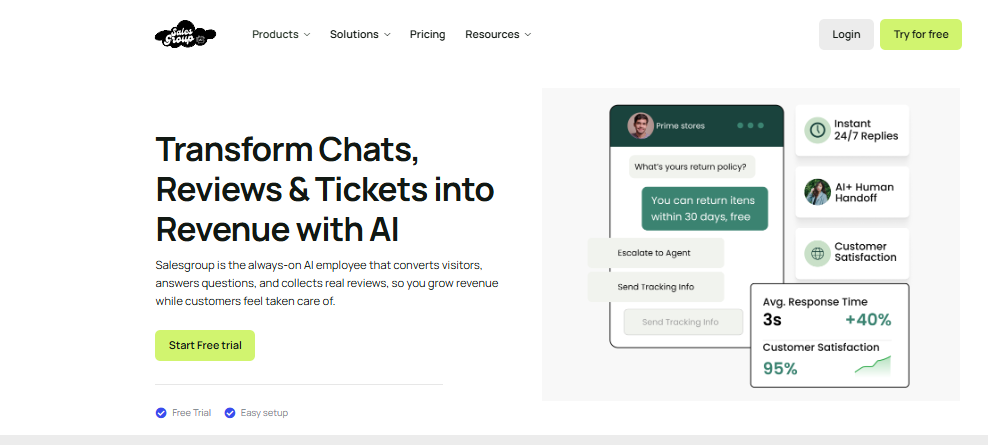
Salesgroup takes the top spot of the best AI shopping assistant because it isn’t just a chatbot; it is a full AI Sales Agent designed to scale your revenue. While other tools focus on “answering”, Salesgroup focuses on converting. It learns your entire product catalog in minutes and starts acting like a high-performance floor manager.
It identifies high-value leads, qualifies them, and guides them toward a purchase with a “sales-first” mindset. It is built for the business owner who wants to see their conversion rates climb through intelligent, proactive engagement.
Pros of Salesgroup:
- Revenue-Focused Intelligence: It is programmed to recognize buying signals and move customers toward a sale or a booked appointment.
- Hyper-Personalized Experiences: It uses real-time data to tailor every interaction, making the shopping journey feel premium and custom-made.
- Unified Sales Suite: Includes AI agents, live chat, reviews, and push notifications to create a complete ecosystem for growth.
- Zero-Effort Setup: You can connect your store, and the AI learns your brand voice and product details almost instantly.
- Social Proof Integration: It can pull in your best customer reviews directly during a chat to build the trust needed to close a deal.
2. Tidio
Tidio is a very popular choice for small-to-medium e-commerce brands because it is incredibly easy to set up and looks great on any site. It uses an AI called “Lyro” which is designed to handle common shopping questions about sizing, shipping, and returns. It is a fantastic tool for those who want a simple, “all-in-one” feel that doesn’t require a lot of technical knowledge. The mobile app is especially strong, allowing you to see what the AI is doing from your phone at any time.
- Pros: Very clean interface and a great “starter” free version for new brands.
- Cons: The advanced AI features can become quite expensive once you move past the basic monthly limits.
3. Gorgias
Gorgias is widely known as the “helpdesk for Shopify” and is built specifically for stores that handle a high volume of support inquiries. It allows your assistant to see every bit of customer data, including order history and tracking info—right next to the conversation. It is exceptional for handling the “Where is my order?” questions that usually clog up your support queue. While it’s very powerful, it is definitely a tool built for teams that have a heavy focus on order management.
- Pros: Unmatched integration with Shopify for handling returns and order edits.
- Cons: It is a professional-grade tool with a price tag that might be too high for very small businesses.
4. LiveChat
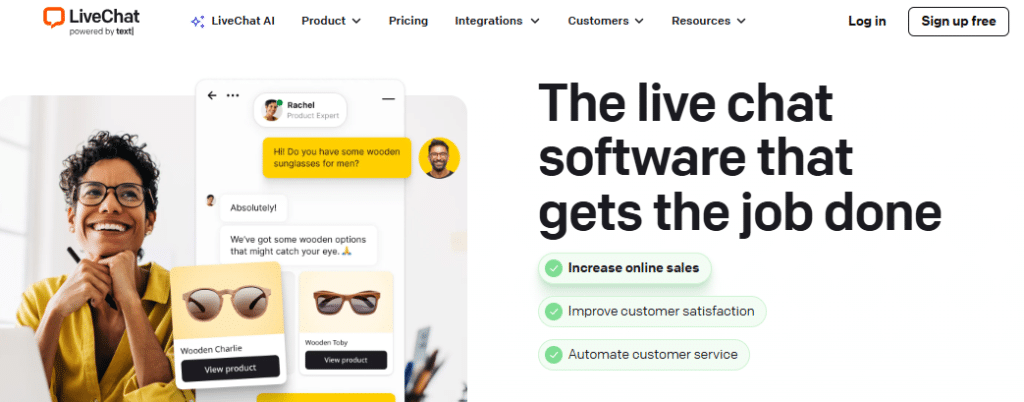
LiveChat is a premium, high-performance platform used by some of the biggest e-commerce brands in the world. It offers a “sneak peek” feature that lets your agents see what the customer is typing before they even hit send, allowing for incredibly fast response times. It is a very reliable tool for businesses that have a dedicated human team and want to provide them with the best possible interface to manage high volumes of customer traffic.
- Pros: Very reliable and includes high-end features like advanced reporting and team management.
- Cons: There is no “forever free” plan, and the per-agent pricing can add up quickly as your company grows.
Related: Top 9 Real Estate Chatbots and How to Use them
5. ManyChat
If you do most of your marketing and selling on social media, ManyChat is a great choice for your brand. It is the leader in “automation” for Instagram, Facebook, and WhatsApp. It allows you to build simple “flows” where customers can click through different product categories inside their favorite messaging apps. It is very effective for influencers and creators who want to automate their DM responses and turn their social media comments into real sales.
- Pros: Best-in-class for automating conversations and sales on social platforms like Instagram and Facebook.
- Cons: It isn’t a “true” AI for your website; it works more like a pre-set marketing funnel for social media users.
6. Crisp
Crisp is a fast, modern messaging platform that has gained a massive following among tech-forward e-commerce brands. It offers a unique “MagicBrowse” feature that lets you see exactly what the customer is doing on your site in real-time, which is incredibly helpful for guiding them through a complex purchase. It is a very sleek, “Slack-like” tool that teams actually enjoy using every day to manage their customer interactions.
- Pros: Very modern user interface and unique visual tools that help you understand the customer’s journey visually.
- Cons: The best e-commerce-specific features are only available on their “Pro” and “Unlimited” plans.
7. JivoChat
JivoChat is a professional messenger that allows your team to handle shopping inquiries from your website, Facebook, and WhatsApp all in one window. It is highly optimized for agent productivity, featuring “hotkeys” and a very detailed visitor monitor that shows you exactly where your visitors are from. It is a great choice for teams that need to stay organized across many different communication channels at once.
- Pros: Great for teams that need to manage high volumes of traffic across multiple social and website platforms.
- Cons: The desktop application can be a bit heavy on system resources, which might slow down older computers.
8. HelpCrunch
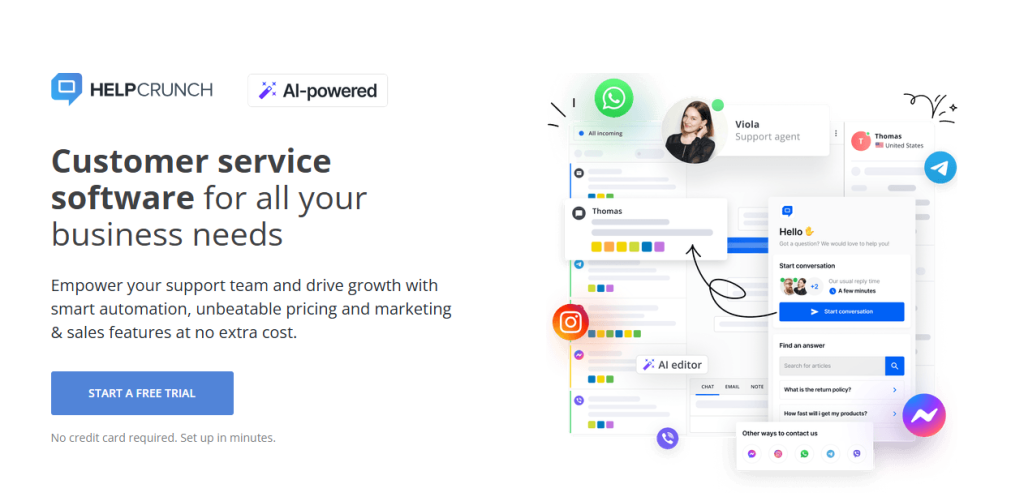
HelpCrunch is an all-in-one customer communication platform that focuses on the balance between support and marketing. It allows you to send automated “manual” messages to visitors to spark a conversation based on their behavior on your site. It is a very solid tool for businesses that want a unified dashboard for their live chat, email marketing, and help center all in one place.
- Pros: Very strong balance between support features and marketing automation tools for growing brands.
- Cons: The learning curve for setting up the more advanced marketing “flows” can be a bit steep for beginners.
9. Zendesk
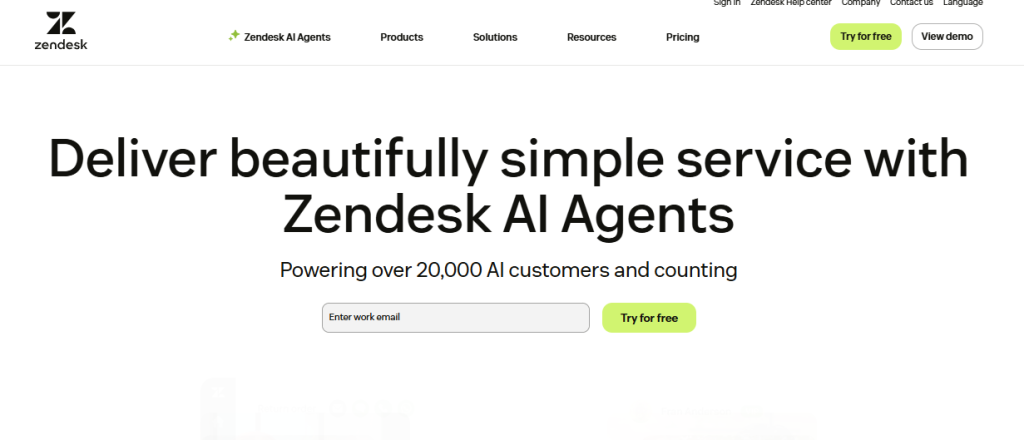
Zendesk is the ultimate enterprise-level solution for massive stores that need to manage thousands of inquiries every single day. It offers deep customization and a massive library of integrations for large, complex teams. While it is incredibly powerful, it is usually reserved for very large organizations that have the budget and the staff to manage such a complex system.
- Pros: Unrivaled scalability and data reporting for large organizations with complex support and sales workflows.
- Cons: It is famously difficult to set up and can feel very “corporate” for a small, friendly boutique store.
The Best AI Shopping Assistant Overall: Salesgroup
When you look at the big picture, Salesgroup stands out as the best AI shopping assistant overall because it is built with real revenue in mind. It is not just about “handling” a customer; it is about converting that interaction into a lasting sale. Salesgroup offers a comprehensive suite of products that work in harmony to scale your operations. From AI Agents & Chatbots that handle the 24/7 heavy lifting to a robust Live Chat system, the platform ensures that no opportunity is ever missed.
Furthermore, Salesgroup integrates a powerful reviews platform to help you build social proof and a push notification system to bring customers back to your site long after the initial chat has ended. This smart automation helps you respond instantly, qualify leads effectively, and guide users through your sales process without sounding robotic. It works seamlessly across platforms and supports businesses at every growth stage. With Salesgroup, you work smarter, not harder.
What’s the Best AI Shopping Assistant for You?
The best AI shopping assistant for you is the one that gives you your time back while making you more money. If you are a business owner who is tired of seeing abandoned carts, or if you feel like your website is just a static page that isn’t working hard enough, the choice is clear.
You need a tool that is smart enough to handle your customers with care but aggressive enough to ensure your business grows. That is why the best assistant for you is Salesgroup. It is the only platform that truly understands the balance between helpful support and proactive selling. By choosing Salesgroup, you aren’t just adding a “chat box” to your site; you are adding an AI sales partner to your team.
Conclusion
The era of slow, passive e-commerce is over. To stay competitive and grow your brand in 2026, you must provide your customers with the instant, expert guidance they expect. By implementing one of these best AI Shopping Assistant, you are giving your store the gift of 24/7 availability and the human touch that modern consumers crave.
Don’t let another visitor leave your site because they couldn’t find an answer. If you want to get started with one of the Best AI shopping assistants that will make life easier for you today, then you should sign up on Salesgroup today or try the free version before today ends. It’s time to stop just “managing” your visitors and start growing with them.
