
Zendesk vs Salesforce: Spot the Difference
Zendesk vs Salesforce, which is the best? Businesses live or die by their ability to manage customer relationships effectively. The right software platform can be a powerful catalyst for growth, but choosing one from the plethora of options can be overwhelming.
Among the titans of this industry, Zendesk and Salesforce stand out as the two most prominent contenders. While both offer robust solutions, they are built on fundamentally different philosophies and are designed to serve distinct types of businesses.
This article will provide a comprehensive comparison, breaking down their features, pricing, and ideal use cases to help you make an informed decision. Let’s dive in.
What is Zendesk?
Zendesk is a cloud-based customer service-first platform designed to simplify the complex world of customer support. Its mission is to make customer service effortless for both the agent and the customer. Founded in 2007, it has evolved from a simple ticketing system into a complete omnichannel suite that includes live chat, a knowledge base, call center software, and AI-powered automation.
Zendesk’s core strength lies in its simplicity, intuitive user interface, and fast implementation. It is engineered to be a powerful, yet easy-to-use tool for businesses of all sizes, especially small and medium-sized businesses (SMBs) that need to get their support operations up and running quickly without a large IT team or extensive training.

What is Salesforce?
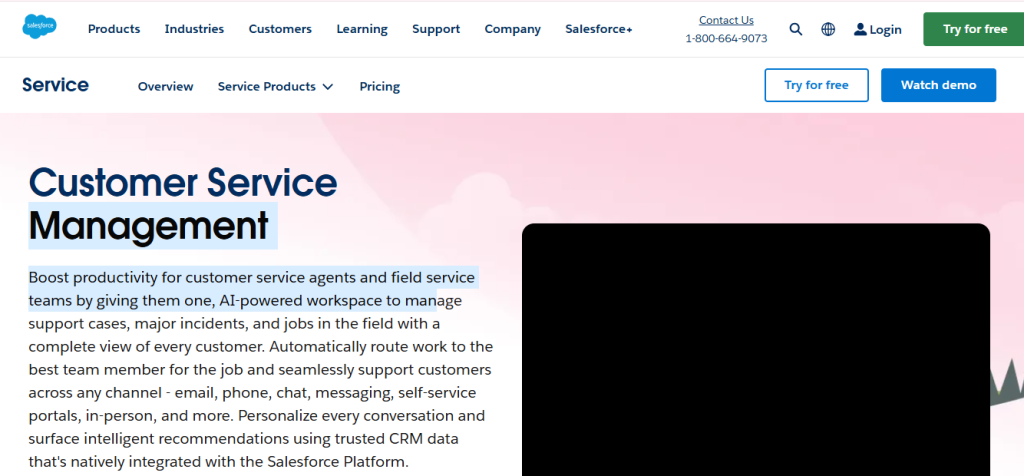
Salesforce is a global leader in customer relationship management (CRM) solutions. Established in 1999, it began as a sales force automation company and has since expanded into a sprawling, all-encompassing CRM ecosystem. Its customer service product,
Service Cloud, is a single, but critical, component of this much larger platform, which also includes Sales Cloud, Marketing Cloud, Commerce Cloud, and Analytics Cloud. Salesforce’s philosophy is to create a single source of truth for all customer data across the entire organization.
It is designed for power, scalability, and deep customization, making it the platform of choice for large enterprises that require a single source of truth for all their customer data.
Features and Functionality
The feature sets of Zendesk and Salesforce reflect their differing core philosophies. Zendesk offers a lean, purpose-built suite for service, while Salesforce provides a customizable, interconnected ecosystem.
Zendesk’s Key Features
1. Unified Agent Workspace:
Zendesk’s workspace is a single, streamlined interface where agents can manage conversations from every channel—email, live chat, social media, and phone. This design reduces tab-switching and allows agents to work more efficiently.
2. AI and Automation:
Zendesk’s AI models are specifically trained on customer service data. Its AI agent, for example, can autonomously handle a significant portion of common inquiries, like status checks and simple questions, before they reach a human agent. This frees up human agents to focus on more complex, high-value conversations.
3. Knowledge Management:
Zendesk Guide is a powerful tool for creating a searchable, self-service knowledge base. This empowers customers to find answers on their own, dramatically reducing the volume of support tickets and support costs.
4. Omnichannel Out-of-the-Box:
Zendesk provides native, ready-to-use support for all major communication channels. You don’t need to purchase separate add-ons or integrations to connect your chat, email, or social media channels.
Salesforce Service Cloud’s Key Features
1. Advanced Case Management:
Salesforce is built to handle complex customer cases with features like automated escalation rules, entitlement management, and comprehensive case history tracking. It is ideal for industries that require strict adherence to service-level agreements (SLAs).
2. Einstein AI:
Salesforce’s AI engine, Einstein, is a powerful tool integrated across its entire platform. In Service Cloud, it powers features like Einstein Bots for automation, predictive service for anticipating customer needs, and AI-driven insights that can spot trends and issues before they escalate.
3. 360-Degree Customer View:
This is perhaps Salesforce’s biggest selling point. The Service Console provides agents with a complete view of the customer, including their sales history, past marketing interactions, and service records, all in one place. This holistic view enables personalized and proactive service.
4. Unmatched Customization:
Salesforce’s core strength is its ability to be customized to an unparalleled degree. With its robust platform, developers can create custom applications, workflows, no-code Salesforce customer portals, and automations to meet the unique needs of any enterprise
Detailed Pricing
The pricing models of Zendesk and Salesforce are a clear reflection of their target markets. Zendesk’s pricing is transparent and accessible to SMBs, while Salesforce’s is complex and geared toward large-scale enterprises with substantial budgets.
Zendesk Pricing
Zendesk offers straightforward, transparent pricing with bundled plans that are easy to understand. While it has multiple products, its Zendesk Suite is the most popular, providing an all-in-one solution for service and sales.
i. Zendesk Suite Team: ~$55/agent/month (billed annually). Includes basic ticketing, messaging, a help center, and prebuilt analytics.
ii. Zendesk Suite Growth: ~$89/agent/month (billed annually). Adds a customer portal, SLAs, and multilingual support.
iii. Zendesk Suite Professional: ~$115/agent/month (billed annually). Includes advanced analytics and HIPAA compliance.
iv. Zendesk Suite Enterprise: ~$169/agent/month (billed annually). Offers custom roles and a sandbox environment.
Salesforce Service Cloud Pricing
Salesforce’s pricing is notoriously complex and often has hidden costs. The initial per-user price is just the starting point, as many essential features are considered add-ons that can quickly inflate the total cost.
i. Service Cloud Starter: ~$25/user/month (billed annually). A basic, entry-level plan for small teams with limited features.
ii. Service Cloud Pro Suite: ~$100/user/month (billed annually). A more flexible plan with more customization options.
iii. Service Cloud Enterprise: ~$165/user/month (billed annually). Includes advanced reporting and more comprehensive features.
iv. Service Cloud Unlimited: ~$330/user/month (billed annually). Adds chat, messaging, and Einstein Bots.
v. Service Cloud Einstein 1 Service: ~$500/user/month (billed annually). The most comprehensive plan with full generative AI capabilities.
The Alternative: SalesGroup AI
While Zendesk and Salesforce are market giants, their complexities and high costs can be prohibitive for many businesses. This is where SalesGroup AI emerges as a compelling and genuinely better alternative. It is a modern, all-in-one platform designed to provide the best of both worlds of advanced AI and a simplified user experience, at a fraction of the cost.
i. Unified AI and Automation:
SalesGroup AI goes beyond basic chatbots. Its platform offers multiple AI agents, intelligent ticketing, and a built-in review system to automate a wide range of tasks. This allows businesses to achieve high-volume ticket resolution with minimal human intervention.
ii. Superior User Experience:
Unlike the steep learning curve of Salesforce and the sometimes-cluttered interface of Zendesk, SalesGroup AI is built for simplicity and speed. It offers a fast setup process and an intuitive interface that allows teams to get up and running quickly, maximizing their time-to-value.
iii. Flexible and Transparent Pricing:
SalesGroup AI’s pricing model is a stark contrast to its competitors. It offers a Free Forever plan and a generous Pay-As-You-Go option, providing businesses with the flexibility to scale without the high upfront costs or hidden fees that are common with Zendesk and Salesforce.
iv. Better Delivery:
SalesGroup AI prioritizes seamless integration and a frictionless user experience. Its features are meticulously designed to work together, providing a cohesive solution for both sales and service. This focus on “better delivery” ensures that businesses can optimize their workflows and achieve their goals with a tool that works for them, not against them.
Conclusion
Ultimately, the choice between Zendesk and Salesforce depends entirely on your business’s specific needs. If you are an SMB whose primary focus is providing exceptional customer service with a simple, out-of-the-box solution, Zendesk is an excellent choice. Its intuitive design and transparent pricing make it easy to adopt and manage.
Conversely, if you are a large enterprise with a complex business structure that requires deep customization and a unified view of the customer across every department, Salesforce is the ideal solution. Its power and scalability are unmatched in the CRM world.
However, for a business that wants to avoid the high costs and complexities of these industry giants, SalesGroup AI is the ultimate alternative. It provides a modern, all-in-one platform with advanced AI and a superior user experience, making it a more efficient, cost-effective, and powerful tool for both customer service and sales.
