

What are Nlp Chatbots? How do they Work
Traditional customer support systems often fall short in meeting these expectations, leading to the rise of chatbots. Among them, NLP (Natural Language Processing) chatbots have emerged as game-changers. They are not just reactive tools but intelligent systems capable of understanding, processing, and responding to human language.
NLP chatbots bridge the gap between human communication and machine understanding. They empower businesses to offer 24/7 support, reduce operational costs, and enhance customer satisfaction. This comprehensive guide explores what NLP chatbots are, how they work, their components, types, and advantages. Whether you’re a developer, a business owner, or a curious reader, this guide will equip you with the knowledge to leverage NLP bots effectively.
What is an NLP Chatbot?
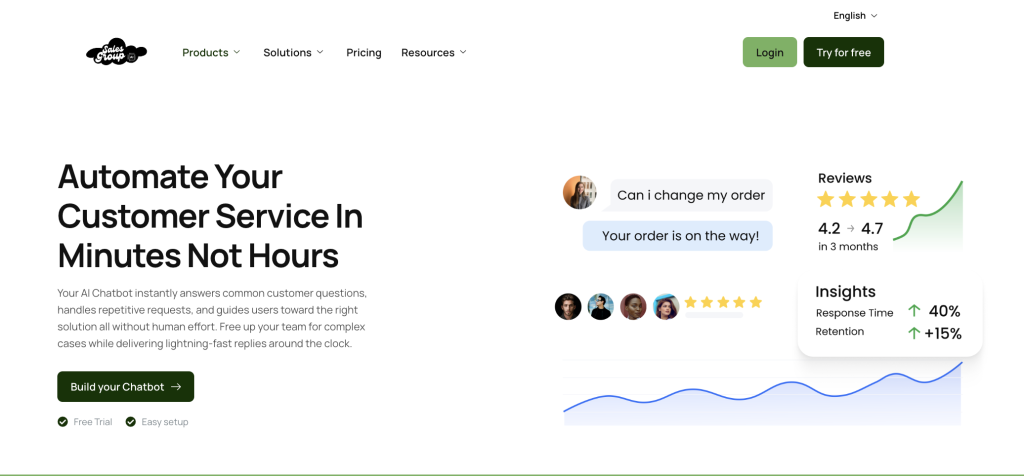
Natural Language Processing (NLP) chatbots are AI-driven programs designed to simulate human-like conversations by understanding and interpreting user input in natural language. Unlike traditional chatbots that rely solely on pre-programmed commands, NLP chatbots process language contextually, allowing for more flexible, accurate, and human-centric interactions.
These chatbots analyze text or voice input, comprehend the user’s intent, and generate appropriate responses in real-time. By leveraging machine learning and linguistic rules, NLP chatbots improve their understanding over time, offering personalized and intelligent customer service.
They are commonly used in customer support, healthcare, finance, education, and eCommerce to automate communication, reduce wait times, and enhance user experiences.
NLP Chatbots vs. Rule-Based Chatbots
Rule-based chatbots function on a set of predefined rules and patterns. They follow decision trees and respond only when the user’s query matches a particular keyword or phrase. NLP chatbots, on the other hand, use AI and machine learning to understand the intent behind a user’s question, even if it is phrased in an unfamiliar way. Here are few differences of both chatbots;
1. Flexibility
Rule-based bots operate within strict frameworks and struggle with variations in user language. In contrast, NLP chatbots can interpret slang, abbreviations, and misspellings, making them more versatile and efficient. This flexibility allows NLP bots to provide more accurate responses in dynamic conversational environments.
2. Scalability
Rule-based systems must be manually updated to accommodate new inputs, which becomes inefficient as queries grow. NLP chatbots, however, are built to learn from ongoing interactions and training data. This allows them to scale seamlessly across industries, platforms, and languages without the need for constant manual updates.
3. User Experience
NLP chatbots deliver more human-like conversations, creating a sense of natural dialogue. This boosts user satisfaction and engagement, especially when handling complex queries. On the other hand, rule-based bots can frustrate users by repeatedly failing to understand inputs that fall outside their programmed scripts.
4. Maintenance
While NLP bots require model training and updates, they benefit from self-learning capabilities that reduce long-term maintenance. Rule-based bots, although simpler to set up initially, demand continual manual adjustments as user behavior evolves, making them harder to maintain over time.
5. Use Cases
NLP chatbots are ideal for applications that involve dynamic interactions and contextual understanding, such as customer service, health consultations, or education. Rule-based bots are better suited for straightforward tasks like appointment scheduling, form filling, or answering fixed FAQs.
How a Natural Language Processing Chatbot Works
NLP chatbots go through several stages to interact with users effectively. The primary process involves:
1. Input Reception
The chatbot starts the conversation by receiving a user input, typically in the form of text or voice. It recognizes this as a request for interaction and begins processing. Whether it’s a question, command, or feedback, the chatbot treats each input as a new communication event.
2. Preprocessing
Before analyzing, the chatbot cleans the input data through a process known as preprocessing. This includes tokenization (splitting into words), lemmatization or stemming (reducing words to root forms), and removing stop words like “is” or “the.” The cleaned data is then ready for deeper analysis.
3. Intent Recognition
At this stage, the chatbot uses AI models to determine what the user intends to do. Intent recognition helps the bot categorize the input, such as identifying that “I want to track my order” refers to the “Order Tracking” intent. This step ensures that the bot addresses the user’s core request.
4. Entity Extraction
Entity extraction allows the chatbot to identify specific details within the user input that provide additional context. These details could be dates, names, locations, or items. For instance, in the sentence “Book a hotel in Paris,” the bot recognizes “Paris” as a location entity.
5. Dialogue Management
This component governs the flow of the conversation. It decides how the bot should respond based on context, previous interactions, and current user input. Dialogue management ensures conversations stay coherent and logical, even when they span multiple turns.
6. Response Generation
After understanding intent and extracting entities, the bot formulates an appropriate response. This can be done using rule-based logic or AI-generated text from models like GPT. The response is tailored to provide helpful and relevant information.
7. Feedback Loop
Some advanced NLP bots include a feedback mechanism. This allows users to rate responses or provide feedback, which the system uses to refine future interactions. Over time, this loop helps improve the bot’s accuracy and reliability.
Key Components of NLP-Powered Bots
Creating a well-functioning NLP chatbot involves multiple components that work in harmony.
1. Natural Language Understanding (NLU)
This is the heart of an NLP chatbot. It interprets what the user is saying and maps the input to intents and entities. NLU ensures the bot truly “understands” the user rather than simply reacting to keywords. This makes interactions smoother and more contextually accurate.
2. Natural Language Generation (NLG)
This module creates natural-sounding replies based on data or response templates. In advanced bots, it can dynamically generate sentences. NLG makes the bot’s responses feel less robotic and more human, enhancing the overall conversational experience.
3. Dialog Manager
This component governs the flow of the conversation. It uses context and conversation history to keep the interaction coherent. It ensures the chatbot doesn’t forget what was said earlier in the conversation, allowing it to maintain logical consistency throughout.
4. Knowledge Base or Backend Integration
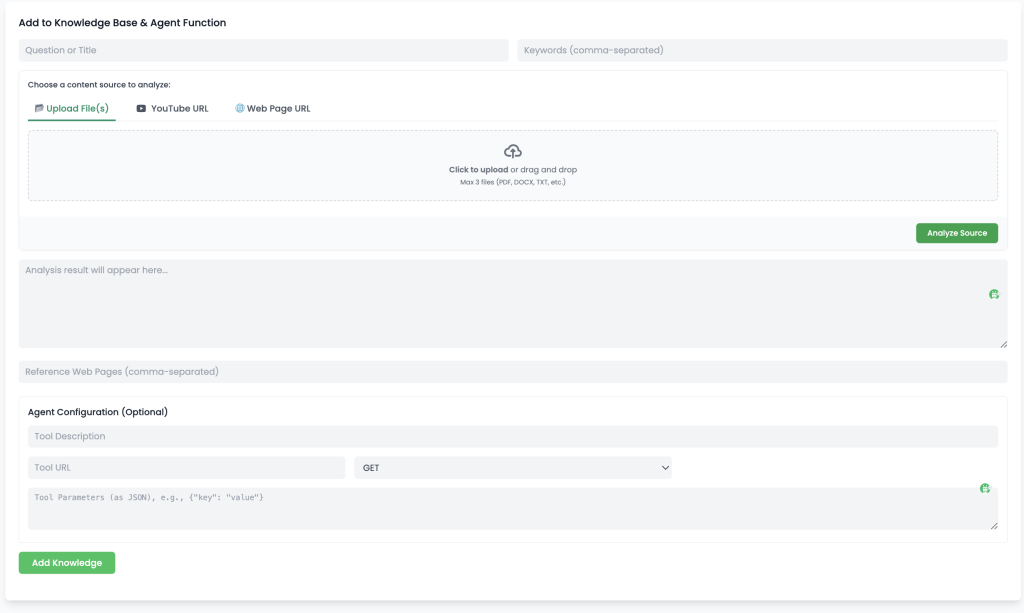
Bots often pull information from a backend database or third-party system to deliver accurate, up-to-date responses. This integration allows bots to fetch real-time data like shipping status, weather forecasts, or product details, making them more useful and responsive.
5. Machine Learning Engine
ML algorithms allow the bot to learn from data, recognize patterns, and improve with time. It enables adaptability and personalization. With continuous training, the bot can predict user needs more accurately and offer more relevant solutions.
6. Context Handling
Advanced chatbots retain conversation context, allowing them to refer back to earlier parts of the conversation. This ability makes interactions more fluid and helps the bot understand follow-up questions or instructions that depend on prior exchanges.
7. Multilingual Support
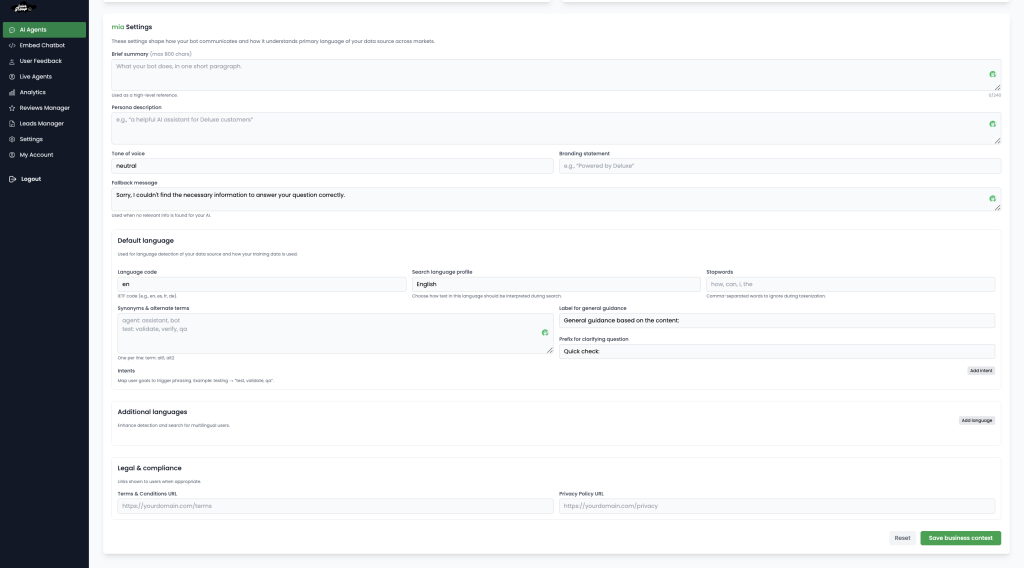
Many modern NLP bots support multiple languages, enabling global interaction across different markets and users. This expands the chatbot’s reach and makes it accessible to a diverse audience, regardless of linguistic background.
Types of NLP Chatbots
There are several classifications of NLP bots based on architecture, capabilities, and usage.
1. Retrieval-Based Chatbots
These bots use predefined responses. They retrieve the most appropriate response using similarity matching and decision trees. This method is efficient and ensures consistent responses, but it limits the bot’s ability to generate original or deeply personalized replies.
2. Generative Chatbots
Instead of relying on a predefined response bank, these bots generate replies using advanced neural networks like GPT or BERT. This allows for more dynamic and context-sensitive conversations, as the responses are created in real time rather than selected from a list.
3. Contextual Chatbots
These chatbots use context (past interactions or user profile) to personalize responses, improving accuracy and engagement. They can handle multi-turn conversations and provide more intelligent follow-ups based on previous messages.
4. Domain-Specific Chatbots
Built for specific industries like banking, healthcare, or eCommerce. They’re trained on niche datasets and deliver specialized assistance. Because they are narrowly focused, they tend to perform very well within their domain but struggle outside it.
5. Open-Domain Chatbots
These are general-purpose bots capable of discussing a broad range of topics. They are ideal for entertainment or general Q&A. Though they offer versatility, they can sometimes produce off-topic or vague responses if not properly tuned.
6. Multilingual Chatbots
These bots are trained to understand and respond in multiple languages, ideal for global brands serving diverse customers. They ensure consistency in customer service across regions and reduce the need for separate bots for each language.
Benefits of an NLP Bot
1. Enhanced Customer Experience
NLP chatbots provide fast, accurate, and 24/7 customer support. They reduce wait times and improve satisfaction through conversational ease. By understanding user context and preferences, these bots make interactions smoother and more personalized.
2. Cost Efficiency
Automating repetitive tasks cuts down on customer service costs. One bot can handle thousands of inquiries simultaneously. This reduces the need for large support teams and allows businesses to allocate resources more effectively.
3. Scalability
NLP bots can be deployed across platforms and handle increasing user volumes without additional human resources. They can serve a growing customer base without sacrificing the quality of service or requiring major infrastructure changes.
4. Insight Generation
Analyzing user queries provides businesses with actionable insights on customer pain points and product feedback. These insights can drive product improvement, marketing strategies, and user experience enhancements.
5. Multichannel Support
NLP bots can operate across websites, messaging apps, and voice assistants, offering consistent service everywhere. This omnichannel presence ensures customers receive support wherever they are, on their preferred platforms.
6. Personalization
By analyzing past conversations and user profiles, NLP bots can deliver tailored experiences to boost engagement. This level of customization enhances loyalty and encourages repeat interactions with the brand.
7. Faster Resolution Time
By routing queries efficiently and offering precise solutions, these bots reduce the time to resolution significantly. This helps improve customer satisfaction and frees up human agents to focus on more complex tasks.
8. Data Collection & Feedback
Bots collect feedback and track user interactions, helping businesses measure performance and improve service delivery. The collected data also aids in refining chatbot behavior and improving training datasets.
Comparison Table: NLP Chatbots vs Rule-Based Chatbots
| Feature | NLP Chatbots | Rule-Based Chatbots |
|---|---|---|
| Language Understanding | Understands natural language | Limited to predefined commands |
| Adaptability | Learns and adapts over time | Needs manual rule updates |
| Complexity Handling | Handles complex queries & variations | Struggles with unstructured input |
| User Experience | Conversational and human-like | Robotic and rigid |
| Setup Time | Requires training data | Quick to set up |
| Maintenance | Needs ongoing model tuning | Simple but rigid |
| Use Case Suitability | Broad, ideal for varied queries | Best for specific, repetitive tasks |
Conclusion
NLP chatbots are transforming the way businesses interact with their users. By leveraging artificial intelligence and language models, these bots can deliver intelligent, human-like conversations that drive engagement, reduce operational costs, and improve user satisfaction. As natural language technology continues to evolve, businesses that adopt NLP chatbots stand to gain a significant competitive advantage.
While rule-based bots still serve a purpose in simple workflows, the future lies in AI-powered solutions capable of understanding context, learning from user behavior, and communicating naturally. Whether you’re looking to automate customer support, qualify leads, or engage users across channels, NLP chatbots offer the flexibility and intelligence to meet your goals.
If you’re considering adopting this technology, assess your business needs, evaluate chatbot platforms, and invest in training your bot for maximum effectiveness. With the right approach, NLP chatbots can become invaluable assets in your customer experience strategy.
