

Online Customer Service: Benefits, Tools and Strategies
Explore the impact online customer service has on businesses:
Customer service has undergone a dramatic transformation over the past few decades. Traditional customer support was anchored in physical interactions—customers had to visit brick-and-mortar stores, wait in long queues, and engage with representatives face-to-face during limited business hours. While this approach offered the irreplaceable value of human connection and personalized attention, it came with significant limitations that constrained both businesses and consumers.
The traditional model presented several critical challenges. Geographic barriers meant customers could only access support within traveling distance of physical locations. Time constraints limited service availability to standard business hours, leaving customers stranded outside of these windows. Response times were often slow, as representatives could only handle one customer at a time, leading to frustrating delays. Perhaps most importantly, this model lacked scalability—businesses struggled to expand their support capacity without proportionally increasing their physical footprint and staff.
These limitations became increasingly problematic as consumer expectations evolved and global commerce expanded. The need for accessible, responsive, and scalable customer service solutions paved the way for the digital revolution we see today. Online customer service has emerged not as a replacement for human interaction, but as a powerful evolution that addresses the core deficiencies of traditional support while opening new possibilities for customer engagement and satisfaction.
What is Online Customer Service?
Online customer service refers to the delivery of customer support through digital platforms and internet-based technologies. It encompasses all forms of customer assistance provided via websites, mobile applications, social media platforms, email, live chat, and other digital communication channels. Unlike traditional in-person service, online customer service operates in a virtual environment where customers can access support from anywhere with an internet connection, often on a 24/7 basis.
This digital approach leverages technology to create seamless, multi-channel experiences that meet customers where they are—whether browsing a website, using a mobile app, or engaging on social media. Online customer service is characterized by its accessibility, immediacy, and ability to integrate various communication methods into a cohesive support ecosystem.
Key Components of Online Customer Service
1. Multi-Channel Communication Platforms
- Live Chat Systems: Real-time messaging interfaces embedded in websites and mobile apps
- Email Support: Structured communication for detailed inquiries and documentation
- Social Media Integration: Support through platforms like Twitter, Facebook, Instagram, and LinkedIn
- Video Conferencing: Face-to-face digital interactions for complex issues
- Voice over Internet Protocol (VoIP): Internet-based phone support systems
2. Self-Service Resources
- Knowledge Base: Comprehensive databases of frequently asked questions, tutorials, and troubleshooting guides
- Video Tutorials: Step-by-step visual instructions for common processes
- Interactive Guides: Clickable walkthroughs that guide users through specific tasks
- Community Forums: Peer-to-peer support platforms where customers help each other
- Downloadable Resources: Manuals, guides, and documentation available on-demand
3. Automated Support Systems
- Chatbots and AI Assistants: Intelligent systems that handle routine inquiries and provide instant responses
- Automated Ticketing Systems: Tools that categorize, prioritize, and route customer issues
- Workflow Automation: Systems that streamline repetitive tasks and ensure consistent service delivery
- Smart Routing: Technology that directs customers to the most appropriate support agent or resource
4. Customer Relationship Management (CRM) Integration
- Unified Customer Profiles: Complete view of customer history, preferences, and interactions
- Cross-Channel Continuity: Seamless experience across all touchpoints
- Personalization Engines: Systems that tailor support based on customer data and behavior
- Analytics and Reporting: Tools that track performance metrics and customer satisfaction
5. Mobile-First Solutions
- Responsive Design: Interfaces that adapt to different screen sizes and devices
- Mobile Apps: Dedicated applications with integrated support features
- Push Notifications: Proactive communication about service updates and resolutions
- Offline Capabilities: Features that work even without internet connectivity
5 Key Benefits of Online Customer Service
1. 24/7 Accessibility and Convenience
Online customer service eliminates the constraints of traditional business hours and geographical boundaries. Customers can access support whenever they need it, whether it’s midnight on a weekend or during a lunch break halfway across the world. This round-the-clock availability is particularly valuable for businesses serving global markets with customers in different time zones.
The convenience extends beyond just timing. Customers can seek help from the comfort of their homes, offices, or while on the go using their mobile devices. They don’t need to take time off work, arrange transportation, or wait in physical queues. This accessibility significantly improves customer satisfaction by meeting them where they are and when they need assistance most.
2. Enhanced Scalability and Cost Efficiency
Online customer service systems can handle multiple customer interactions simultaneously without the linear scaling requirements of traditional support. A single customer service representative can manage several chat conversations at once, while automated systems can handle hundreds or thousands of routine inquiries without human intervention.
This scalability translates directly into cost savings for businesses. Companies can serve more customers with fewer staff members, reduce overhead costs associated with physical locations, and optimize resource allocation based on real-time demand. The initial investment in digital infrastructure typically pays for itself through reduced operational costs and increased customer handling capacity.
3. Faster Response Times and Improved Efficiency
Digital communication channels enable near-instantaneous responses to customer inquiries. Live chat systems can provide immediate acknowledgment, while automated systems can instantly resolve common issues. Even complex problems benefit from faster initial response times, as customers receive immediate confirmation that their issue has been received and is being addressed.
The efficiency gains extend to problem resolution as well. Online systems can automatically route issues to the most qualified representatives, provide agents with complete customer histories, and suggest solutions based on similar past cases. This streamlined approach reduces the time customers spend explaining their problems and increases first-contact resolution rates.
4. Personalized and Data-Driven Customer Experiences
Online customer service platforms collect and analyze vast amounts of customer interaction data, enabling highly personalized support experiences. Systems can track customer preferences, purchase history, previous issues, and communication patterns to tailor responses and proactively address potential problems.
This data-driven approach allows businesses to anticipate customer needs, offer relevant solutions, and create more meaningful interactions. Personalization extends to communication preferences as well—some customers prefer quick chat responses, others detailed email explanations, and the system can adapt to these preferences automatically.
5. Comprehensive Documentation and Quality Assurance
Digital customer service interactions are automatically recorded and stored, creating a complete audit trail of all customer communications. This documentation serves multiple purposes: it ensures continuity when customers need to follow up on previous issues, provides valuable data for quality assurance and training purposes, and helps identify patterns that can improve overall service delivery.
The digital nature of these interactions also enables consistent quality control through automated monitoring, sentiment analysis, and performance tracking. Businesses can identify successful resolution strategies, spot training opportunities, and maintain consistent service standards across all channels and representatives.
7 Ways to Improve Online Customer Service
1. Implement Omnichannel Integration
Create a seamless experience across all digital touchpoints by integrating chat, email, social media, and phone support into a unified platform. Customers should be able to start a conversation on one channel and continue it on another without losing context or having to repeat information.
Ensure that customer data and interaction history are synchronized across all channels in real-time. This integration allows support agents to access complete customer profiles regardless of how the customer initiated contact, leading to more efficient problem resolution and a more personalized experience.
2. Optimize Response Time and Availability
Establish clear response time expectations for different communication channels and consistently meet or exceed them. Use automated acknowledgment messages to let customers know their inquiry has been received and provide estimated response times for human follow-up.
Implement intelligent routing systems that direct customers to available agents based on expertise, language preferences, and issue complexity. Consider offering extended support hours or 24/7 availability for critical issues, using a combination of human agents and AI-powered systems to maintain coverage.
3. Enhance Self-Service Capabilities
Develop comprehensive knowledge bases with searchable content, video tutorials, and step-by-step guides that address common customer issues. Use analytics to identify the most frequent inquiries and prioritize creating self-service resources for these topics.
Implement smart search functionality with filters, categories, and AI-powered suggestions that help customers find relevant information quickly. Include user feedback mechanisms to continuously improve the quality and relevance of self-service content based on customer success rates and satisfaction scores.
4. Leverage AI and Automation Strategically
Deploy intelligent chatbots that can handle routine inquiries, gather initial information, and provide instant responses for common questions. Ensure these systems are trained to recognize when issues require human intervention and can seamlessly transfer conversations to live agents with complete context.
Use automation for ticket routing, follow-up scheduling, and proactive customer outreach based on behavioral triggers. However, maintain the balance between efficiency and human touch by clearly communicating when customers are interacting with automated systems and providing easy escalation paths to human support.
5. Personalize Customer Interactions
Utilize customer data to create personalized support experiences that acknowledge purchase history, preferences, and previous interactions. Train agents to use this information to provide relevant solutions and recommendations tailored to each customer’s specific situation.
Implement dynamic content delivery that adapts support resources based on customer segments, product usage patterns, and identified pain points. This approach helps customers find relevant information more quickly and demonstrates that the business understands their unique needs and challenges.
6. Invest in Agent Training and Tools
Provide comprehensive training programs that cover not only product knowledge but also digital communication skills, empathy, and conflict resolution techniques specific to online interactions. Regular refresher training ensures agents stay updated on new features, policies, and best practices.
Equip agents with advanced tools such as screen sharing, co-browsing capabilities, and access to comprehensive customer databases. These tools enable agents to provide more effective assistance and resolve complex issues more efficiently, leading to higher customer satisfaction and reduced resolution times.
7. Monitor Performance and Gather Feedback
Establish key performance indicators (KPIs) for online customer service, including response times, resolution rates, customer satisfaction scores, and channel-specific metrics. Use real-time dashboards to track performance and identify areas for improvement.
Implement systematic feedback collection through post-interaction surveys, follow-up emails, and regular customer satisfaction assessments. Analyze this feedback to identify trends, common issues, and opportunities for service enhancement, then use these insights to continuously refine and improve the customer service experience.
3 Best Online Customer Service Tools
1. SalesGroup
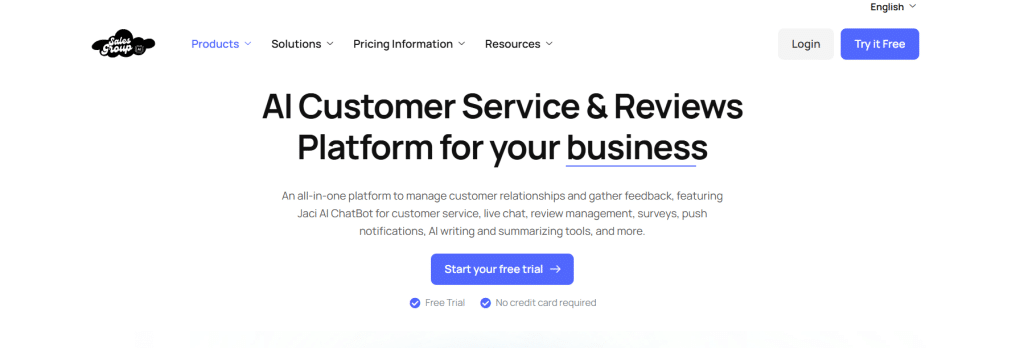
SalesGroup is an AI-powered customer service and reviews platform designed specifically for websites looking to enhance their customer relationship management and feedback collection capabilities. It serves as an all-in-one solution that combines AI chatbot technology (Jaci AI ChatBot) with comprehensive customer service tools, live chat functionality, review management systems, surveys, push notifications.
The platform focuses on automating customer interactions while maintaining personalization through its AI capabilities. SalesGroup offers features like intelligent chatbot responses, automated review collection and management, customer feedback analysis, and integrated communication tools that help businesses streamline their customer service operations while gathering valuable insights about customer satisfaction and preferences.
Benefits: SalesGroup reduces response times through AI-powered automation, increases customer engagement with proactive chat and feedback collection, and provides valuable business insights through integrated analytics and review management. The platform offers a free trial with no credit card required, making it accessible for businesses of all sizes to test its capabilities before committing to a paid plan.
Problems It Solves: SalesGroup addresses the challenge of managing multiple customer touchpoints by providing a unified platform, eliminates the manual effort required for review collection and response management, and reduces the workload on customer service teams through intelligent automation while maintaining quality customer interactions and feedback management.
2. Tidio
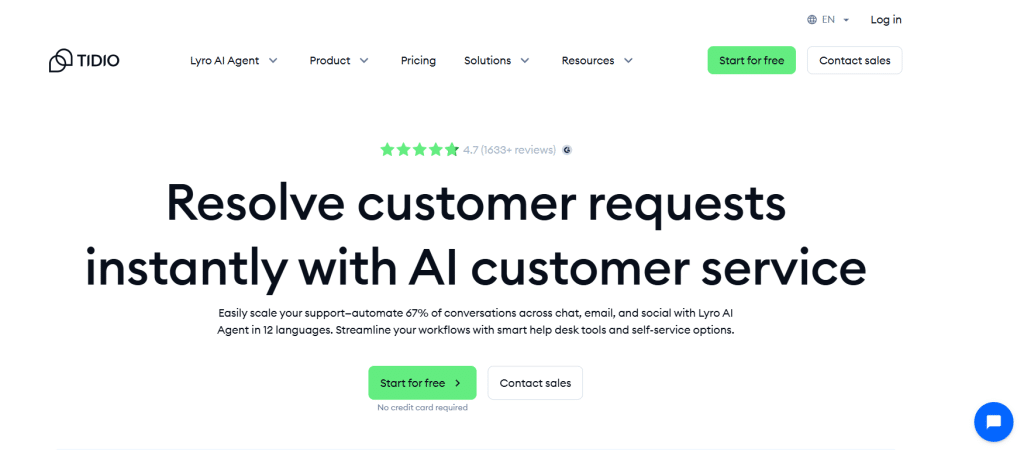
Tidio is a live chat and customer service platform designed primarily for small to medium-sized businesses looking to engage website visitors in real-time. It combines live chat functionality with chatbot capabilities, email marketing tools, and visitor tracking features, making it an all-in-one solution for customer communication and lead generation.
The platform offers intuitive chatbot builders that require no coding experience, allowing businesses to create automated responses for common inquiries while seamlessly transferring complex issues to human agents. Tidio also provides detailed visitor analytics, showing user behavior patterns and engagement metrics that help businesses understand their customers better and optimize their support strategies.
Benefits: Tidio increases website conversion rates by engaging visitors proactively, reduces response times through automated chat responses, and provides valuable insights into customer behavior and preferences. The platform is easy to implement and use, making it accessible for businesses without dedicated IT resources, while offering mobile apps that allow agents to respond to customers from anywhere.
Problems It Solves: Tidio addresses the problem of missed opportunities when website visitors leave without engaging, eliminates the need for customers to wait for email responses to simple questions, and provides small businesses with enterprise-level chat capabilities without the complexity or high costs typically associated with such tools.
3. Zendesk

Zendesk is a cloud-based customer service platform that centralizes customer support operations through a comprehensive ticketing system. It transforms customer inquiries from various channels—email, chat, phone, social media, and web forms—into organized tickets that can be tracked, prioritized, and resolved efficiently by support teams.
The platform features a robust knowledge base system, community forums, and advanced reporting capabilities that help businesses understand support performance and customer satisfaction trends. Zendesk also offers extensive customization options, allowing businesses to tailor workflows, ticket fields, and user interfaces to match their specific support processes and branding requirements.
Benefits: Zendesk improves support team efficiency through organized ticket management and automated workflows, enhances customer satisfaction with faster response times and consistent service quality, and provides valuable insights through comprehensive analytics and reporting. The platform supports business growth with flexible pricing tiers and scalable features that adapt to changing support needs.
Problems It Solves: Zendesk eliminates the chaos of managing customer inquiries across multiple channels without proper organization, reduces the risk of customer issues falling through the cracks, and provides the structure needed for support teams to handle increasing volumes of customer interactions while maintaining service quality and accountability.
Conclusion
Online customer service has made life easier. It saves customers time, since they no longer have to queue in a store somewhere or stay on hold on a call for hours waiting to be served. The digital transformation of customer support has eliminated geographical barriers, extended service availability, and created more efficient ways for businesses to connect with their customers.
SalesGroup enables you to provide better online customer service through its comprehensive AI-powered platform. Try it for free, or sign up for a live demo to learn more about its features including Jaci AI ChatBot, review management, and integrated customer service tools. You can also contact the SalesGroup support team if you need further assistance.
Was this article helpful? Please feel free to express your thoughts about online customer service in the comments section below.
